


The decision was made at Government House yesterday (Sept 16) by the Centre for Economic Situation Administration (CESA).
Monthly financial assistance would see an additional B500 given to 14 million low-income earners who have state welfare cards, for three months from October to December, totalling B21bn.
The government will also offer B30bn cash to 10 million people to buy goods during the final quarter of the year, scaling back an earlier plan to give B45bn to 15 million people, government spokesman Anucha Burapachaisri told reporters after the meeting.
The half-half co-payment scheme will allow registered people to shop at small shops, with the government subsidising 50% of the payment, up to B50 per day, for the customer’s payment of B100.
Thailand has since June eased most of its coronavirus restrictions due to its low infection numbers, but a ban on foreign tourists since April is limiting the speed of domestic recovery.
The handout plans, to be financed by some of the government’s B1 trillion borrowing, still needs cabinet approval, Mr Anucha said.
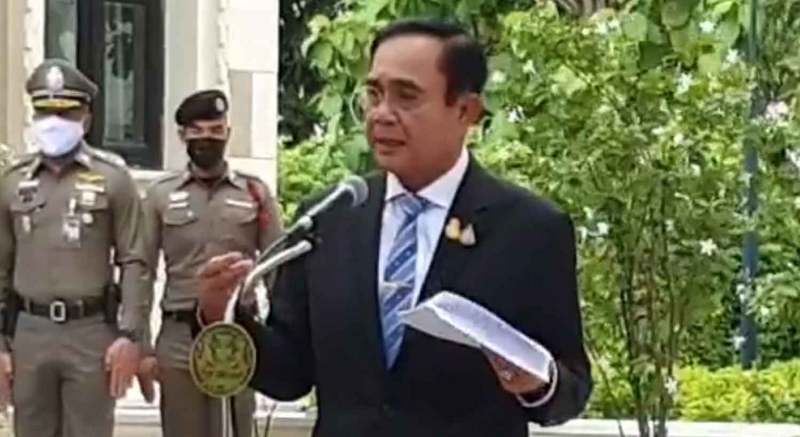
Prime Minister Prayut Chan-o-cha said after the meeting that the most important thing at this time was to help low-income earners, while maintaining government and private investment in projects that would generate a sustainable national income in the future.
“We have to look at medium- and long-term problems too as we don’t know when the COVID situation will end,” Gen Prayut said.
Danucha Pichayanan, deputy secretary-general of the National Economic and Social Development Council, said that there are currently about 3.6 million people who earn less than B30,000 per year and receive B300 monthly financial assistance under the state welfare scheme. Once the cash handout scheme takes effect, assistance will increase to B800.
For about 10.3 million who earn between B30,000 and B100,000 per year, their B200 monthly financial aid will increase to B700.
Mr Danucha said the government also plans to revise smart visa rules to attract long-term investors, particularly those with special skills or those operating in targeted industries.
The CESA instructed the Board of Investment and the Interior Ministry to change the rules to allow those who are granted Smart Visas to invest in property, he said.
The CESA also approved a proposal by the Bank of Thailand to extend credit terms to between 30 to 45 days to help small and medium-sized entrepreneurs affected by the economic fallout.
Kanchana Tangpakorn, director of the Bureau of Tax Policy, said the co-pay programme would be applied to the purchase of food, beverages and general goods (excluding lottery tickets, alcoholic drinks and tobacco) from small vendors. Registration for shops will start from Oct 1.
Some 100,000 shops are expected to join the scheme.