


The government has recently come under fire, accused of “selling off” the country after the Cabinet approved the ministry’s draft regulation to allow four groups of wealthy foreigners to purchase and own up to one rai of land in return for investments.
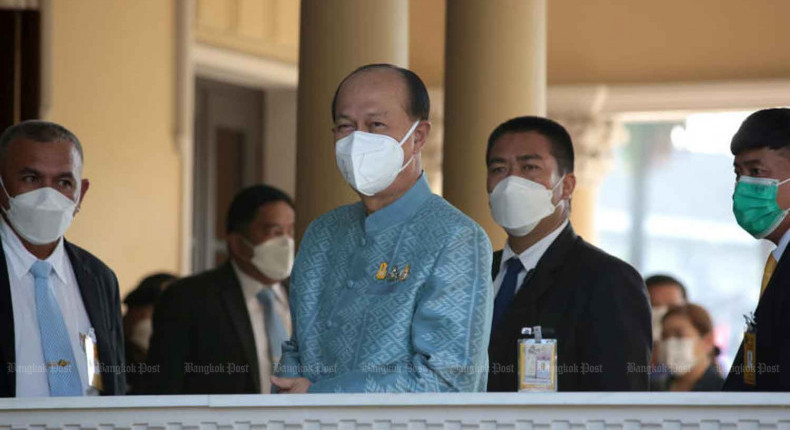
Gen Anupong responded to questions by the opposition yesterday in parliament about the land policy, reports the Bangkok Post.
He said the draft regulation was being put up for public input and it can still be revised to introduce additional limitations, such as upping the required amount of investment and limiting its duration.
Under the draft regulation, wealthy individuals, pensioners, work-from-Thailand professionals and specialists who hold Long-Term Resident visas can apply to buy and own up to one rai of land for residential purposes with conditions.
Those eligible must meet certain criteria, including a minimum B40 million investment requirement and the land slated for purchase must be located in Bangkok, Pattaya City, as well as other municipalities and zones specified as residential areas.
Anupong said the draft regulation aims to lure foreign investments, adding it is not selling off the country or catering to investors as some suggested.
“I insist it is not about selling the country off and I don’t think people here see it that way,” he said. “For those who are concerned it will lead to foreign land grabs, we’ll further add regulations to prohibit them from buying connected plots.”
These plots can later be sold for property development.
Anupong said the policy will not lead to land holding by nominees, adding the government is also tackling land ownership inequality problems.
“We can improve the regulation, such as by increasing the [required] investment to B100mn or raising the investment period to 10 years,” he said. “[The plan] can be scrapped if people have serious concerns. We won’t see it as a loss of face.”
He also addressed criticism that the government is at a loss with the economy and has to resort to this measure to shore up investments.
“When it comes to tackling economic problems, no government will use just one measure,” he told the House. “All governments will explore all possible measures. If we want to draw tourists and investors, we motivate them and use several incentives.”
Energy Minister Supattanapong Punmeechaow said that mechanisms would be in place to prevent abuse of the land policy by money launderers.
He said the policy, aimed at generating B1 trillion, was formulated based on input from businesses and potential investors.