


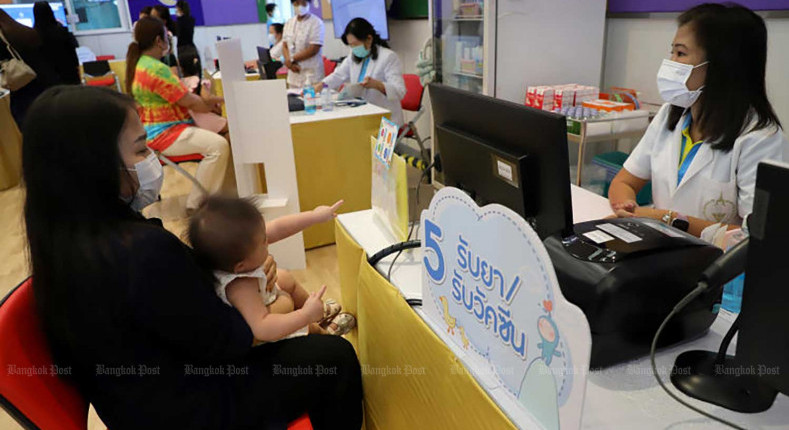
Dr Cholnan Srikaew, Public Health Minister, said yesterday (Oct 30) that every province risks suffering the effects of the changing age demographic.
On average, the fertility rate (TFR) for a Thai woman is 1.16, meaning one woman has about 1.16 children throughout her lifetime, except in Yala province, which reaches 2.27., reports the Bangkok Post.
The declining TFR was first recorded in 1993 when TFR was measured at 2.1. It is in line with a decreasing number of births. Between 1963-1983, the average was about one million births a year, but in 2021 the total of newborn babies was only 485,085, which was also lower than the death rate of 550,042, he said.
The main causes are associated with economic, social, educational and environmental problems, with only 10% due to health problems, said Dr Cholnan.
And if there are no lucrative measures, this year will be the first in which workers aged 20-24 years old will be outnumbered by retirees aged 60-64 years old.
That gap between the two groups will only grow wider and will lead to labour shortages, a greater dependence on the working group and a higher budget to take care of the health of the elderly.
“We have been working to promote the issue of pregnancy into the national agenda so that the government will do its job to invest in human resources development, including providing financial assistance to newborn babies and assistance for infertility problems,” Dr Cholnan said.
Dr Kua Wongboonsin of the College of Population Studies, Chulalongkorn University, explained that the Thai population will fall to 33 million people in 2083, or half the current 66 million, if measures are not taken.