


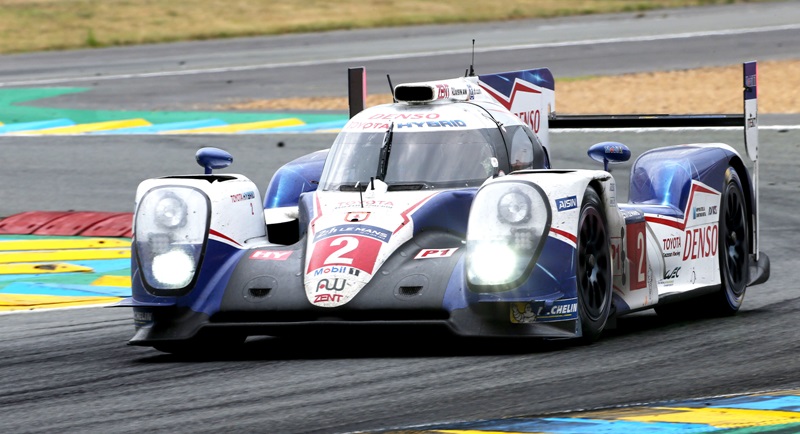
The 24 Heures du Mans is a feat of human and technical endurance unsurpassed by any other circuit race and often touted as the greatest race in the world, and it is loved almost universally by the motorsport community.
The World Endurance Championship, in essence the rebirth of the old World Sportscar Championship, continues to move from strength to strength in this golden era of renaissance. Its list of driving talent is impressive, as is its current crop of team and manufacturer entries.
Moreover, of the series’ eight races, five – or roughly two-thirds – take place on classic racing circuits, including Silverstone, Spa, Nürburgring, Fuji, and Le Mans. The other rounds, run in Austin, Shanghai, and Bahrain, don’t scrub up too badly either. It’s a mighty calendar.
It is little wonder, then, that the grass through which the WEC so happily frolics appears so much greener when peering from the F1 side of the fence.
The difference could not be starker. On the World Endurance Championship’s day (and then night, and back to day) of the year, it boasted an image far removed from the near apocalyptical vision being offered by its more popular FIA cousin, Formula One.
One need only to consider the stories the Formula One world was pumping out during Le Mans week, including Red Bull Racing and Renault teetering on a sudden exit, the clouds gathering over the sport’s latest calendar addition in Azerbaijan, and EU Commission poised to tear through F1’s commercial and governance structures. None of it made for happy reading.
Be in no doubt that Formula One has its problems – and that short collection of news headlines is far from an exhaustive list – but chief amongst them is its own pessimistic collective consciousness.
Not a race goes by in which a subplot of political tension, grabs for power, or the threat of total upheaval undermines that core product we call ‘motor racing’, and the resulting public airing of dirty laundry serves only to further muddy the sport’s quest for strategic direction and undermine its sense of self.
Meanwhile, the WEC continues to prove that good racing can still come from less than a handful of competitive entries. It continues to prove that technical prowess can be both interesting and sustainable. It continues to prove that not every minute of every race has to be thrilling, if only one were to look at the broader narrative of an hour, a race, or an entire season.
The beauty of what the WEC is doing is that these principals are far from exclusive to endurance racing – these things are at the heart of all racing, including Formula One.
A boring race is not a crisis. A single dominant team does not equate to deep-rooted flaws in the regulations. Fuel saving and engine management, integral to all motorsport for decades, do not herald the end of racing drivers as modern day ‘heroes’.
Formula One discourse has become so hysterical that it would have one believe that the sport has somehow irrevocably changed – but Formula One has never stopped being Formula One.
All Formula One is, lest it forget its origins, is a category of motor racing. The reality is that sometimes motorsport can be a downright pedestrian affair – but that’s motor racing.
If you’re not prepared to sit through the duds to witness the gems, then this sport mightn’t be for you.