


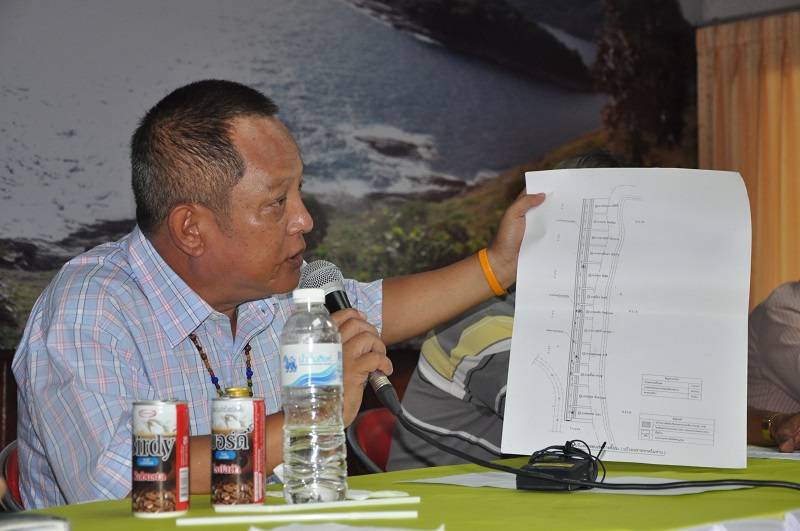
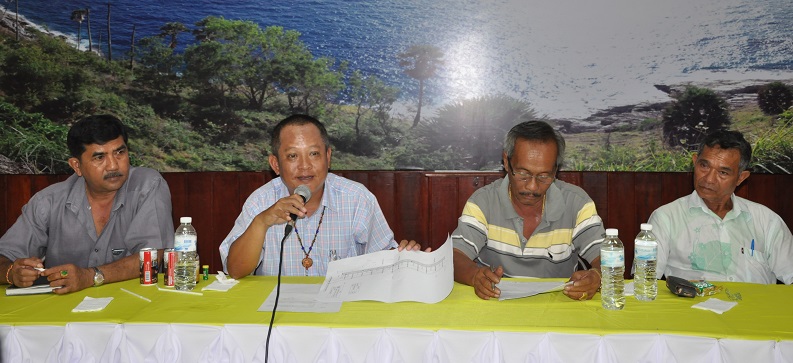
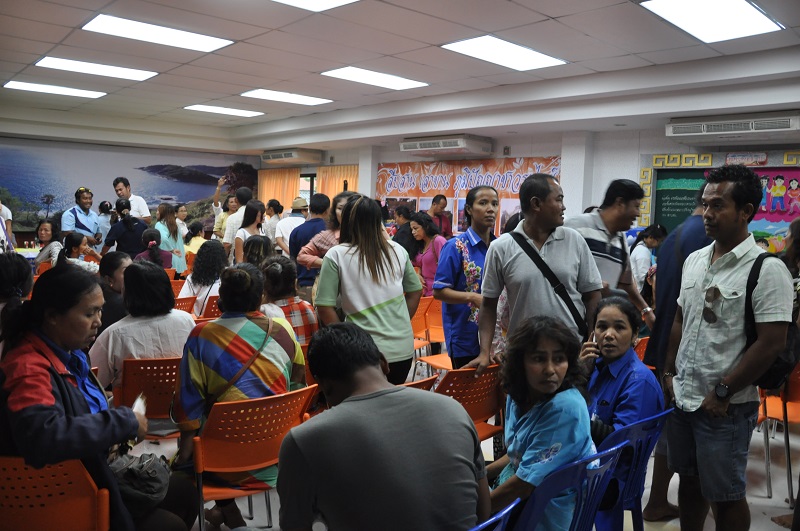
Small business operators from beaches across Phuket attended the meeting, held at Wat Sawang-arom school and organised by the Phuket Tourism Operator Association, with the hopes of getting their jobs back.
“I am very happy and feeling hopeful when we can gather together and help each other think about how to get our jobs back while preserving the public space and nature,” said Salinee Salee, 40, who was a masseusse on Naiharn Beach.
She told The Phuket News that she lost B800 – B1,600 of income a day during these few month but said she understands and will follow the conditions that local authorities have mandated.
“There will be less massage operators and also beach chairs and every shops will be registered in the official’s list,” she added.
The aim of Friday's meeting (October 3) was to create an understanding among beach business operators and schedule follow-up meetings at other beach areas.
“Since there was a policy to remove all businesses and services on the beaches, all operators lost their jobs immediately and they are in trouble. I have waited for a month and I did not see any authority give them a hand, so I created Phuket Tourism Operator Association [and] gathered representatives of each beach business operator from all beaches. I created this because I do not want people to use the same way as before like making protest on the street,” said Phalat Jantarasopin, chief of Phuket Tourism Operator Association.
Phalat added that beach front land is public and everyone has the right to use the area and profit from their own small businesses on beaches while creating tax revenue for the province.
“It is the local public land. It should belong to local people. The beach management measures from the [local government] was already good as they have limited the number of operators, made an association for the group, and after the Tsunami disaster … povided larger entrances and exits along the beach.
“The problem is that these measures were intervened by hotels’ benefits. Hotels nowadays sell their rooms including a beach[front] meaning when guests pay for a room, they use the hotel's beach chairs and this is why they try to kick the small operators out.”
Mr Phalat asked for a compromise in which hotels allow small operators to put their beach chairs and train them to give proper services.
The offer that the association will present to the provincial board, he says, will allow for more space for public use.
In addition, Mr Phalat – who has already been in touch with Governor Maitri Inthusut about the issues – stressed that there will be less beach massage operators in each area and a limited number of beach chairs whith operators responsible for clean-ups.
The association is expected to meet with provincial authorities to offer detailed proposals sometime in the near future.