


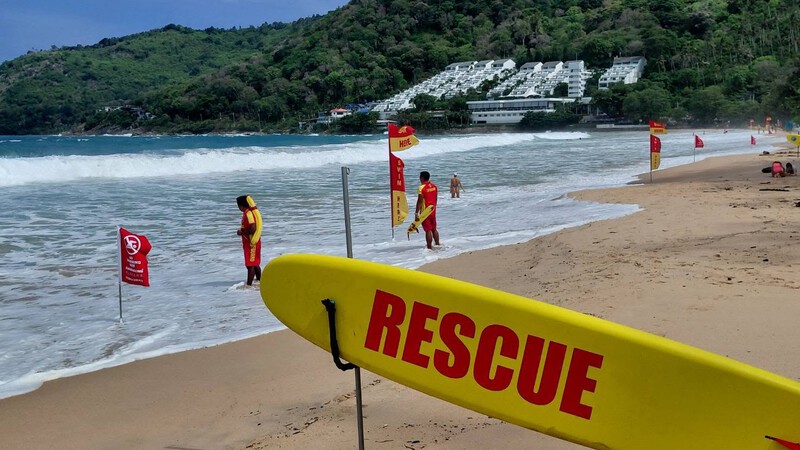
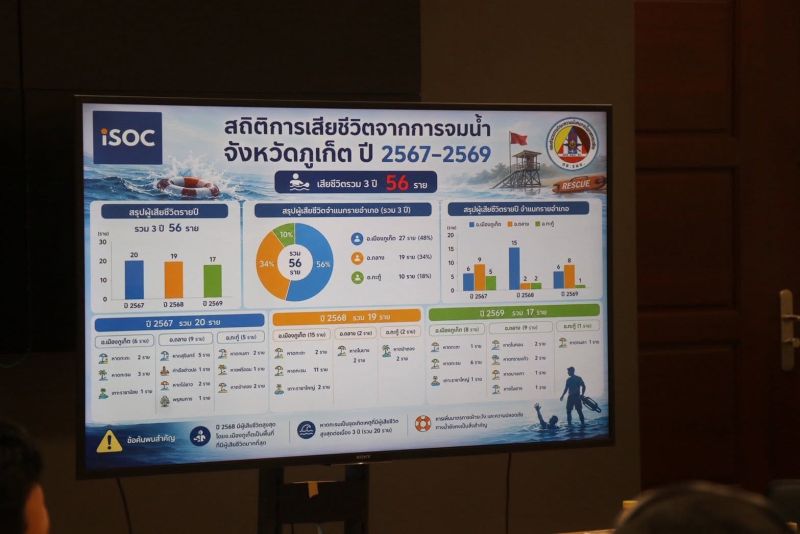


Figures compiled by the Phuket Provincial Administrative Organisation (PPAO) show Karon Beach remains the island’s deadliest beach, accounting for 20 drowning deaths between 2024 and 2026 – more than one-third of all fatalities recorded during the period.
Kata and Surin beaches recorded five deaths each, followed by Patong and Mai Khao beaches with four each, Kamala and Ley Phang beaches with three each, and Nai Thon and Sai Kaew beaches with two each. One drowning death was recorded at each of Ao Por, Bang Tao, Nai Yang, Freedom Beach, Koh Racha Yai and Koh Racha Noi.
By district, Mueang recorded the highest toll with 27 deaths, followed by Thalang with 19 and Kathu with 10.
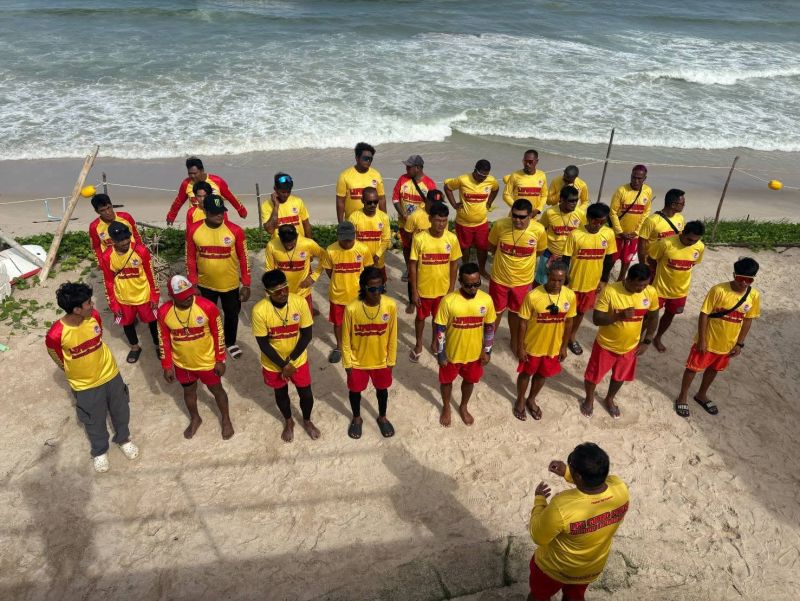
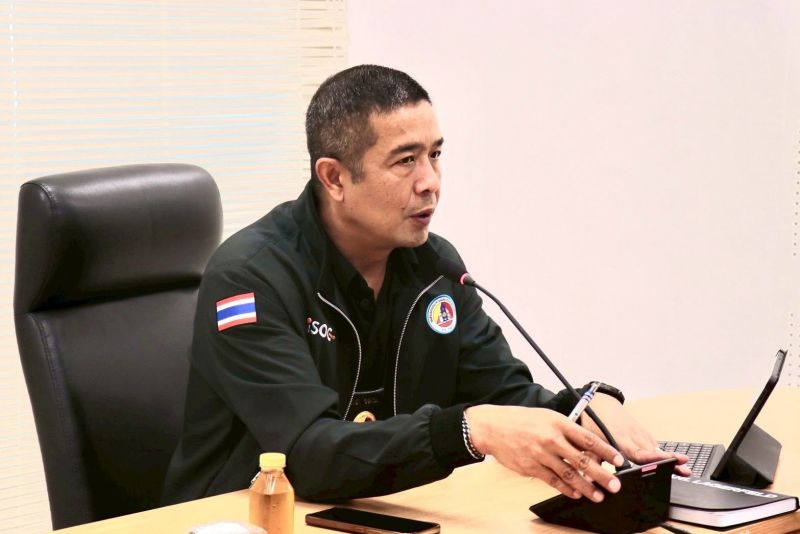
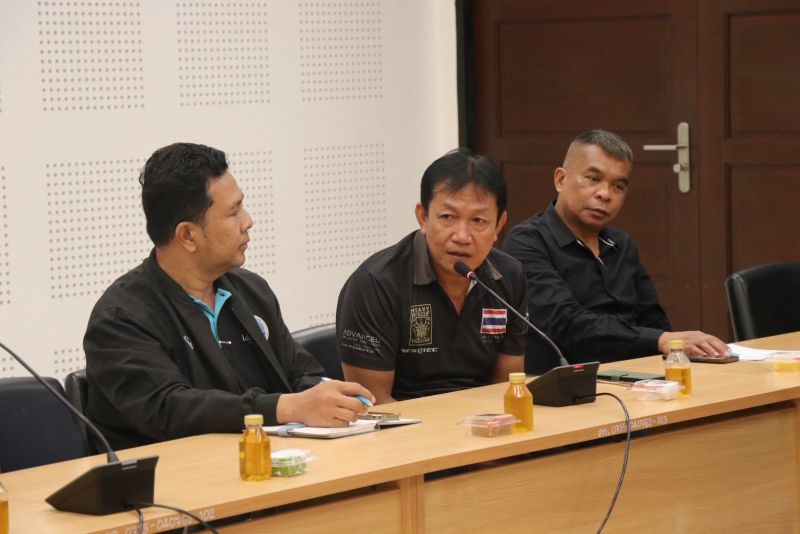
Against that backdrop, ISOC Phuket this week proposed placing lifeguard services under a single authority to improve standards, training and rescue coordination across the island.
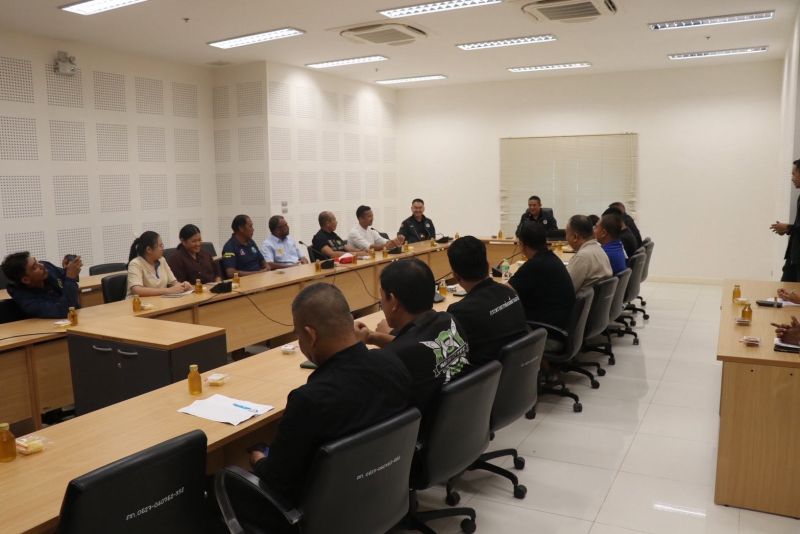
At a meeting attended by representatives from the PPAO, the Phuket Provincial Tourism and Sports Office, local authorities, beachfront businesses and lifeguard groups, the PPAO was identified as the proposed lead agency to oversee lifeguard operations province-wide, with support from MoTS Phuket.
The meeting also called for additional safety measures, including multilingual warning signs at beaches and other high-risk coastal areas to better alert foreign visitors to dangerous swimming conditions ‒ namely deadly rip currents during the southwest monsoon season, from May through October.
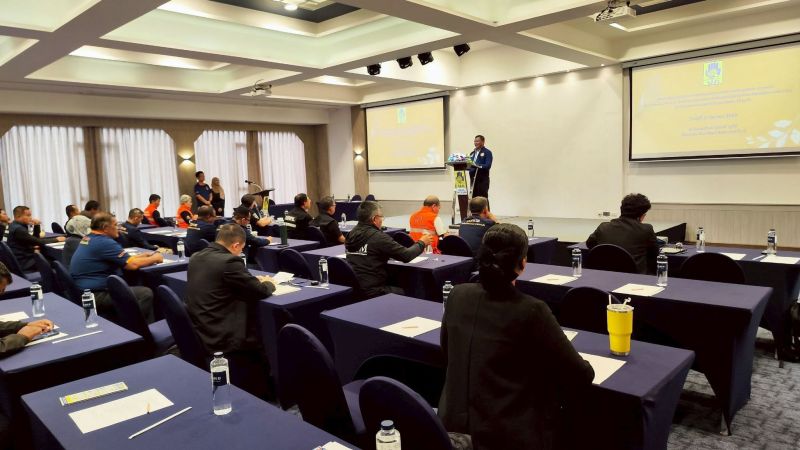
Meanwhile, the DDPM’s Phuket-based Region 18 office brought together 62 disaster-response officials from five Andaman provinces for a large-scale exercise testing how agencies would respond to major floods and landslides during the monsoon season.
The tabletop exercise, held at Seabed Grand Hotel, simulated multi-province disaster scenarios to test command structures, communications, resource deployment and emergency decision-making.
Officials from Phuket, Phang Nga, Krabi, Trang and Ranong reviewed response plans and agency responsibilities as part of efforts to strengthen coordination before severe weather strikes.
The exercise comes as Andaman provinces remain vulnerable to flash floods, flooding and landslides during periods of heavy rainfall, making effective coordination critical for evacuations, rescue operations and emergency relief efforts.