





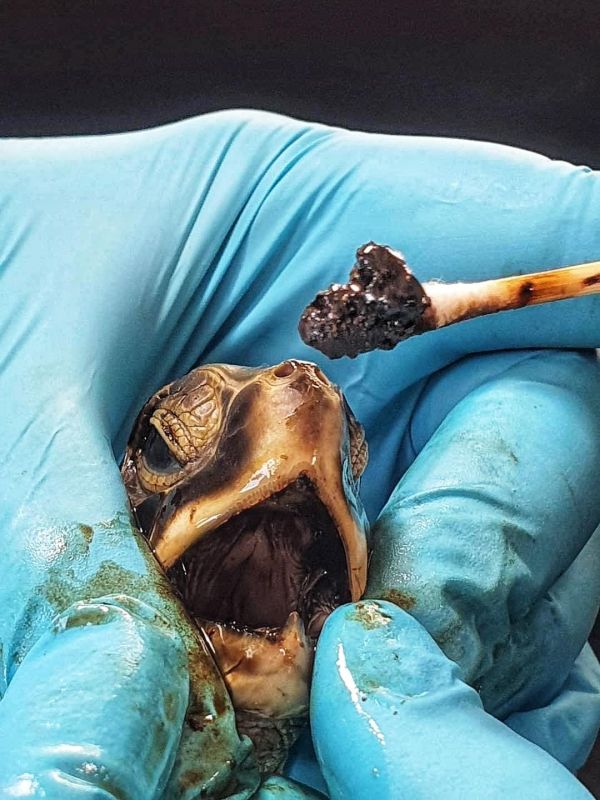
Dr Thon made his call for greater environmental protection through a post on Facebook that featured a distressing photo of a young turtle being cleaned of oil, which he described as, “What hurt me so much and must have hurt my friends who love the sea the most”.
“As far as we know, she is the third turtle to be hit by an oil slick in Phuket, and one is dead,” Dr Thon wrote.
“Since starting to work in the sea until today, almost 40 years, I can’t think of any case in Thai waters where turtles have been exposed to this much oil from a slick,” he noted.
Dr Thon called on all people involved in responding to the oil slick to not pass off the incident as “just a pity”.
“Thailand has joined the Convention on Biological Diversity, but what indicators for SDGs [Sustainable Development Goals] do we use?
“We have also signed up for and participated in many issues related to rare marine animals, but many stranded Thai sea turtles carry garbage with them, whether outside or inside [their bodies], and now they are being afflicted by oil,” he added.
“Know that all parties are trying to find the source of the oil slick in order to pursue the perpetrators to be punished, but knowing who that is is extremely difficult. It was estimated that the incident occurred at a distance of more than 100 kilometres from the coast. With the system we have, how can we tell where the boat went?” he posed.
“Suffice it to say that we still can’t take care of the coast. We must keep our little turtles safe from serious pollution in the sea. And if we do not change, coastal tourism worth hundreds of billions [of baht] per year also risks random destruction in the blink of an eye,” Dr Thon noted.
“Various animals and marine ecosystems still rely solely on luck to avoid catastrophic events. We need to invest more to understand and protect the seas. We need to understand the tides and wind waves, and identify risk areas so we can find a way to improve surveillance and have an early warning system,” he added.
“It’s not ‘just a pity’. It’s more than that because we can still do better,” he wrote.
Department of Marine and Coastal Resources (DMCR) Deputy Director-General Pornsri Suthanaruk on Tuesday (Aug 8) revealed that more than 4,000 rai of corals in Phuket and Phang Nga are at risk of damage by the oil slick, which she said affected 125 kilometres of coastline along the Andaman seaboard.
The oil slick came from the north. It was first observed washing ashore in Phang Nga on Aug 2 and reached Koh Racha Yai, just over 17km south of Phuket, last Sunday (Aug 6), she said.
A model of the oil slick determined that the slick originated some 80 to 90 nautical miles west (more likely northwest) of Phuket, Dr Pornsri said.
DATA REVIEW
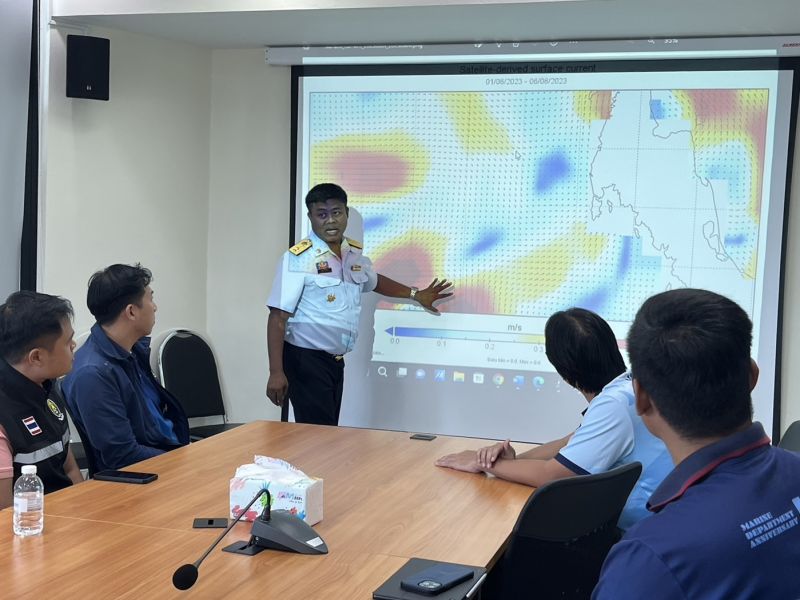
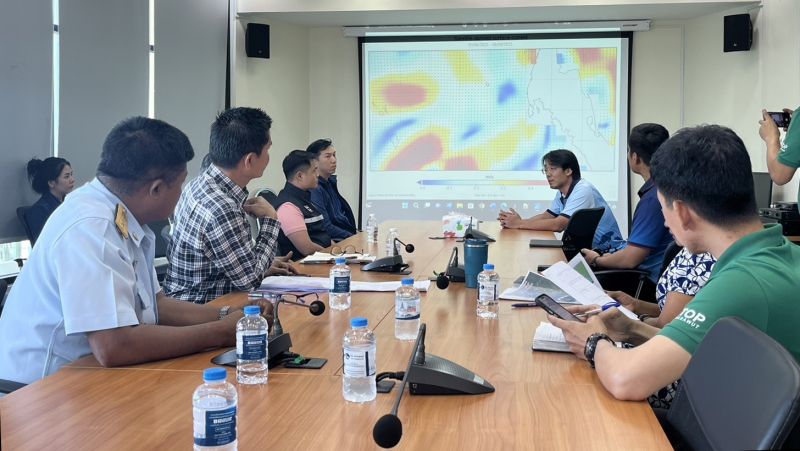
Phuket Marine Chief Nachaphong Pranit on Thursday (Aug 9) joined a meeting with representatives of selected agencies in the hope of learning more about the origin of the oil slick.
Among the agencies represented were the DMCR, the Ministry of Natural Resources (MNRE) and the Environment and Pollution Control Region 15 branch, which is based in Phuket.
The beaches confirmed to have been affected by the oil washing ashore were listed as Khao Lak Beach as well as Khuk Khak Thai Mueang in Phang Nga, then continuing down the west west coast of Phuket to affect Sirinath National Park, Mai Khao Beach, Nai Yang Beach, Kamala Beach, Patong Beach, Karon Beach, Kata Beach and Koh Racha Yai, located south of Phuket.
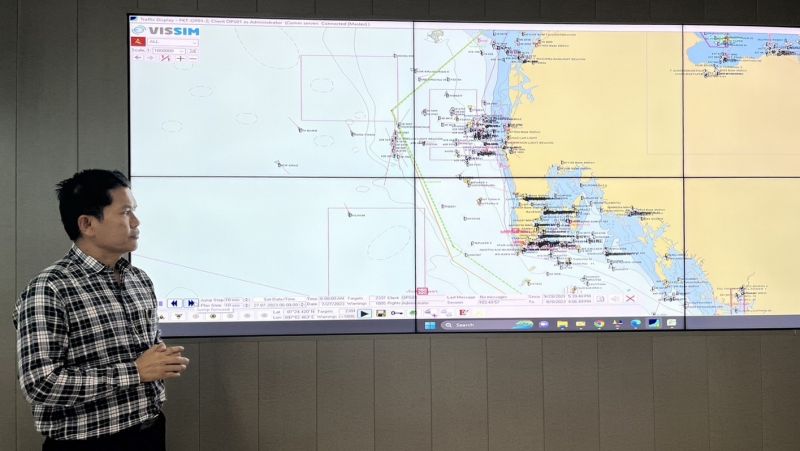
The team reviewed weather models, including factors such as wind, tides and waves, and the number of ships passing through the area where the slick is believed to have originated.
All data collected will be forwarded to the Geo-Informatics and Space Technology Development Agency (GISTDA) for further analysis, including tests to confirm the type and composition of the oil, Mr Nachapong said.
However, he added that it is expected to take “one to two weeks” before all the samples and test data will be ready to forward to GISTDA.
“This is the first time that there has been a joint discussion of such relevant agencies to collect data and create a model to narrow down the tracking of ships that dumped oil into the sea,” Mr Nachapong said.
“All information obtained from existing equipment and any data on ships passing through the area will be delivered to GISTDA to evaluate and use satellite images to ensure we have scientific facts as evidence in prosecuting the offender and for us to continue to take action according to the relevant laws,” said Mr Nachapong.