


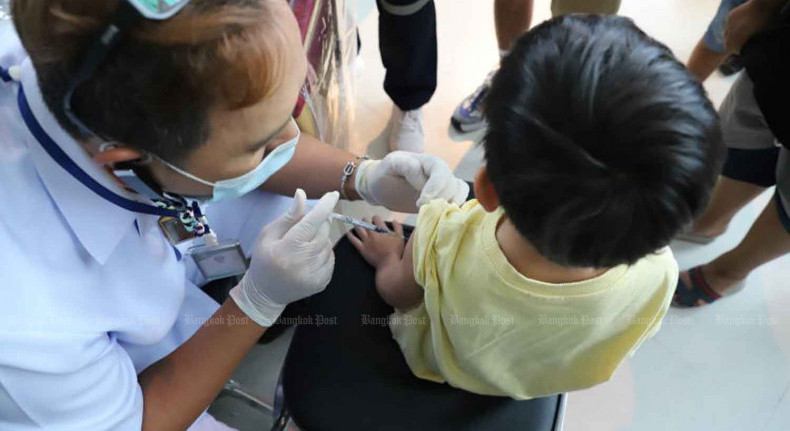
Dr Somsak Lolekha, president of the Royal College of Paediatricians of Thailand, stressed that the COVID-19 vaccine is very important for this age group, who are at greater risk of suffering from serious symptoms than older children, reports the Bangkok Post.
He said the college has agreed to issue guidance on how to vaccinate, the specific dose and the published evidence of its efficacy when given to young children.
“We found that this age group have a greater risk of death from COVID-19 infections due to their very low levels of immunity. Hence, they should be one of the groups to get the vaccine, which has also been shown to protect against multisystem inflammatory syndrome in children. MIS-C is frequently also diagnosed when a child gets infected with the disease,” he said.
He further insisted that there have been no reports of hazardous side effects during international trials, and recommended a dose of three microgrammes, given in three separate shots.
The Ministry of Public Health is now ready to begin administering the three million doses, when they arrive next month, to the first million to children aged six months to five years.
Meanwhile, Dr Yong Poovorawan, head of the centre of excellence in clinical virology at Chulalongkorn University’s faculty of medicine, posted on his Facebook page that COVID-19 is following the same trajectory as H1N1 did in 2009 and will soon be considered little more life-threatening than seasonal flu.
The peak period will be July and August, followed by a decline until Christmas. There will then be sporadic outbreaks when schools reopen in January before a sharp decline until the next “COVID season”, predicted the doctor.
The Ministry of Public Health on Monday reported 15 more COVID-19 fatalities and 698 new patients admitted to hospitals on Sunday (Sept 11).
This compared with 19 fatalities and 1,093 new patients on Saturday.
The 698 new patients were all local cases.
DMS defends use of favipiravir pills
Meanwhile, the Department of Medical Services (DMS) has defended defended the effectiveness of favipiravir in treating COVID-19 patients against an international study claiming the antiviral drug lacked efficacy in treatments, reports the Bangkok Post.
Dr Somsak Akksilp, DMS director-general, said the study he is referring to is one carried out in the United States, Mexico and Brazil.
In the study, favipiravir was used to compare with a control group, he said, adding there were 1,187 patients who volunteered to take part in the research, 70% of whom were obese and 15% were elderly.
However, it appears the researchers didn’t adjust the appropriate doses of the pills based on patient weight, he said.
Almost every patient who received pills during the third day of the study started developing coronavirus symptoms, he said, noting one-third of them had at least been infected once or vaccinated.
The evaluation to gauge the severity of infections among patients is also different from Thailand’s, Dr Somsak said.
He said Thai researchers have carried out a study on the drug using 93 patients in three hospitals. All of them were below 60 years old and didn’t suffer chronic diseases, he said. Only 25% were obese.
Half of the patients were treated with the pill from the first day symptoms started showing. The group only developed mild-to-moderate symptoms, he added.
He confirmed the patients were treated and monitored in the hospital.
Dr Somsak further explained the effectiveness of favipiravir was measured by medical personnel via the News system - comprising of checks on patients’ respiratory rate, blood oxygen saturation and heart rate, among others.