


But my answer never fails to surprise: the most amazing restaurant I’ve ever visited serves barbecue, not haute cuisine: it was Andres Carne de Res, in Columbia.
The meal I had there was breathtaking. I ate beef tenderloin with a piquant Argentine chimichurri sauce, made of parsley, garlic, olive oil, red pepper, vinegar, paprika, thyme, cumin, oregano, bay leaf, and cilantro.
Andres is located in Chia, about half an hour outside Bogota; the restaurant runs around a thousand covers. The logistics are staggering.
Outside the restaurant there’s a barbecue set up for the drivers and bodyguards. Inside, the restaurant is all glamour, its interior decorated with brocante: antiques, old advertisements, vintage machines.
The architecture is fascinating: there are cooking areas on different levels, with Heaven (cielo) on the top floor, for families, and Hell (infierno) on the ground floor, for drinking aguardiente and dancing the rumba.
Andres is like different houses put together at different heights, with steps zigzagging from one platform to the other. You don’t know who’s staff, who’s a customer; by the end of the evening, people are dancing on the tables. It is the Columbian Ka Jok See version on a larger scale!
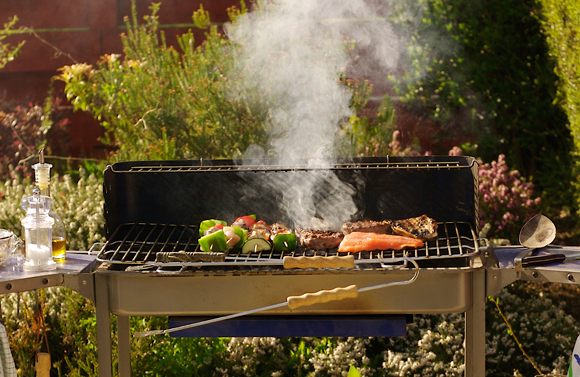
I am passionate about barbecues. There is no better way to be with friends than outdoors on a fine day, chatting while grilling food. I love the flavours of grilled meat and foil-wrapped potatoes roasted among burning coals.
But have you ever thought about the origin of the word barbecue? There are two etymologies, though I definitely prefer the first, which would give barbecue a French origin. The word would come from barbe a queue (‘from beard to tail’), referring to a piglet roasted whole.
But the explanation preferred by most linguists traces the English word barbecue back through Spanish to the native American Taino tribe’s term barbacoa – a green wood rack whose original meaning was ‘holy fire pit.’
The cooking technique for barbacoa involved digging an earthen trench and placing the meat inside to marinate in its own juices; more leaves and coals are placed over the flesh. Then the whole is set ablaze; the meat takes several hours to smoke-cook.
Early visitors to the Caribbean record that venison, bear, fish and pumpkin all were cooked over the barbacoa; one writer even claimed that the original barbecues made human flesh “savoury”.
Whatever the word’s origins, the barbecue is now ubiquitous – from Cantonese char siu to the pulled pork of the American South.
I still have not figured out why the Australians have mastered the barbecue technique?
Antoine Melon is the GM of Trisara.