


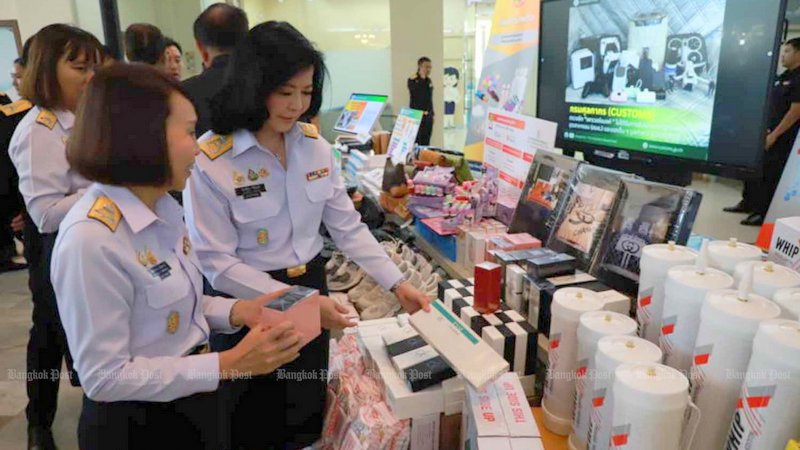
The Ministry of Finance has finished the draft of the amended regulations on rewards to executives. The legislation will take effect immediately after publication in the Royal Gazette, reports the Bangkok Post.
The next step will be to revoke the century-old practice of rewards for all levels of customs officials, Mr Phantong said, ensuring enforcement adheres to governance and transparency principles, while bolstering public confidence.
The change aligns with the recommendations of the government and the National Anti-Corruption Commission, which proposed the department review the reward system of law enforcement agencies.
The government and the agency have said the rewards could lead to corruption.
Thailand’s customs bounty system has existed since 1926. Prior to 2017, payouts of up to 30% of the value of a shipment were distributed to officers and informants taking part in a seizure.
BRIBES FOR CLEARANCE
While the incentive was aimed at making sure customs officials caught violations, in practice it slowed down procedures. Officials eager to collect rewards by spotting infractions would spend inordinate amounts of time examining shipments. This gave rise to more bribes paid by importers seeking timely clearance.
Under the amended Customs Act BE 2560 (2017), officers and informants are eligible for 10% to 20% of the proceeds from the sale of seized goods or fines, or up to 10% of additional collected duties.
Total payouts for both customs officers and informants are capped at B5 million per case.
The new regulations prohibit senior executives and decision-making officials ‒ level C8/C9 and above, including the director-general ‒ from receiving any rewards from seizures.
Cancelling the reward system completely is part of Thailand’s legal and regulatory reform mission as it seeks membership in the Organisation for Economic Co-operation and Development (OECD).
The OECD prioritises public governance and anti-corruption efforts.
Mr Phantong said the department is also adjusting the criteria to classify eligibility for rewards into three categories: officials who detect and seize smuggled goods, those who join a seizure, and those who assist an arrest.
The agency is also reviewing the amount of reward money to ensure it accurately reflects officials’ performance in seizures.
He said that while rewards are allowed by law, the department is ready to change the rules if it can affect law enforcement.