


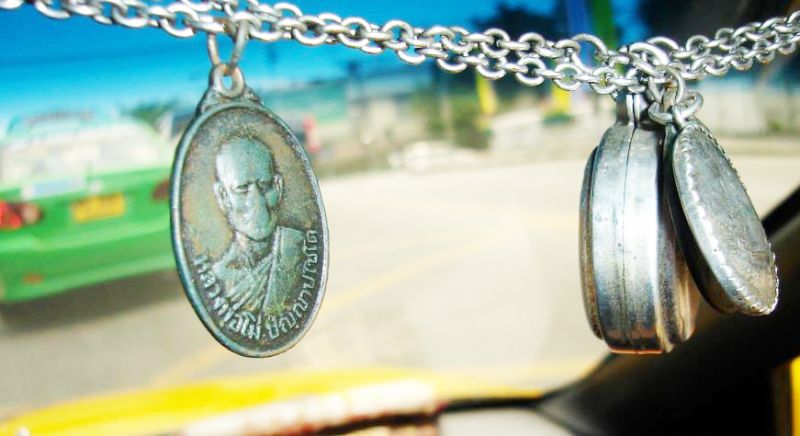
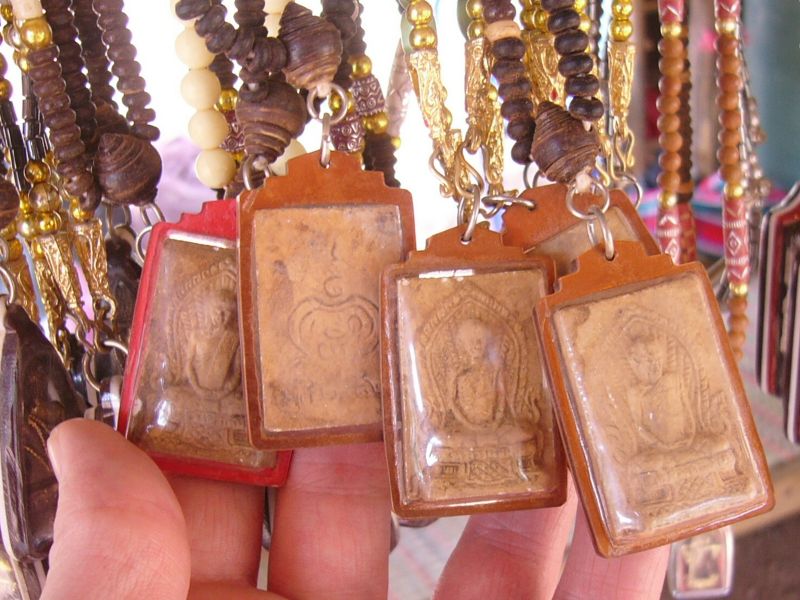
What is the reason behind these talismans? On the surface, it’s a kind of animism, or the attribution of supernatural powers to inanimate objects, a basic “safety” precaution if you will.
Many Thai Buddhists believe in karma and that each person’s fate is predetermined by their previous actions, in a past life or even this one. Thus, many Thais believe that anything that happens to a person, good or bad, happens as a direct or indirect result of their past actions.
Therefore, many Thais, to some extent, believe that conventional safety precautions (helmets, seat belts, blinkers), driver’s skills and speed are not necessarily related to the probability of having an accident.
In other words, if someone becomes a victim in a car accident, many will conclude that it was because of his or her negative karma. Strange as it may seem to a rational Westerner, the fate of a taxi might be influenced by the spirits of the passengers that ride in it.
Therefore, on one hand Thai taxi drivers tend to believe in the concept of pok pong (ปกป้อง), which implies a supernatural, magical or spiritual protection against danger and harm, which often carries a lot more weight the concept of prevention or pong gun (ป้องกัน), by avoiding accidents through minding practical safety measures such as wearing seat-belts and helmets.
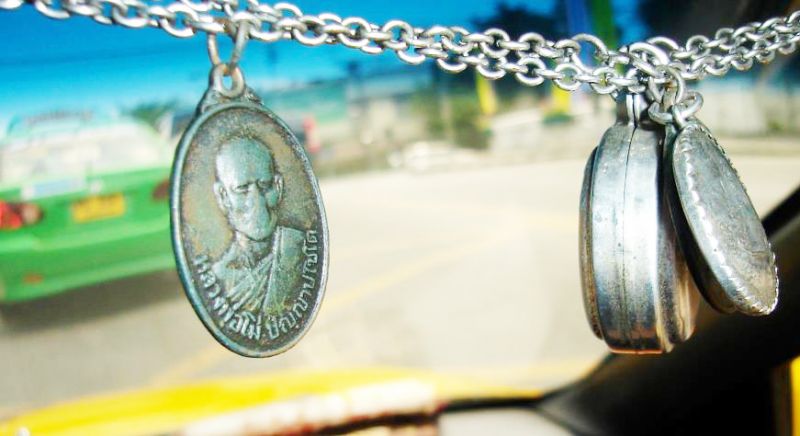
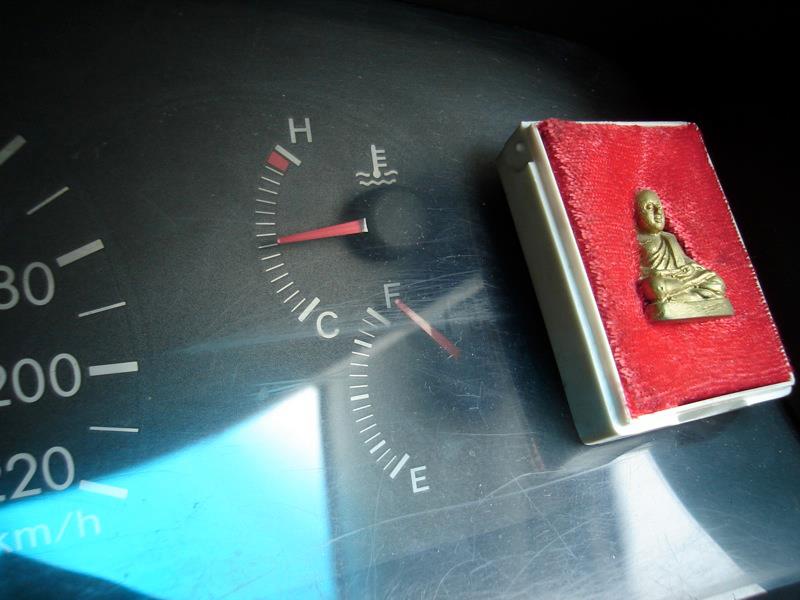
Nonetheless, it is believed that pok pong plays an essential role to counter the negative influences radiated from the passengers. Thus, taxi drivers transform their cabs into a sort of spiritual “life insurance” when they decorate their dashboards with numerous talismans and amulets.
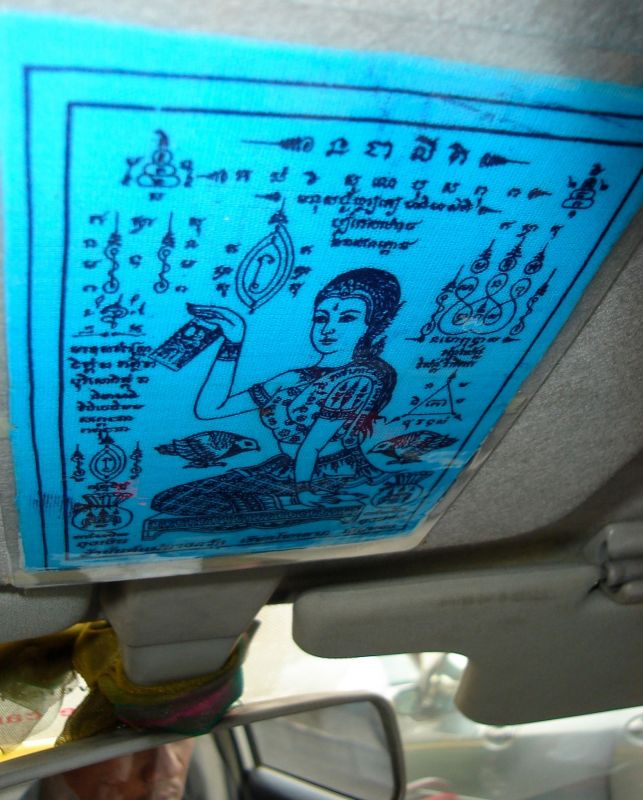
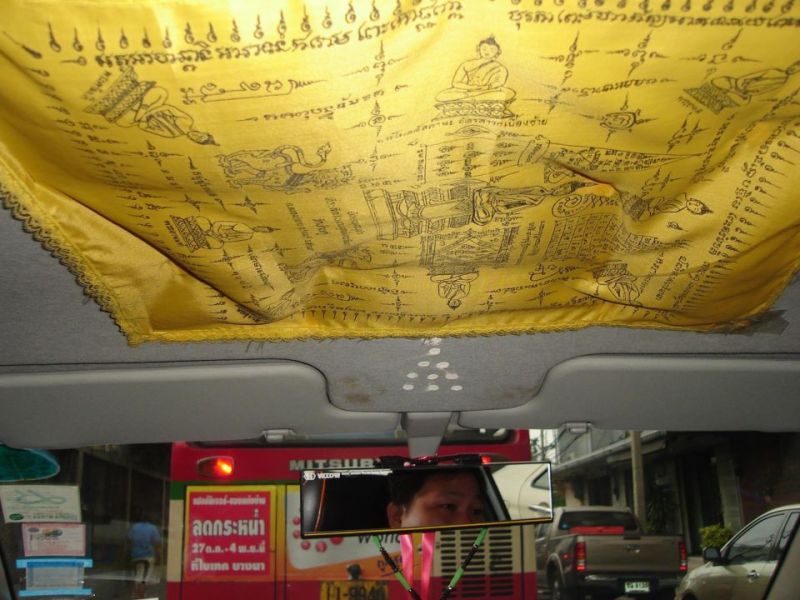
To bless their car, some drivers have a yantra, a sacred, ancient geometrical diagram drawn by a monk or other holy scribe, which is then placed on the ceiling.
Many drivers also hang Thai flower garlands and amulets on the rear view mirror to honour the journey goddess Mae Yanang (แม่ย่านาง). The dashboard may also harbour Buddha statues and pictures of enlightened monks and royal images that are considered
auspicious.
Some drivers go beyond adorning the inside of a taxi and also decorate the outside. Taxi drivers may customise their cars with mascots, stickers, lamps and flags, which they also believe serve as an extra layer of protection against negative karma.
Ancient beliefs, spells and superstition aside, most Thais in the modern day are rational enough to agree that safe driving and an emotionally-stable driver can go a long way in staying safe on the roads. A few simple and polite words to remind your Thai driver of this will also go along way. Say: Kup rote dee dee (ขับรถดีๆ) – drive nicely or steadily, or Kup rote cha cha noi (ขับรถช้าๆหน่อย) – please drive slowly.
In conclusion, we can say that Thai taxi altars and talismans are really special, since they reveal a lot about Thai culture, auspicious beliefs and their mentality about life and harmony. Riding in a taxi in Thailand can become a spiritual experience. Just make sure you are carrying around good karma and vibes!
Sirinya Pakditawan is a ‘luk kreung’, or half-Thai, born and raised in Hamburg, Germany. She enjoys writing about Thailand, with a focus on culture, art, history, tradition and on the people, as well as a mix of topics concerning Thai popular culture, travelogues and articles about Thai food.
Sirinya’s aim is not only to entertain you but to provide you with information and facts about Thailand, its culture and history that may not be generally known, in particular to the Western world. She has a PhD in American Studies from the University of Hamburg.
To read the original story, and many more, be sure to check out Sirinya’s blog: www.sirinyas thailand.de