


Sea gypsies are one of the old inhabitants of Phuket. They can be separated into three types: Urak Lawoi (the main tribe on the island) Moken and Moklen.
These three tribes live in seaside areas around the island: Urak Lawoi in Rawai beach, Siray bay, Laemla and Baan Sapam; Moken also live in Rawai beach and Thachatchai in Thalang district; Moklen in Laemla.
Each tribe is distinguished by their language, culture and lifestyle. Chanwit Saiwan, 35, an NGO working with sea gypsies for years explained that Urak Lawoi in Malayu language means “sea people” as Thai people call them “Chaolay”. The official Thai name for Urak Lawoi is “Thai Mai” (New Thai).
“The lifestyle can tell that they are Urak Lawoi. They flexibly live with other Thai people, socialise, go to school and accept other cultures. The others, Moken and Moklen are more conservative. They are more shy and mostly spend time in their community and don’t really go to school.”
Apart from the unique language and lifestyle, the tribe have an interesting culture and tradition that has been passed down through many generations and is conserved by its elders, to prevent possible eradication in future generations.
“We are worried because we hold ceremonies for every occasion as taught from our ancestors,”said Ngim Damrongkaset, 69, a Rawai Urak Lawoi member who has lived in the village his entire life.
When asked about the culture and ceremonies in the village, joy was reflected in his eyes along with a smile.
“There are many important ceremonies for us as we are taught to keep them sternly. Mainly, the ceremonies are about paying respect to ancestors, spiritual teachers and other respectful spirits.”
Sea gypsies in every tribe believe in life after death. They use the Buddhist religion on their identification cards but their core belief revolves around the spirit of ancestors and angels, whom they believe protect them from bad luck.
“Around April, May or October every year [depending on their astrological calendar], we always have Balai, a ceremony in which the whole village gathers to pay respect to the ancestors’ spirit,” he said.
The shaman of the village, Moh Rih, always leads the ceremony and he appears to be the only one who learned from the death of their teacher.
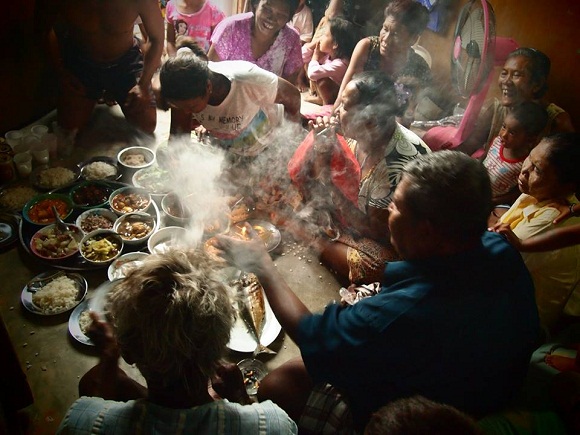
“The villagers have to prepare rice mixed with turmeric and grilled chicken while the shaman has to prepare candles, popped rice, white chicken, betel, dried leaves of the nipa palm and clear water.”
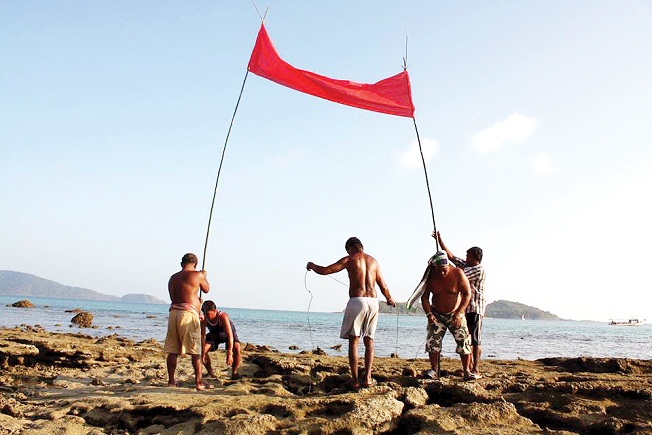
Before paying respect to the ancestors’ spirit, the shaman leads villagers to pay respect to the guardian goddess of boats, “Mae Ya Nang”, believed to protect all sea gypsies from any trouble or accidents.
After paying respect to Mae Ya Nang, the shaman will lead everyone to the village’s graveyard where Mr Ngim said it was built over three centuries ago.
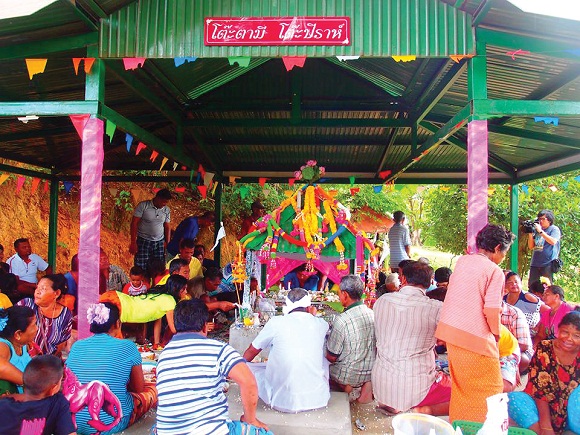
The graveyard is a wide space with a traditional spirit house next to the ceremonial altar where Balai will be set.
“The shaman will prepare everything on the table, to worship the ancestors while praying at the same time in an ancient sea gypsy language, which he learned from his teacher,” said Mr Ngim.
After the Balai ceremony, there is an exercise ceremony in the village’s centre, the space where the villagers always hold cermonies and other entertainment activities.
“Mo Rhi will start the ceremony at around 2am. He will prepare coconut flowers, betel flowers, silver and gold (artificial) leaves, raw rice, gum benzoin, candles and a knife, while the villagers have to prepare three lemons, three kaffir lime, two betel leaves, seven different colours of string, a candle and a B1 coin, which used to just be a copper coin with a hole in the middle,” he explained.
The exercise ceremony will continue until 6am in the morning when the villagers have to shower their bodies with the holy water made by Moh Rih.
“They each have a water jar. After the ceremony they will take a shower in the water, to expel all bad things from themselves then they must turn the jar upside down before the ceremony ends. Afterwards, the villagers will get white flags and rice from Balai. They must keep the white flag at home and scatter rice around the house for three days for good fortune.”
There are other ceremonies such as cleaning the graveyard, in which the whole village participates. A small ceremony is also held to show respect for their passed loved ones. They have to prepare three different colours of rice – yellow, white and black – to worship the spirits.
Another big community in the Phuket sea gypsy world is in Siray Bay where it is mainly Urak Lawoi. They have an additional ceremony, locally known as loy rua (Floating Boat) aiming to expel bad energy and give offerings to ancestors.
“The ceremony’s purpose is to get rid of bad luck and bring us good luck. It is the ancient ceremony carried out by our ancestors. We use boats as we are sea people,” said Amnouy Pramongkij, 51, Deputy Village Chief.
As the strong belief of sea gypsies is about life after death and spirits, the boat “Pla Juk”, is made from wintergreen and Devil Tree wood, which are believed to be the holy materials for making vehicles to send their family’s spirit to another world.
Wintergreen wood is normally used for carving into different shapes, representing their ancestor who came from different roots and to protect them. For example, the bird in front of the boat represents Toh Burong who can stop rain and storms.
During the ceremony, there is also local dancing with traditional musical instruments, Rammana (one-sided drum with shallow body). A village shaman also leads the ceremony with the belief that the shaman is a medium between the human world and death world.
For traditional entertainment, Urak Lawoi mostly hold similar events across the island but sea gypsies in Siray Bay seem to have an outstanding reputation.
Mr Amnouy who is also the village manager of the local band, Ponsawan, proudly presented “Rong Ngeng”, a traditional sea gypsy dance that is known throughout the Kingdom.
“My aunt, Jiw Pramong was bestowed with the Thai Notable Inheritance Preserve Artist award from Princess Sirindhorn. She can sing in Urak Lawoi language and translate [the lyrics] into Thai while also dancing.”
Rong Ngeng is a traditional performance illustrated in its language and costumes. Women who dance and sing Rong Ngeng must wear a long sleeved shirt called Ban Tong, with a long sarong and a bold coloured scarf. Men on the other hand, must wear a turban, long sleeved shirt, and trousers with a cloth around their waists .
“We are worried because our children go to school and naturally absorb the different cultures from the outside world and seem to care less about our roots,” said Mr Amnouy.
“We are trying to teach them the language, traditional ceremonies and performances but we accept that the modern world is ever-changing. There are still some kids that are practicing Rong Ngeng in my band, but not as many as before. We are trying to make our children feel attached to their roots even though we know it is difficult. We also need a helping hand from the local authorities to support us. If we do not have our own culture and tradition, we will lose our signature and at the end, the children will forget who they are. It is just a sad future for an old Sea gypsy like me.” concluded Mr Ngim.