


However, the association is still pursuing the main case, seeking to revoke the Ministry of Labour’s announcement, reports the Bangkok Post.
Teerawat Angkasakulkiat, president of the Thai Pilots Association, said the court ruled that suspending enforcement of the permission already granted would prevent authorised personnel from operating flights on approved domestic routes.
This would disrupt flight planning, affect air operators engaged in passenger and cargo transport, and impact passengers and shippers.
Referring to the Ministry of Labour’s special permission, the Ministry of Transport has already allowed private entities to temporarily lease aircraft with crew for a period not exceeding six months from the start of service.
Special work permits under this announcement were issued to 38 pilots and co-pilots to support the previous government’s policy in expanding flight operations in Thailand.
However, the association’s main petition seeking to revoke the special permission granted for foreign pilots operating domestic flights remains ongoing, as the court has already completed the inquiry process, Mr Teerawat said.
He said that although there have been no additional requests from airlines to use wet-lease arrangements specifically for this purpose during the high season, the court ruling remains crucial as it may serve as a reference standard for the current or next labour minister, if any airline submitted such a request in the future.
Despite the high season, the number of unemployed pilots remains unchanged due to delays in aircraft delivery, particularly from Boeing, he noted.
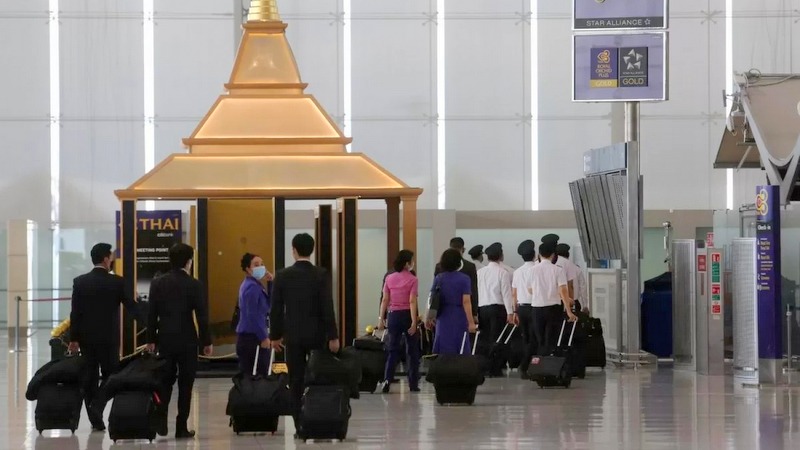
He said that Thai Airways International, which plans to deploy 15 Airbus A321neo planes, is recruiting student pilots to support its expanding fleet, as it would require at least 200 pilots to operate those aircraft.
However, this recruitment is unlikely to significantly reduce the number of unemployed pilots, as most airlines shifting their fleets to different manufacturers typically prefer to hire qualified pilots rather than student pilots.
Mr Teerawat, who also serves as a pilot for Thai Airways, expressed his support for the airline’s plan to acquire 10 Airbus A330-200s to strengthen its hub-and-spoke model, which relies on both wide-body jets like A330-200s and single-aisle aircraft, such as the A321neo.
He urged the Thai Airways board not to oppose the decision, as this matter is still under consideration at board level.