


The news broke last Sunday (Nov 19) when several Patong operators attended a meeting in Bangkok that was called by officials in the capital to discuss in detail the state of corrupt affairs in Patong.
That meeting was held just one day after Acting Inspector-General of the Royal Thai Police Gen Suchart Thirasawat issued an order to transfer Patong Police Chief Col Tassanai Orarigdech and Patong Traffic Police Chief Snr Sgt Maj Worachat Thappun to inactive posts in Bangkok pending an investigation into their affairs.
It also followed former Patong Police Chief Col Chaiwat Uikam and Patong Police Deputy Chief Lt Col Somsak Thongkleng being transferred out of Phuket on Nov 12 to the former Region 8 Police Headquarters in Surat Thani province until further notice following allegations of taking bribes from entertainment venues in Patong.
Weerawit Kreuasombat, President of the Patong Entertainment Business Association (PEBA), this week hailed Gen Suchart as Patong’s best bet for finally seeing the late-trading corruption racket brought to heel.
“Gen Suchart was in Phuket on Nov 7 to hear firsthand what the situation is in Patong. Following our meeting with him, last week we sent another request for the closing time for bars and nightclubs in the Bangla entertainment zone to be moved to 4am,” Mr Weerawit told The Phuket News this week.
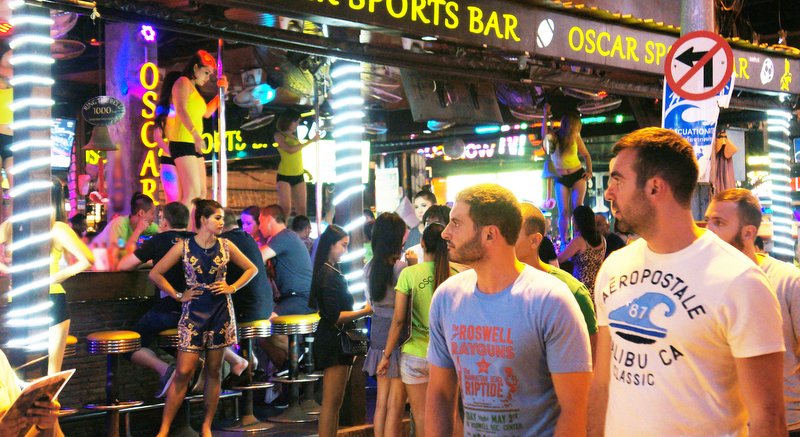
The current closing times, as evidenced in the raids in February this year that saw hundreds of tourists turfed out onto the streets, are 1am for venues inside the entertainment zone and midnight for venues outside the zone.
PEBA members currently account for 500 businesses in Patong, with at least 200 businesses in the Bangla Rd entertainment zone.
“Gen Suchart right now is our best hope for later closing times,” Mr Weerawit said on Tuesday (Nov 21).
“We have no expectations that any other office will do anything to resolve the situation.
“Changing the law is the only way to fix everything. All information and all documents regarding the issue were handed to the Office of Inspector-General last week,” he added.
Mr Weerawit declined to estimate the amount paid to police and other officials.
“I don’t want to talk about it. It doesn’t change anything if I do tell anyone. I just want the law to be fixed,” he said.
“If the trading hours were extended, there would be no reason for people to pay bribes,” he added.
Requests over the years to extend the legal trading hours in Patong have been ignored with no explanations ever given for the inaction.
The most recent request, submitted in February via the Phuket Governor of the time, Chockchai Dejamornthan, after the late-trading raids made international headlines, has still yet to yield any response from Bangkok.
Mr Weerawait dispelled rumours that Patong business operators were fearful of publicly admitting to paying bribes to keep their businesses open later as doing so would likely only see themselves arrested while any officials involved would likely remain above the law.
He also noted that even an amnesty for those who presented evidence of the corrupt payments was pointless.
“All the evidence has been handed over to the Royal Thai Police in Bangkok. We do this every year – and I am so tired of it,” Mr Weerawit said.
“Especially this year,” he added. “They have everything they need to fix this problem – but they do nothing about it… and every year you get to see the policemen moved about in transfers.
“So many officials have been down here to ‘collect evidence’ over the past eight months – and still we have heard nothing about any steps to fix this problem,” he said.
Mr Weerawit pointed out that he was involved in the move by local businessman Chart Jindapol, co-owner of an advertising and an event-organising company as well as president of Thai Global Intertrade Co, which is a major exporter of halal food to Middle Eastern Islamic countries, and several other companies, to draw the issue into the full view of the public in 2013.
“Four years ago I joined with Khun Chart – even then the bribes were nothing new, they had been paid for years,” he said.
Mr Chart publicly revealed that at the time some B50 million per month was paid to police and other officials from a total of 17 different law-enforcement offices and government agencies.
However, police at the time declined to investigate the claims as they said they were currently only focussing on spearheading a campaign against the Patong tuk-tuk and taxi mafia.
But old habits die hard.
“Even after the public admission of bribes was made last Sunday, the business operator who spoke about it was intimidated by several officials over it,” Mr Weerawit explained.
“This also affects foreign investors setting up businesses in Patong. Several operators have been forced to pay money to police – and there is nothing we can do about it.
“This is affecting the image of Patong and the decision of whether to even open a business here,” he said.
Mr Weerawit argued that extending the legal closing times in Patong would bring forth many other benefits, not just clear the stain of corruption that permeates throughout the town.
“If the closing times are made later then businessmen can pay the right fee to the government to be able to legally stay open later. Patong entertainment business operators are willing to do this,” he said.
“This way the government gets the money. The government can collect more in taxes and staff can be legally paid for the extra hours they work – with social insurance covered – and those incomes will also be subject to income tax, which means even more money for the government.
“Those who benefit most are the staff working in these businesses. They can make more money, which will give them the opportunity for a better life,” he said.
But most of all, extending the nightlife trading hours would bring a large portion of Patong’s illicit economy out of the dark and into the light, Mr Weerawit explained.
“This will bring all the illegal money paid into the world of legal income and taxes,” he said.