


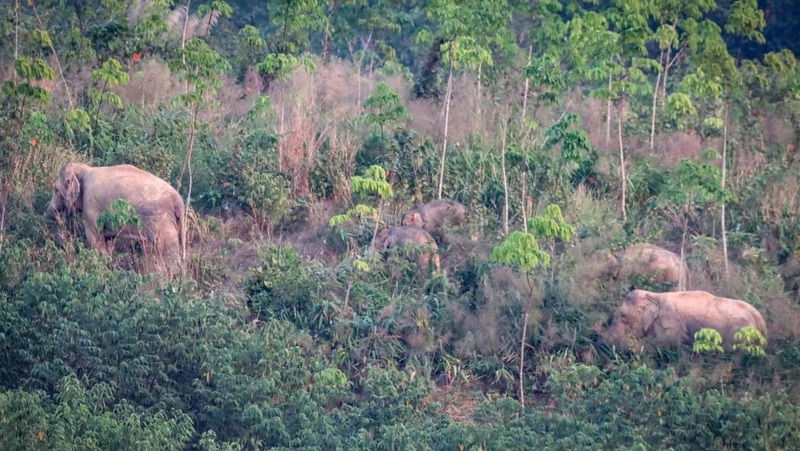
Wildlife authorities and a veterinary team administered the shots to three female elephants in Trat province on Monday, said Sukhee Boonsang, a director of the Wildlife Conservation Office, under the Department of National Parks, Wildlife and Plant Conservation.
The aim was to manage the wild elephant population, he told AFP, adding that the mammals’ birth rate in five provinces in eastern Thailand was rising by about 8% yearly compared to 3% in other regions.
This “will cause more conflict between humans and elephants in the long term if we let it continue”, Mr Sukhee said.
Veterinarians and officials administered the vaccines using a dart gun without anaesthesia, the conservation office said in a statement.
Wild elephant numbers in Thailand rose from 334 in 2015 to almost 800 last year, with thousands more in captivity, reports the Bangkok Post.
Human-elephant conflict has caused almost 200 human fatalities and more than 100 elephant deaths since 2012, the office said.
Asian elephants, Thailand’s national animal, are classified as endangered globally by the International Union for the Conservation of Nature.
Mr Sukhee said the three elephants had been checked for signs of infection, were well and “living their normal life”, adding that his team would follow up with blood tests every six months.
The vaccine was tested on seven captive elephants in northern Chiang Mai two years ago with no side effects, he said.
Another 15 doses will be used on elephants in other herds in Thailand before the rainy season starts from May, Mr Sukhee said.
A SpayVac shot given to a female elephant delivers a birth control effect lasting seven years. The shots, which do not alter the elephants’ behaviour or physical features, only regulate their hormone levels to keep them from conceiving.