



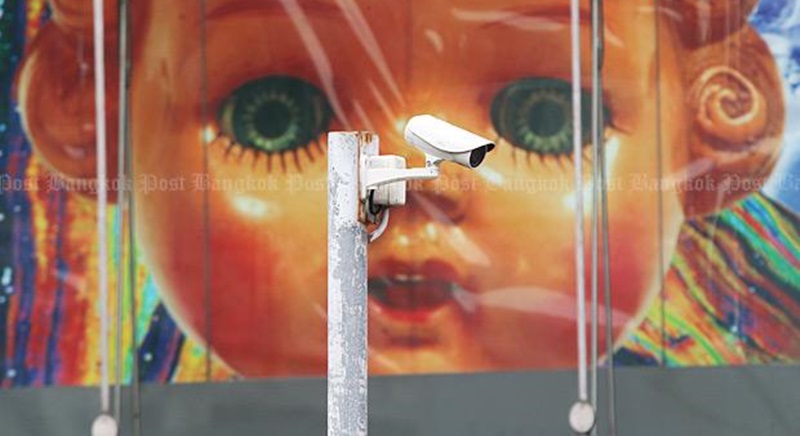
Social media users have ripped the Bangkok Metropolitan Administration for the fuzzy closed-circuit television photos of the “man in yellow” wanted the deadly August 17 bombing. People complained the images werenʼt nearly as clear as those taken by traffic cameras, which clearly showed licence-plate numbers of cars speeding or running red lights.
Tripob Khantayaporn, director of the BMAʼs Traffic Systems Development Division, argued that the BMAʼs inexpensive CCTV cameras were used for wide surveillance, not targeting specific spots.
“The image-recording system of traffic-police CCTVs aims to capture a particular spot to get a clear shot of an offending vehicle. The BMA system records panoramic views in a surveillance-mode manner,” Mr Tripob explained.
Mr Tripob said such traffic cameras cited by internet users featured very-high-definition resolution and each cost more than B100,000, while general City Hall CCTVs cost less than B40,000 each.
“Today Bangkok has around 57,000 CCTVs in operation. We have fixed their specifications to respond to our work needs. And they are certainly worth the money spent,” Mr Tripob said.
He added the BMA street cameras could be adjusted to focus on a specific location instead of a wide shot if necessary.
Mr Tripob said the city hall began to install 2,500 CCTVs between 2007 and 2011. Their resolution then was only one-third of a megapixel – 36 times less than todayʼs high-end smartphones – and each camera cost B30,000.
During 2012-2013, the BMA purchased another 10,000 CCTVs with resolution of one megapixel.
It later installed more than 10,000 five-megapixel CCTVs at major intersections last year and this year. Each camera cost about B30,000.
Read original story here.