



In Thailand, defamation is not only a civil suit action. It is a criminal offense. Under Section 326 of the Thai Criminal Code, defamation is defined as whoever imputes anything about another person to a third person in a manner likely to impair the person’s reputation or place the person in contempt or hatred by others.
Chalong Police confirmed the charge through a post on their own Facebook page on Monday (Aug 21).
The charge alleges that the man had damaged the reputation of the Traffic Police Division of the Royal Thai Police, and specifically of the traffic police officers seen in the video.
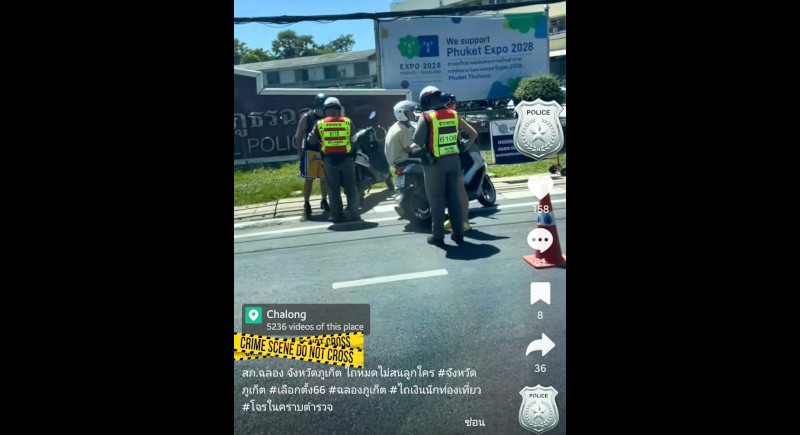
The man, not named by police, had uploaded a video showing Chalong Traffic Police stopping people on motorbikes at a checkpoint.
Accompanying the post was the note in Thai: “Chalong Police take everything” followed by “Don’t care about anyone’s children.”
The post also included the hashtags, also in Thai: #PhuketProvince #Election66 #ChalongPhuket #takemoneyfromtourists #thievesinpoliceuniform
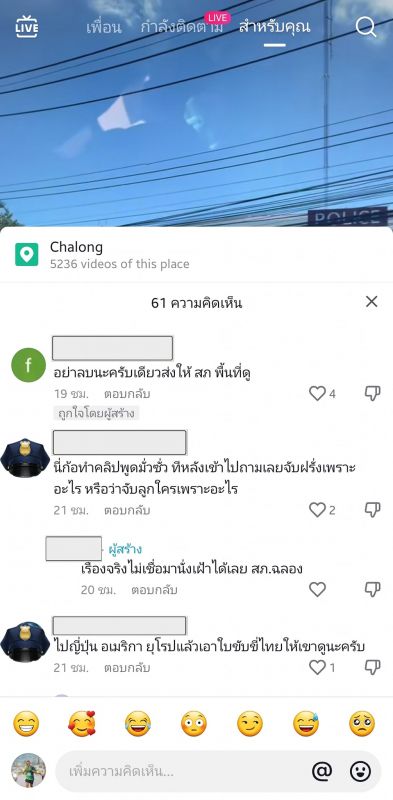
The post had received more than 150 “hearts” and was forwarded at least 36 times.
The man presented himself at Chalong Police Station on Monday to meet Pol Lt Col Peerasit Nupayan, Chalong Police reported.
The man “felt remorse for having acted recklessly”, Chalong Police said.
He presented a gift basket and “apologised to all traffic police officers”, and “apologised to all traffic police who were unknowingly posted in the clip”, Chalong Police added.
However, despite the apology, Chalong Police are continuing with the charge, maintaining that they were carrying out their duties correctly at the time of the video recording, Chalong Police confirmed.
The man acknowledged the charge against him, Chalong Police said.
Of note, national police chief Pol Gen Damrongsak Kittipraphat in February issued an order stipulating the conditions under which police must set up checkpoints and conduct patrols and perform their duties at inspection points.
The order was presented as highlighting that police officers must wear bodycams while performing duties at checkpoints.
The order followed the Royal Thai Police coming under fire for a slew of cases involving corrupt officers, including the extortion of B27,000 from a high-profile Taiwanese actress for carrying an e-cigarette.
The new checkpoint regulations were introduced by the national police chief “in order to achieve transparency and standards”, said the Traffic Police notice.
"If body cameras are not available, checkpoints are not allowed. It is crucial that every officer wears the designated uniform during checkpoint operations and remains within the designated duty area,” Pol Gen Damrongsak said.
However, the same notice clearly noted that members of the public have the right to take photos and record videos of police performing their duties at police checkpoints.
The notice was posted publicly just 10 days before a German tourist went public about a Chalong Police officer asking him to pay a fine of B5,000 for illegally riding a motorbike through the Chalong Underpass, then suggesting and accepting B2,000 cash by the side of the road. No receipt was given to the tourist for the cash handed over.