


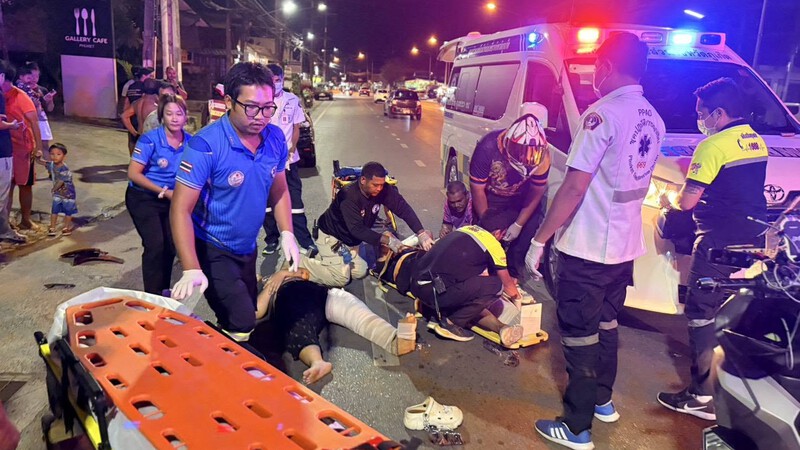
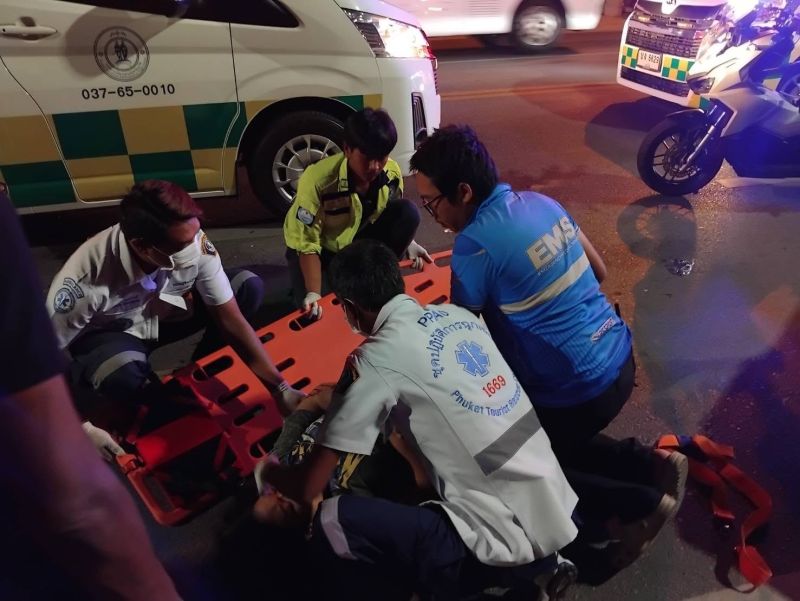
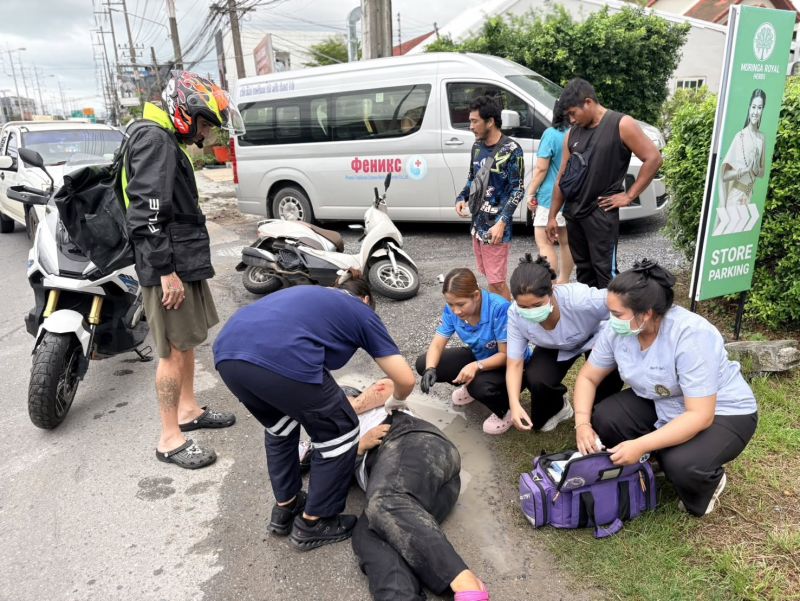
The figures highlight the continuing human cost of road crashes in one of Thailand’s busiest tourism provinces, where residents, migrant workers and millions of visitors share roads increasingly dominated by motorcycles.
According to Ministry of Public Health road injury surveillance data (RTI-D), Phuket recorded 14,109 road crash casualties between Jan 1 and July 4 this year, including 7,238 outpatient cases, 6,871 inpatient admissions, and 92 fatalities.
The statistics reveal a persistent road safety crisis on the island, where experts say the greatest risks stem not from a lack of awareness, but from dangerous behaviour behind the handlebars and wheel.
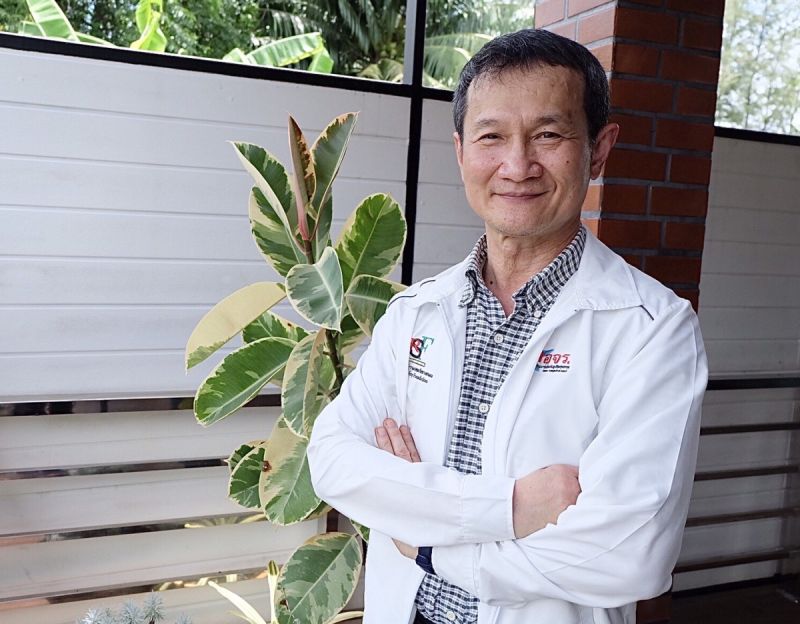
“The main problem in Phuket is that we don’t have enough public transportation. That’s why motorcycles are the primary mode of transport for both workers and tourists,” said Dr Wiwat Seetamanotch, Manager of Thailand’s WHO Road Safety Partnership Programme and Legal Development Programme.
While Phuket did not rank among Thailand’s five deadliest provinces during the period, Dr Wiwat said the island continues to carry a disproportionately high road injury burden relative to its population, with motorcycle users accounting for the overwhelming majority of serious casualties.
Nationally, Thailand recorded more than 582,468 road injuries and 7,957 deaths over the same period, averaging about 44 road deaths every day.
But for Phuket, Dr Wiwat said the underlying causes of fatal crashes remain clear.
“As for injuries and fatalities, the primary cause is speeding. Another significant issue is drunk driving, especially at night and among tourists,” he said.
The combination of excessive speed, alcohol consumption and low helmet use continues to fuel serious crashes across the island, particularly during night-time hours when enforcement becomes more difficult.
Patong remains one of the most challenging environments for road safety enforcement, with heavy traffic continuing well into the early hours because of its role as Phuket’s main entertainment district.
“The majority of fatalities still involve motorcycle users, and helmet use among those injured and killed remains low,” Dr Wiwat said.
“This is especially at night or during times when traffic police have limited ability to fully enforce the law.”
The result is a dangerous mix of risk-taking behaviour, alcohol consumption and inadequate protection that continues to claim lives despite ongoing efforts by authorities.
DESIGN RISKS
While human behaviour remains the dominant factor, Dr Wiwat said Phuket’s road network amplifies the consequences of mistakes.
Many of the island’s main roads were designed decades ago for much lower traffic volumes and now serve densely populated communities, tourism centres and commercial corridors.
“Many roads are four-lane or six-lane, passing through urban areas with dense communities along the routes,” he said.
“This results in constant intersections and mixed traffic conditions, with vehicles entering and exiting side streets throughout main corridors.”
The situation creates frequent conflict points between motorcycles, passenger vehicles, delivery trucks and tourist traffic, particularly along major transport routes where development has expanded rapidly.
Unlike many provinces, Phuket’s roads also present a more complex driving environment.
Dr Wiwat described the island’s network as effectively “three-dimensional”, with steep hills, sharp curves and frequent elevation changes creating hazards largely absent in flatter urban centres.
Heavy rain, slippery surfaces and mud washed onto roads further increase risks, particularly for motorcycle riders who have less stability and protection than occupants of larger vehicles.
Dr Wiwat said sudden braking while cornering or descending steep roads remains a common factor in serious motorcycle crashes.
“This remains a common mechanism behind serious motorcycle crashes on downhill and wet roads,” he said.
Tourists and inexperienced riders unfamiliar with Phuket’s terrain are particularly vulnerable.
SAFETY MEASURES
Despite the grim statistics, Dr Wiwat said road deaths can be significantly reduced through a combination of stronger enforcement, safer road design and improved vehicle safety.
He estimated that effective enforcement of speed limits, helmet laws and drink-driving regulations could reduce deaths and injuries by as much as 30-40%.
“If these laws are enforced effectively, it will significantly improve road safety,” he said.
Measures such as speed tables, speed bumps and other traffic-calming infrastructure are also increasingly being introduced near schools, markets, communities and commercial areas to reduce vehicle speeds before drivers enter high-risk pedestrian zones.
“Traffic engineering tools like speed tables and speed bumps are being promoted in areas such as communities, schools, shopping malls and markets to slow vehicles before entering high pedestrian zones,” he said.
Dr Wiwat pointed to improvements along a 15.6-kilometre section of Thepkrasattri Rd, where redesigned U-turns helped reduce annual fatalities from an average of five deaths to one. Provincial officials this month reported no fatalities at the upgraded locations during the four months since the work was completed.
Similar interventions are now being considered elsewhere. “Small roundabouts are also being considered at intersections such as Bang Thong in Kathu, where complex traffic flows and limited visibility make traditional signal systems less effective,” he said.
While Phuket cannot eliminate steep roads, sharp curves or heavy rainfall, Dr Wiwat said wider adoption of motorcycles equipped with Anti-lock Braking Systems (ABS) could help riders maintain control during emergency braking and reduce skidding on wet surfaces.
He also warned of continuing risks posed by buses and heavy trucks on steep routes such as Patong Hill, where prolonged downhill braking can lead to brake failure.
Yet if forced to choose a single measure capable of saving the greatest number of lives, Dr Wiwat said the answer was simple.
“If everyone on the island wore helmets correctly and consistently, it could reduce fatalities by dozens per year,” he said.
LATEST RESPONSE
The renewed focus on road safety comes as Phuket officials continue to invest heavily in engineering and infrastructure measures aimed at reducing crashes across the island.
Just days before Dr Wiwat’s warning, provincial authorities approved plans to continue funding road safety projects through the Phuket Road Safety Fund, with B4 million allocated for the 2026 fiscal year.
At a meeting chaired by then-Vice Governor Adul Chuthong last month, officials reviewed ongoing programmes and considered new funding requests, including a public-awareness campaign targeting residents, tourists and tourism operators, and a project aimed at improving safety standards among public motorcycle taxi operators and passengers.
The meeting followed a session of the Phuket Provincial Road Safety Centre on June 9, where officials highlighted encouraging results from infrastructure improvements implemented under the province’s ‘Safe & Seamless Phuket’ initiative.
Among the projects cited was the upgrading of temporary U-turn openings along Thepkrasattri Rd into permanent concrete U-turn facilities, where officials reported no fatalities during the four months following completion of the work.
Authorities also outlined plans to expand traffic-calming measures, including raised pedestrian crossings, speed tables, mini-roundabouts and redesigned road layouts intended to naturally reduce vehicle speeds in high-risk areas.
Additional projects under consideration include improvements along Phra Baramee Rd, the Koh Siray Bridge approach, Pattana Rd and several roads in Patong, together with expanded CCTV monitoring and helmet-promotion campaigns.
The province is also exploring ways to reduce motorcycle dependence among workers by encouraging large employers to provide staff shuttle services.
Officials said future projects would continue to be selected using a data-driven approach based on accident records, hospital data and engineering assessments.