


According to Yunyong Thaicharoen, chief economist and sustainability officer at Siam Commercial Bank (SCB), growth of less than 2% is not normal for the Thai economy and represents the lowest expansion in three decades, excluding major crises such as the 1997 Asian financial crisis, the 2008-09 global financial crisis, the COVID pandemic, Thailand’s great flood in 2011, and coups.
"The key issue is political commitment. It must begin with clear signals from the political sector to continuously support these efforts, and to make economic reform an issue that all political parties prioritise," said Mr Yunyong, reports the Bangkok Post.
He said the factors affecting the Thai economy are not temporary ‒ local economic growth has been steadily declining. Economic reform is critical, whether by removing regulations that hinder investment or creating new growth engines for the country, said Mr Yunyong.
This requires time and cooperation from all sectors, he said.
"In the short term, economic reform will produce both winners and losers, but in the long run everyone will benefit. The challenge lies in establishing mechanisms to support those who are adversely affected in the short term, in order to build public support for genuine economic reform," said Mr Yunyong.
SCB forecasts Thai economic growth in 2026 of only 1.5%, slowing from this year’s expected expansion of 2%. The Thai economy next year will be affected by US President Donald Trump’s tariffs and intensified global trade competition, causing Thai export values to contract by 1.5%, compared with an expected expansion of 10.8% this year.
Meanwhile, the global economy is expected to grow by 2.5% next year, down from 2.7% this year, pressured by US tariffs.
In terms of tourism, Mr Yunyong said this year’s performance was weak, contracting by 7%, with 2026 expected to register a gradual recovery as tourist arrivals increase from 32.9 million to 34.1 million, up by 4%.
This level remains below the 2019 peak of almost 40mn visitors, due partly to intensified competition as many countries promote their own tourism sectors.
Regarding the domestic economy, he said investment this year is expected to expand by 1.6%, dipping to 1% next year.
The outlays are attributed to foreign direct investment supported by the Board of Investment, concentrated in sectors such as digital industries, electric vehicles and electronics.
However, these sectors have relatively high import content and limited domestic supply chains. As a result, Mr Yunyong said the short-term benefits may be limited, but in the long term, if Thailand can better leverage these technologies and develop stronger local supply chains, the benefits to the Thai economy will be greater.
Meanwhile, investment in other sectors remains sluggish. Investment in Thailand’s real estate sector next year is expected to contract for another year, reflecting relatively weak purchasing power.
Household consumption remains fragile in terms of income and employment.
Incomes are stagnating or even declining, and job vacancies are decreasing, with new graduates being particularly affected.
Household debt is still in a phase of gradual deleveraging, with households remaining cautious in their spending, he said.
A potential reduction in government stimulus is expected to slow household consumption growth to 1.9% next year, down from an estimated 2.5% in 2025, noted the SCB.
In the financial sector, the Monetary Policy Committee is expected to cut interest rates from 1.5%, likely two times by the first half of next year, bringing the rate down to 1%.
The objective is to support the economy rather than stimulate demand, given ongoing economic risks and fiscal policy constraints, said Mr Yunyong.
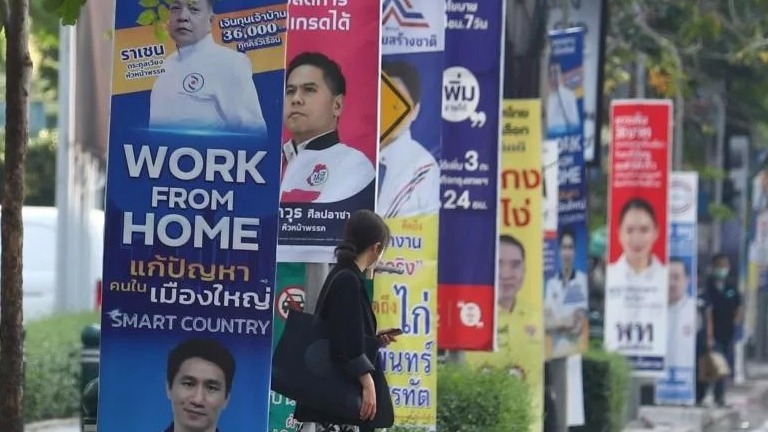
The election and the formation of a new government are expected to take around five months. If a new government is formed on schedule, growth is unlikely to fall further, he said.
However, prolonged delays could undermine confidence. A new government is expected to be in place by May or June next year, said Mr Yunyong.