


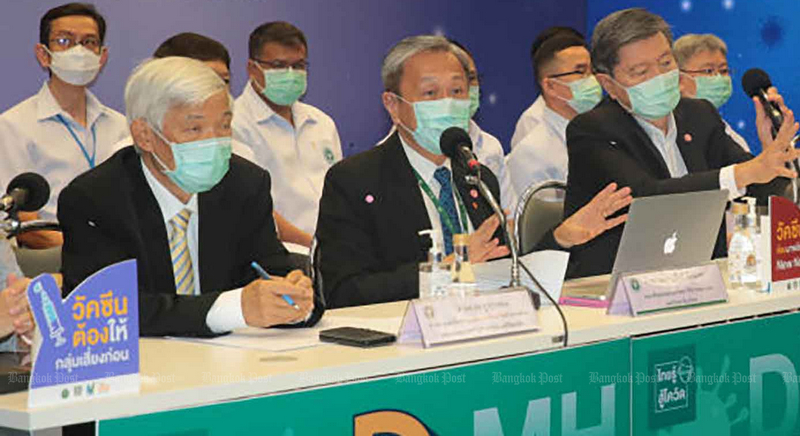
Dr Yong, chief of the Centre of Excellence in Clinical Virology at Chulalongkorn University, yesterday (May 2) posted on his Facebook page that concerned agencies must ramp up measures to keep the B.1.351 variant from spreading in the country.
He said there are five mutations in circulation in Malaysia and the most worrying is this new one which accounts for 31% of all current infections in the country.
“There is a possibility that this variant may enter the country via the south. The UK variant which is currently spreading in Thailand didn’t fly in, but walked in through natural border crossings,” he said.
Dr Yong said the South African variant will reduce the efficacy of the COVID-19 vaccines currently in use and efforts have to be made to prevent it from entering the country.
He said the discovery of another new variant spreading in Indian state quarantine facilities is not unusual and should not be a cause for concern as these are facilities equipped to monitor and test those individuals until they test negative again.
Protect elderly
Meanwhile, the government is urging families to do what they can to protect elderly members of their households from the risk of infection while others are forced to work and travel in areas where COVID-19 outbreaks are prevalent.
At its daily briefing yesterday, Dr Apisamai Srirangson, the Centre for COVID-19 Situation Administration (CCSA) assistant spokeswoman, said many infections in families had been brought home from workplaces or spread at gatherings such as religious ceremonies, wedding parties, ordination rites and funerals.
Previously, the CCSA had focused on heightening measures to prevent contagion in public places; but with COVID-19 now so prevalent across the country, households are no longer as safe as they used to be, she said.
“So, if possible, elderly family members and bed-bound patients should be separated from family members who still are travelling into areas where there is a risk of infection,” she said. “If that is impossible, please avoid doing the activity together.”
The CCSA recorded 1,940 new cases of COVID-19 yesterday, of which 1,788 were detected under the CCSA’s COVID-19 surveillance system while another 142 cases were detected in active case-finding operations.
The remaining 10 were imported cases detected at state COVID-19 quarantine facilities.
Another 21 deaths were reported, bringing the toll to 245 so far, said Dr Apisamai.
Of the 21, eight were in Bangkok, four in Chiang Mai, two each in Chon Buri and Lamphun and one apiece in Nakhon Pathom, Tak, Rayong, Nakon Sawan and Udon Thani, she said.
A total of 1.4 million doses of the vaccine have been administered, she said.
Since the implementation of stricter control measures including the work-from-home policy and shutting down night entertainment venues after Songkran holiday, the overall situation has now begun to improve, as evidenced by a steady fall in the infection rate, she said.
Bed shortages are easing now, with patients only having to wait one or two days, on average, to be admitted for treatment, she added.