


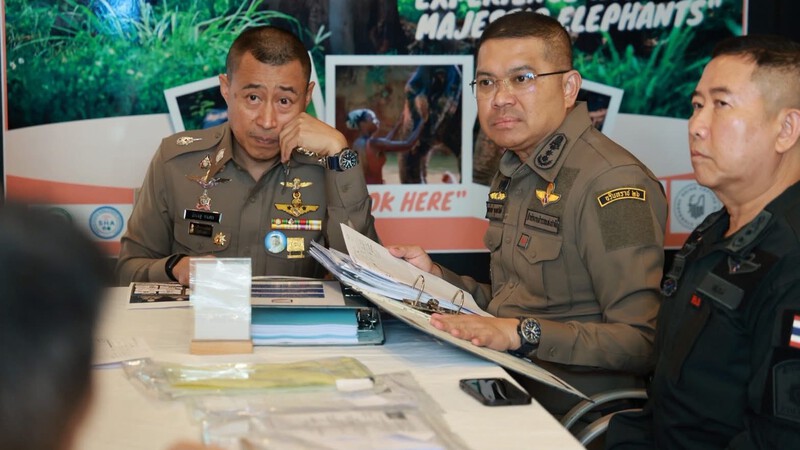
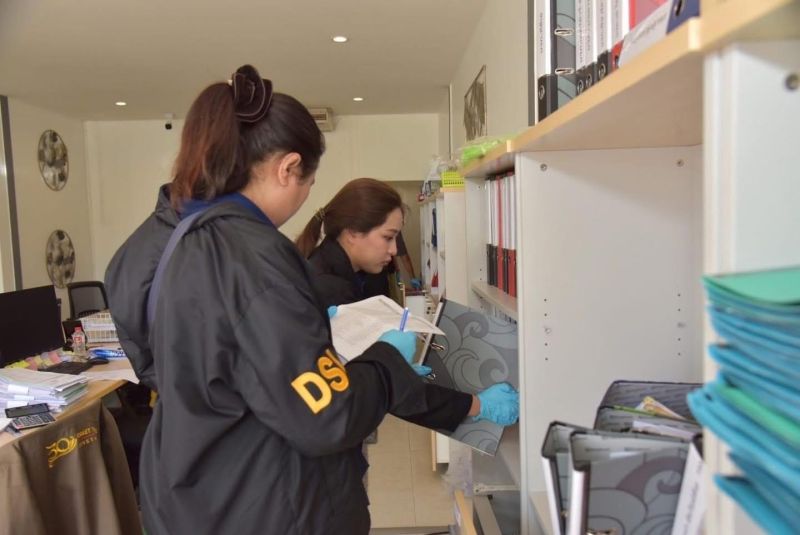

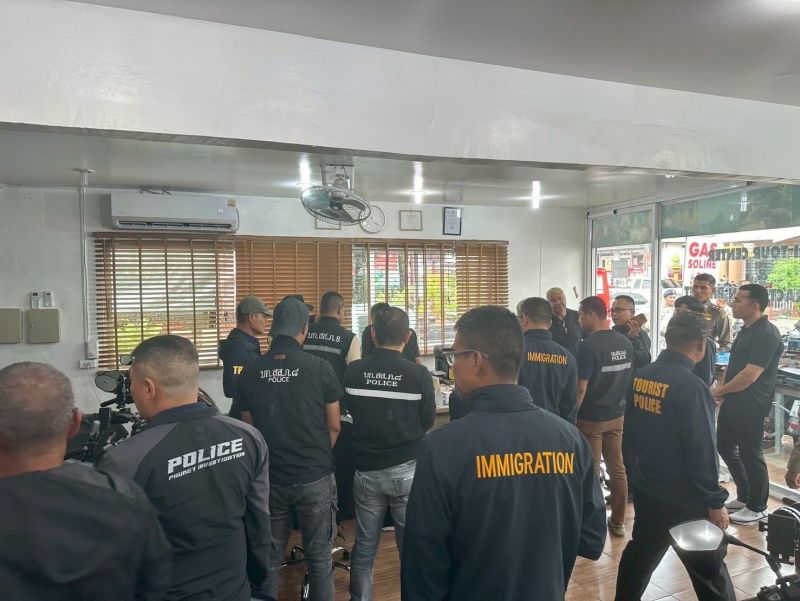
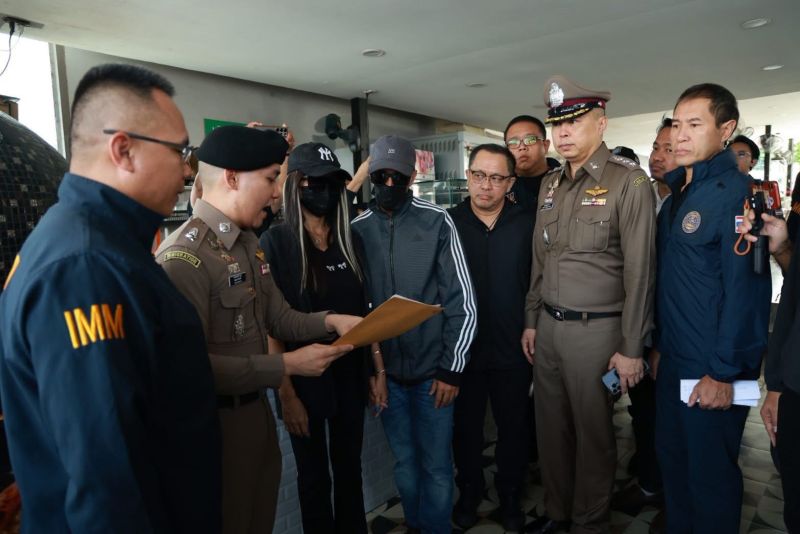
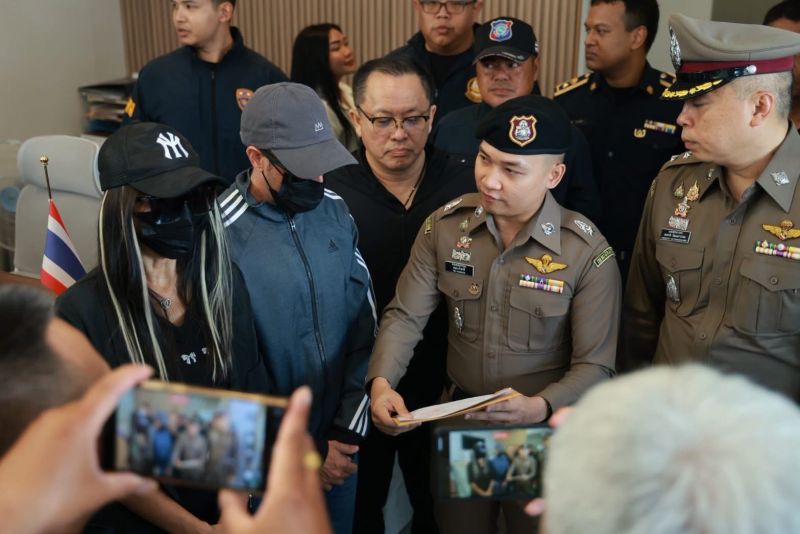
Deputy National Police Chief Pol Gen Samran Nualma and National Police Inspector-General Pol Lt Gen Nophasil Phoolsawat, together with senior officers from Region 8 Police, Phuket Provincial Police, Immigration Division 6 and representatives from the Department of Business Development, Department of Lands and other government agencies all massed in Phuket on June 20 to launch an intensive crackdown on nominee businesses.
Police said the operation follows directives from Prime Minister Anutin Charnvirakul and Royal Thai Police Chief Pol Gen Kitrat Phanphet to intensify action against the illegal use of Thai nationals to hold assets or operate businesses on behalf of foreigners.
Since then police have arrested foreign suspects, charged Thai nominee shareholders and launched legal action against dozens of companies accused of concealing foreign ownership. Yet authorities have provided no indication they are investigating the lawyers, accountants, company formation agents or other professionals who may have established and maintained those companies.
On July 15, the Department of Business Development (DBD) said preliminary investigations had identified lawyers and accountants involved in establishing illegal nominee structures. The department announced a nationwide effort with professional bodies to tackle what it described as the “root cause” of nominee businesses.
The contrast raises an obvious question: if Bangkok says facilitators are part of the problem, why are Phuket authorities not saying whether they are part of the investigation?
MISSING LINK
A nominee company does not simply appear. Someone prepares incorporation documents, advises on ownership structures, files registration paperwork and secures approval before the company becomes a legal entity.
If investigators now believe companies were established to conceal foreign ownership in breach of the Foreign Business Act, it naturally raises questions about whether those who facilitated their creation are also being investigated.
The Phuket News put that question directly to Phuket Provincial Police Commander Pol Maj Gen Sinlert Sukhum.
Rather than answer whether lawyers, accountants or company formation agents were under investigation, he referred enquiries to the Phuket Provincial Commerce Office, which oversees company registration.
Maj Gen Sinlert said police investigate offences only after evidence has been identified.
“We are currently working on it,” he said. “These are complicated cases. It’s not like we can arrest them immediately. We need evidence first.”
He confirmed investigators had examined about eight to 10 companies during the latest phase of the operation but declined to provide further details while enquiries continue.
Asked specifically whether investigations had expanded to include law firms or accounting firms that may have assisted nominee companies, he again referred questions to the Commerce Office.
THE DODGE
The Phuket News then put the same questions to Phuket Provincial Commerce Office Chief Waranit Apiratjirawong.
She was asked whether lawyers, accountants, company formation agents or other professionals involved in establishing suspected nominee companies were being investigated, whether any had been identified, whether offices had been searched and whether disciplinary proceedings were under way.
Ms Waranit did not directly answer those questions. Instead, she outlined the province’s ongoing nominee suppression campaign, saying investigations were continuing jointly with police, the Land Office and other agencies under the direction of Vice Governor Pol Lt Col Khetarat Chansilp.
She noted that authorities were investigating thousands of companies considered at risk of nominee arrangements but did not explain whether enquiries extended to those who helped establish them.
‘ROOT CAUSE’
The gap became more apparent after the DBD’s July 15 statement. DBD Director-General Poonpong Naiyanapakorn said preliminary investigations had found that some lawyers and accountants had advised or assisted in establishing companies using Thai nominees to conceal foreign ownership.
The department responded by convening a meeting with the Lawyers Council of Thailand, the Federation of Accounting Professions and other professional organisations.
Professional bodies were urged to ensure members did not facilitate nominee structures and to impose the strongest disciplinary penalties on those found involved.
Mr Poonpong described lawyers and accountants as the starting point for many foreigners establishing businesses in Thailand. If those professionals refuse to facilitate illegal nominee arrangements, he said, the problem can be significantly reduced.
He described the strategy as cutting off the “root cause” rather than dealing only with the consequences.
The DBD also reminded the public that the Foreign Business Act penalises not only foreigners using nominee structures but also Thai nationals who assist or allow their names to be used to conceal foreign ownership.
Those convicted face up to three years’ imprisonment, fines of B100,000 to B1 million, or both.
WIDESPREAD
According to the Phuket Provincial Commerce Office, more than 6,600 legal entities across Phuket have been identified as presenting a high risk of operating as nominee companies.
The businesses span six sectors: land trading, real estate, tourism, hotels and resorts, e-commerce and agricultural products.
The latest enforcement campaign, launched in June as Phase 3 of the Andaman Coast Foreign Nominee Network Dismantling Operation, targeted Phuket, Phang Nga and Krabi.
Authorities searched dozens of locations, arrested foreign suspects, charged Thai nationals under the Foreign Business Act and initiated legal proceedings against 39 companies in Phuket alone. Investigators have also expanded enquiries into land ownership linked to nominee structures.
The campaign has become one of the government’s highest-profile law enforcement operations in Phuket this year.
Pressure is also mounting from within Parliament. Phuket MP Chalermpong Saengdee has repeatedly argued that nominee businesses remain one of the province’s biggest economic threats.
Earlier this month he asked the Phuket Provincial Commerce Office to investigate an individual listed as director of five companies suspected of concealing foreign ownership through nominee arrangements, and requested an investigation into how the individual obtained Thai citizenship.
GREY IMAGE
Officials themselves are also suffering from the public perception that nominee companies cannot exist without corrupt, or at best very inept, officials playing their role.
A nationwide survey released by the National Institute of Development Administration (NIDA) last Sunday (July 19) found that corrupt government officials were viewed as the main factor enabling foreigners to operate illegal businesses in Thailand.
According to the poll, 67.1% of respondents blamed corrupt officials, followed by lenient penalties (59.31%), legal loopholes (52.21%) and corrupt politicians (50.46%).
Almost half also blamed Thai nationals willing to assist foreigners, while 44.35% said officials who ignored offences contributed to the problem.
The survey of 1,310 adults was conducted from July 14-16 as authorities continued major operations targeting nominee businesses.
The findings suggest growing public concern that enforcement should extend beyond nominee shareholders and foreign operators to include those who enable illegal business structures.
INVESTOR CONFIDENCE
Phuket Real Estate Association President Maetapong Upatising said foreigners who legally purchase condominium units under Thai law should have little cause for concern.
Foreigners may legally own condominium units provided foreign ownership remains within statutory limits and all legal requirements are met.
He distinguished that from land ownership, which foreigners cannot hold directly, making attempts to conceal ownership through nominee companies unlawful.
Mr Maetapong advised buyers to conduct proper due diligence before purchasing property and suggested stronger enforcement against illegal nominee structures could ultimately strengthen Phuket’s property market by encouraging lawful investment models.
Yet one question remains unresolved: will enforcement stop with foreign operators, Thai nominee shareholders and the companies themselves, or will it extend to those who helped create them?
For now, that remains the most conspicuous blind spot in Phuket’s nominee crackdown.