



Despite being a centrepiece of the party’s election campaign, no formal proposal has been tabled in parliament, no legislative framework has been made public and no timeline has been set ‒ leaving a widening gap between political promises and tangible action.
The issue carries strong public interest in Phuket, which generates an estimated B500 billion annually in tourism revenue but continues to struggle with mounting infrastructure pressures, environmental strain and uneven distribution of economic benefits.
THE PLEDGE
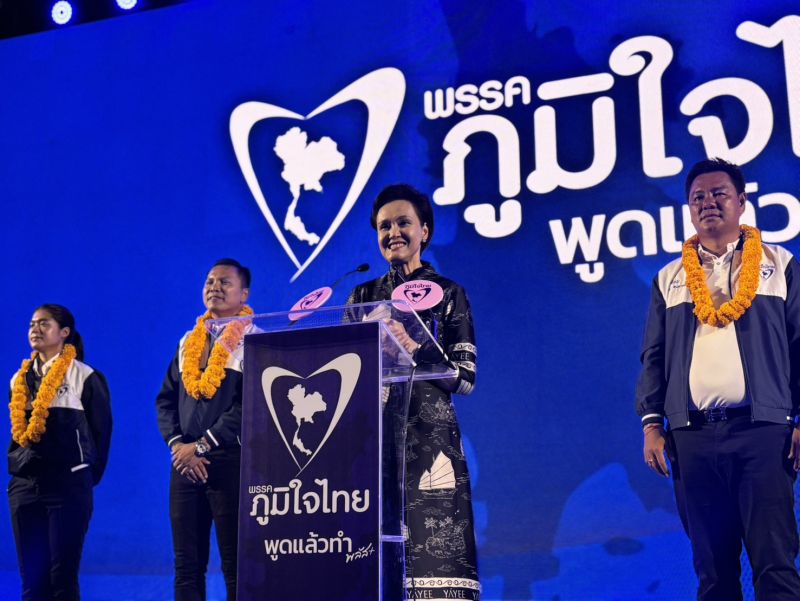
The SEZ proposal was prominently outlined by Deputy Prime Minister and Commerce Minister Supajee Suthamphan during a campaign event at Saphan Hin on Jan 28, just days before the February 8 national election.
Speaking on national television, Ms Supajee described Phuket as a province with “immense potential” but burdened by structural challenges that require a new governance and funding approach.
“The real problems… are multifaceted in Phuket,” she said, citing infrastructure shortfalls, unequal tourism income distribution, expenditure management and illegal employment.
She argued that addressing these issues in Phuket would not only improve the province but also strengthen national economic performance.
At the core of Bhumjaithai’s proposal is a shift in how revenue generated in Phuket is managed. Rather than relying heavily on central government allocations, the party has proposed allowing a greater share of locally generated income to remain within the province to fund development.
Ms Supajee pointed to Phuket’s waste crisis as a clear example. The island faces an estimated 1.2 million tonnes of accumulated waste, with only one operational incinerator and a second under construction.
“If one incinerator malfunctions, it will have a significant impact,” she said, adding that local funding would allow faster investment without relying on central budgets.
The party has framed its approach not as redistributing existing state revenue, but as expanding overall economic output ‒ particularly by further developing the Andaman region as a global tourism hub.
“Our approach is to expand the pie,” Ms Supajee said, explaining that higher tourism revenue would generate increased tax income, allowing a portion to be retained locally without reducing central government receipts.
She added that efficient expenditure management would be key, arguing that “every baht saved should be considered profit for the people of Phuket”.
However, beyond these broad principles, few operational details have been provided. Ms Suphajee’s ‘revenue generation’ policy also did not explain just how the money generated by Phuket will go directly to addressing critical issues in Phuket.
NO ACTION
More than two months after the election, there has been no visible legislative movement. No draft SEZ bill has been submitted, no policy framework released and no implementation timeline announced.
Attempts by The Phuket News to seek clarification from Bhumjaithai representatives and Ms Supajee since Feb 10 ‒ including multiple follow-ups ‒ have gone unanswered.
The absence of detail has fuelled criticism that the policy remains largely aspirational rather than actionable.
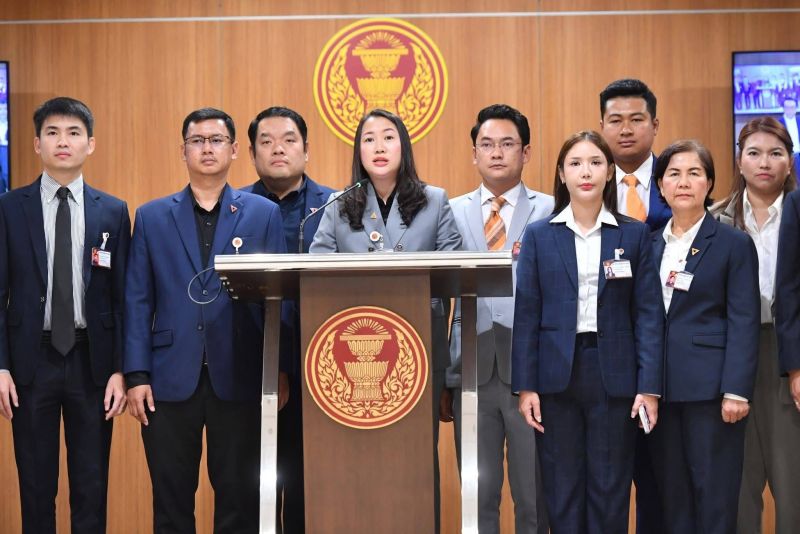
Opposition MPs representing Phuket say the lack of progress is clear. Phuket MP Chalermpong Saengdee said on Apr 3 that there has been no formal move to bring the SEZ proposal before parliament.
“It’s probably more of a campaign rhetoric typical of political parties,” he said.
Mr Chalermpong pointed to the Interior Ministry’s Mar 9 public hearing on a proposed “Hometown Tax” scheme as an indication of the government’s current direction.
The scheme would allow up to 10% of income tax collected in an area to be spent locally, while also encouraging tax-incentivised donations to support public services ‒ such as already used in Phuket to fund Vachira Phuket Hospital’s new cancer treatment centre.
However, MP Chalermpong argued that such measures fall short of meaningful reform. “What we really need is power ‒ administrative power, budgetary power and personnel power ‒ for local authorities to manage their areas,” he said. “Not a ‘Hometown Tax’.”
Fellow Phuket MP Somchart Techathaworncharoen echoed the criticism. “I haven’t seen anything concrete from the Bhumjaithai Party yet,” he said.
Both MPs pointed instead to a competing initiative led by the People’s Party, which has submitted nine draft decentralisation laws aimed at expanding local governance nationwide.
SEZ SIDESTEP
Rather than pursuing SEZ status directly, the People’s Party is advocating a broader restructuring of governance.
Their proposals focus on three pillars: expanding administrative authority through a “negative list” system, increasing local revenue powers ‒ including borrowing and bond issuance ‒ and granting local governments greater control over budgets and financial regulations.
Mr Chalermpong said the approach is designed to deliver genuine self-governance, rather than relying on a special designation that may not fundamentally change how decisions are made.
“This is about unlocking work, money and power,” he said.
The divergence highlights a growing policy divide over how Phuket’s long-standing structural challenges should be addressed.
LEGAL RISKS, PAST FAILURE
Even if the government moves forward, significant legal hurdles remain.
A previous attempt to establish a Phuket-specific governance model ‒ the Phuket Metropolitan Administration Act ‒ was rejected last year after being deemed inconsistent with constitutional provisions on citizens’ rights and state duties.
The ruling has raised concerns that any new proposal involving revenue redistribution or expanded local authority could face similar scrutiny.
While Thailand already operates special administrative models such as Pattaya, expanding such frameworks remains legally complex and politically sensitive.
Asked whether a new proposal could face the same fate, Mr Chalermpong said: “There’s a chance. It could be the same as before ‒ or even worse.”
He added that progress ultimately depends on political will within parliament, where Bhumjaithai holds significant influence.
“Whether they follow through on what they promised the people ‒ that’s what matters,” he said.
Mr Somchart suggested political competition could play a role.
“We believe that once we submit our draft, the government will submit theirs as well ‒ because they won’t want to miss out,” he said.
PRESSURE BUILDS
In an effort to push the issue forward, opposition MPs are turning to public mobilisation.
Mr Chalermpong said his team plans to gather at least 20,000 signatures from Phuket residents to demonstrate demand for greater autonomy, including the possibility of electing a provincial governor.
The move is intended to strengthen the legitimacy of future proposals and increase pressure on parliament to act.
For now, however, Phuket’s long-promised Special Economic Zone remains politically prominent but practically undefined.
With no draft law, no timeline and no response from key policymakers, the policy remains an idea in waiting ‒ caught between ambition, uncertainty and the realities of Thailand’s legislative process.