


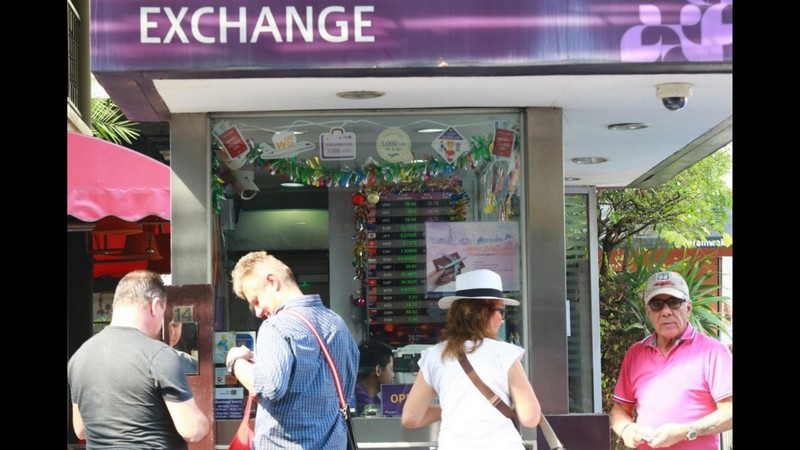
K-Research views a prolonged two-month conflict as the most likely scenario. Under this outlook, global crude oil prices would rise beyond US$100 per barrel, putting downward pressure on the baht and increasing currency volatility, said Burin Adulwattana, the centre’s chief economist, reports the Bangkok Post.
According to Mr Burin, the conflict has already had a significant impact on the baht against the dollar, both in terms of volatility and depreciation. Year-to-date, the baht has fluctuated by around 9%, up from a range of 7.5-8% throughout last year.
The baht has depreciated by about 4% against the dollar, making it the region’s second-weakest currency after the South Korean won.
Amid heightened risks and uncertainties, he said Thai GDP growth could dip by around 0.5 percentage points in the most likely scenario.
K-Research said war in the Middle East has driven a sharp surge in energy prices, particularly following the closure of shipping routes through the Strait of Hormuz.
This situation is expected to trigger a chain reaction across the global economy, from shortages of raw materials in the petrochemical sector to rising pressure on global food prices in the months ahead.
The conflict has already disrupted trade and air transport in the region, leading to fewer flights and higher travel costs.
On the financial front, the strengthening US dollar against Asian currencies poses additional challenges, especially for Thailand, which relies heavily on energy imports. This dynamic is likely to weigh on the capital market, the baht, and both global and domestic economic growth, while also accelerating inflation and raising the risk of stagflation, noted K-Research.
"Stagflation would put pressure on central banks worldwide, including the Bank of Thailand, to delay policy rate cuts or limit monetary easing," said Mr Burin.
Nattaporn Triratanasirikul, deputy managing director of K-Research, expects Thai economic growth to decline by 0.2-0.7 percentage points, bringing full-year growth to around 1.9%.
This projection assumes prolonged tensions involving Iran and potential supply disruptions to the critical Strait of Hormuz for one to three months. Under this scenario, global crude oil prices would remain above US$100 per barrel during that period, with the 2026 annual average projected at $75-90 per barrel.
In a worst-case scenario, if oil prices exceed $130 per barrel for more than three months, Thailand’s headline inflation could exceed the upper bound of the Bank of Thailand’s 3% target range, while economic growth in 2026 could stagnate.
"Inflationary pressures are already emerging in Thailand, driven by rising energy prices, while the impact on the real sector is expected to become more evident in the second quarter of this year," Ms Nattaporn said.
The government’s ability to subsidise energy prices is more constrained than during the Russia-Ukraine conflict due to tighter fiscal conditions, she said.
While subsidies remain necessary, K-Research recommends they be more targeted, focusing on specific groups, price levels and time frames.