


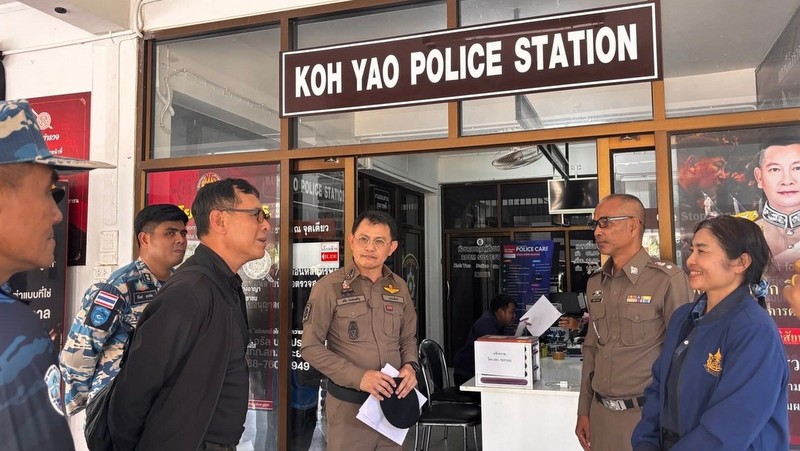

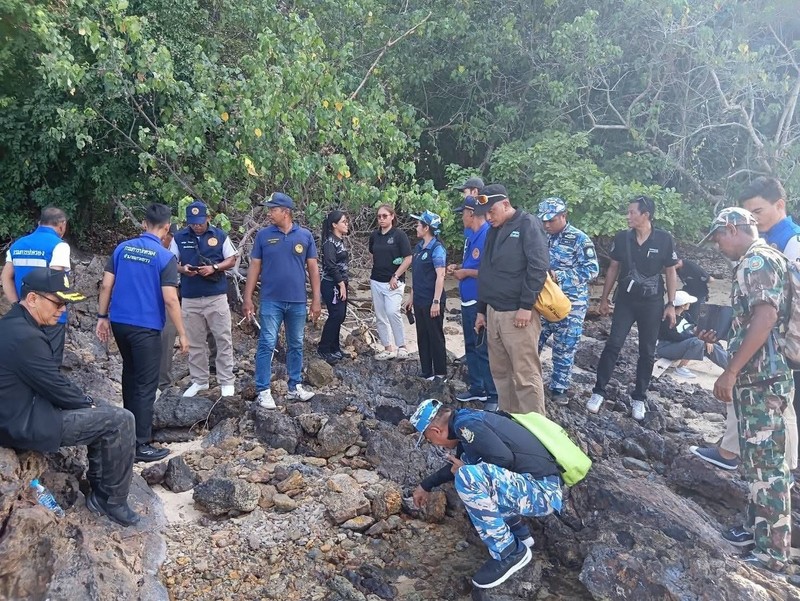
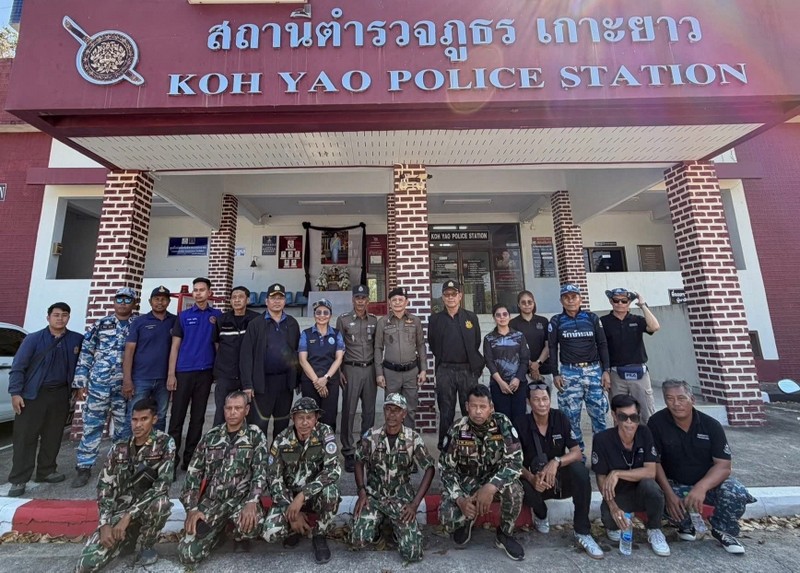
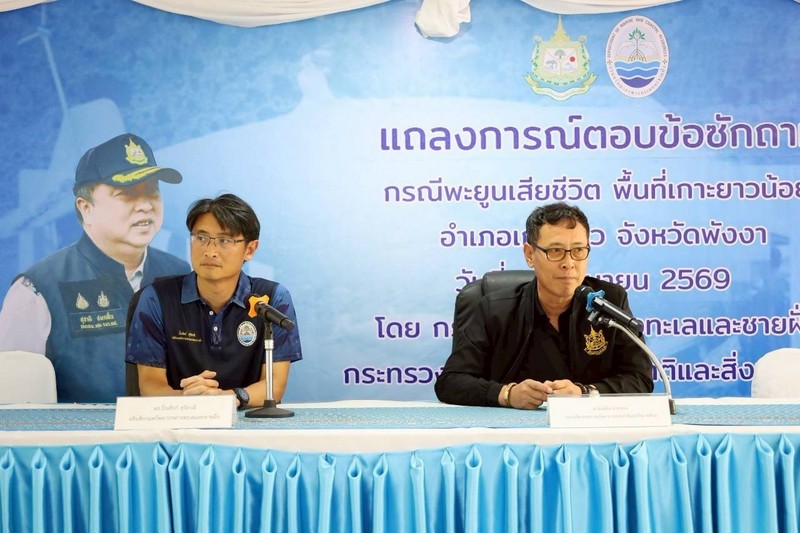
The reward was confirmed during a press conference held at Sirinat National Park on Nai Yang Beach in Sakhu on Apr 12, led by Suchart Chomklin, who assigned senior officials to urgently follow up on the case.
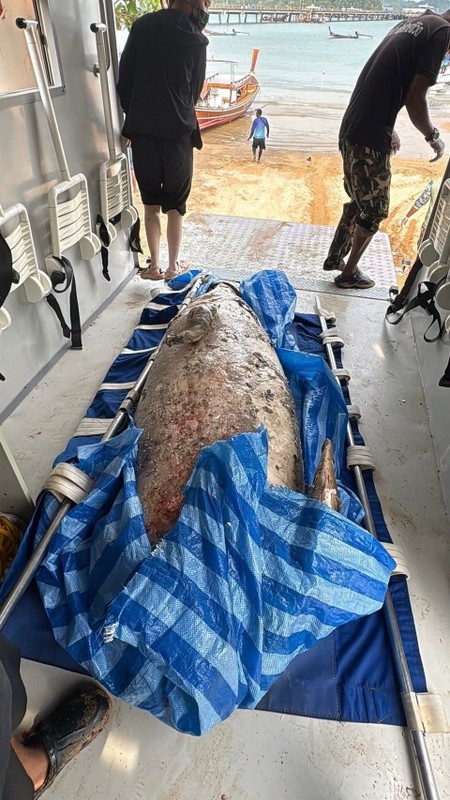
The carcass of the dugong was discovered stranded in Tha Khao Bay at Koh Yao Noi, which is under the administration of Phang Nga Province. Authorities said the animal’s head had been illegally removed.
A forensic examination revealed the dugong was a mature male measuring about 233cm in length, excluding the head, and weighing approximately 120kg. Investigators determined the animal died from chronic enteritis and prolonged starvation, with no evidence it had been hunted or killed by fishing gear.
However, officials confirmed the decapitation occurred after death. A clean cut wound was found on the throat with no signs of bruising or haemorrhaging, indicating the use of a sharp tool by someone believed to have knowledge of animal anatomy.
The case is now under investigation by police in Koh Yao, following a formal complaint lodged by the Department of Marine and Coastal Resources (DMCR). Officers are working to trace the missing body parts and identify the perpetrator.
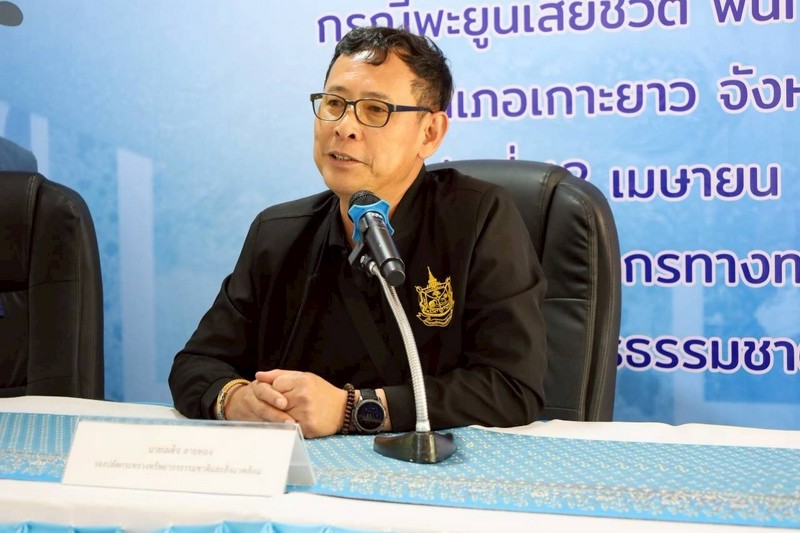
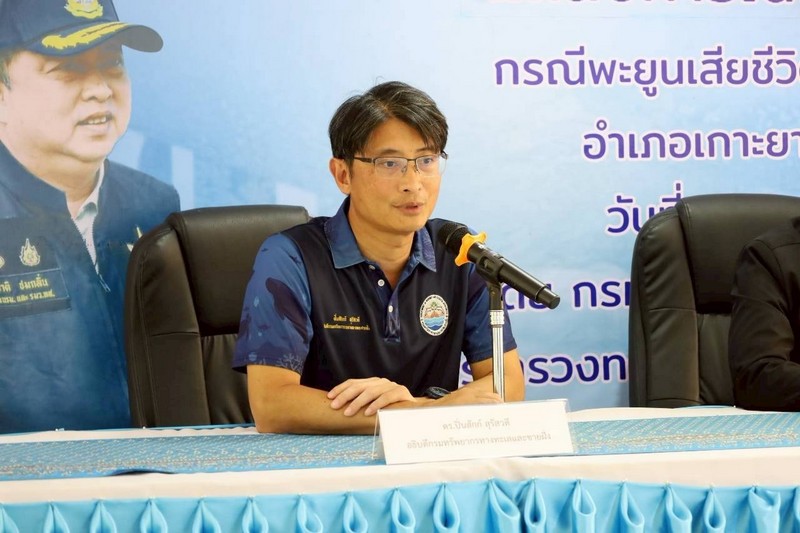
Speaking at the briefing, Phadet Laithong and Pinsak Suraswadi outlined the legal implications, noting the offence falls under the Wildlife Conservation and Protection Act B.E. 2562 (2019).
Anyone found in possession of a protected wildlife carcass faces up to five years in prison, a fine of up to B500,000, or both.
Mr Pinsak urged members of the public to come forward with any information related to the case.
The incident comes amid growing concern over the sharp decline in Thailand’s dugong population. Latest estimates indicate numbers have dropped from around 248 individuals in 2023 to between 114 and 150 in 2025-2026 ‒ a fall of more than 50% in just a few years.
Marine experts say dugongs, once commonly found in large numbers around Koh Libong in Trang, are now migrating further north into waters off Phuket and Phang Nga. The shift is attributed to the degradation of seagrass beds, their primary food source, driven by climate change and wider ecosystem disruption.
As dugongs move into new areas, they face increasing threats from human activity, including boat strikes and illegal practices.
Mr Pinsak said conservation efforts are ongoing, including drone surveillance, the establishment of temporary protected zones, and seagrass restoration projects in key habitats.
Dugongs are classified as protected wildlife in Thailand and are considered a vital indicator of marine ecosystem health.
Members of the public who encounter an injured or dead dugong are urged to report it via the national hotline 1362 to allow authorities to respond quickly and investigate.