


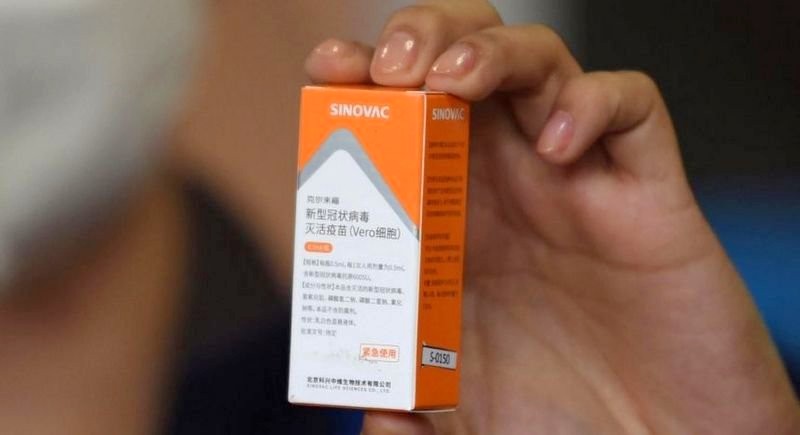
The move will come as much welcomed news to many expats in Phuket who have been vaccinated through the Thai government vaccination campaign with two injections of Sinovac, and one “booster” injection of AstraZeneca.
Matthew Barclay, the Australian Consul-General for Phuket and the neighbouring provinces, told The Phuket News, “I’m sure the recent announcement on mixed doses of approved or recognised vaccines being accepted is welcome news for Australians vaccinated in Thailand, particularly those looking to return to Australia in coming months.
“We have had a number of enquiries on this matter since the 1 October announcement and I am glad we have been able to now clarify the situation,” he said.
The Australian Government’s Department of Home Affairs updated its revised conditions for entering Australia last night.
“From 1 November 2021, Australian citizens and permanent residents aged 12 and over who are considered fully vaccinated will be able to leave Australia without needing an outwards travel exemption,” the notice said.
“Australia considers you to be fully vaccinated if you have completed a course of a Therapeutic Goods Administration (TGA) approved or recognised vaccine. This includes mixed doses,” it added.
The current vaccines and dosages accepted for the purposes of travel are:
Two doses at least 14 days apart of:
- AstraZeneca Vaxzevria
- AstraZeneca Covishield
- Pfizer/Biontech Comirnaty
- Moderna Spikevax
- Sinovac Coronavac
Or one dose of:
- Johnson & Johnson/ Janssen-Cilag COVID Vaccine.
“At least 7 days must have passed since the final dose of vaccine in a course of immunisation for you to be considered fully vaccinated.
"Mixed doses count towards being fully vaccinated as long as all vaccines are approved or recognised by the TGA," the notice added.
“If you have not been vaccinated with the above doses or schedule, you do not meet Australia’s definition of ‘fully vaccinated.’ This includes instances where the dosing schedule or vaccine eligibility differs in your country of origin.
“If you do not meet Australia’s definition of fully vaccinated, current border restrictions apply and you must continue to follow current border processes when leaving Australia or coming to Australia. This includes requesting a travel exemption and undertaking mandatory quarantine,” the notice confirmed.
Meanwhile, the Australian TGA has updated its recommendations on recognition of vaccines not registered in Australia, noting, “Coronavac (Sinovac) showed an average VE [Vaccine Efficacy and Effectiveness] against symptomatic infection of 64% and an average VE against hospitalisation of 90%.”
The TGA also noted that for Sinovac:
- VE against symptomatic infection (surrogate for transmission) of 54%, 54%, 64%, 66% and 84% in five studies.
- VE against severe infection/hospitalisation of 100%, 100%, 88% and 73% in four trials.
“The standard schedule of Coronavac is 2 doses administered 14-28 days apart,” the notice added.
“Based on regulatory, published and pre-print data this suggests the efficacy of Coronavac is comparable to the Australian-approved vaccines, although marginally lower in protection against symptomatic infection, the TGA admitted.
However, marked in the TGA notice separately in bold are the words: “TGA thus considers that the Coronavac (Sinovac) vaccine is a “recognised vaccine”.
The TGA also noted further down in the notice, “TGA has not reached a conclusion on whether Covaxin be a ‘recognised vaccine’”, and “TGA has not reached a conclusion on whether Sputnik V be a ‘recognised vaccine’.”
The Phuket News understands that the TGA has recognised Sinovac as an an effective vaccine since Oct 1.
Proof of vaccination when leaving or travelling to Australia
The Department of Home Affairs (DHA) also noted, “If you were vaccinated in Australia, you will need to show airline staff your International COVID-19 Vaccination Certificate (ICVC). The ICVC will be provided in PDF format for you to print or hold electronically on your phone.
“If you were vaccinated overseas and do not have an ICVC, you will need to present a foreign vaccination certificate,” the DHA confirmed.
“If you are an Australian citizen or permanent resident who cannot be vaccinated for medical reasons, you will need to provide proof of a medical exemption. You should also check any requirements, particularly quarantine requirements, in the state or territory to which you are travelling,” the DHA added.
For full details, including conditions of travel for children under 12, visit the website here.