


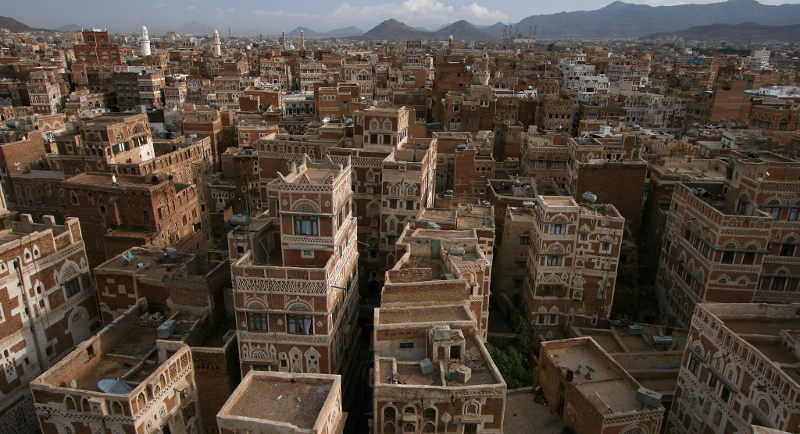
One bomb exploded inside Badr mosque in southern Sanaa, and was followed by another at the gate as worshippers fled, witnesses said.
The third suicide bomber targeted Al-Hashahush mosque in northern Sanaa, witnesses said.
Powerful armed groups have sidelined Yemen’s government ever since a 2011 popular uprising forced long-time president Ali Abdullah Saleh to step down.
Shiite militiamen and Sunni extremists have sought to exploit the power vacuum, as escalating violence and political chaos grip Yemen.
The two main players are Al-Qaeda in the Arabian Peninsula (AQAP), regarded by the US as the deadliest Al Qaeda group, who are allied with Sunni tribes, and the Shiite Huthi militia, also known as Ansarullah (Supporters of God), who have long complained of marginalisation by authorities in Sanaa.
Badreddin al-Huthi, who formed the “Faithful Youth” political movement in 1992 to fight discrimination, is regarded as the spiritual leader of the Huthis, who have taken his name.
His son Hussein led a nearly three-month uprising in Saada province before the army killed him in 2004. Ansarullah is now led by his brother Abdulmalik.
After months of clashes with the Sunni Islamist party Al-Islah last year, the Huthis took control of the capital on September 21.
They are thought to be backed by forces loyal to Saleh.
Sunni tribes hostile to the Huthi advance into their provinces, have teamed up with Al-Qaeda against the militia, with the government mostly standing by.
Since September, AQAP has claimed several attacks on the Huthis, including the killing of 49 people in the central province of Ibb in December and another attack in October that left 47 dead in Sanaa.
Hopes of an end to the political crisis in impoverished Yemen were raised in 2013 with the launch of a national dialogue but have been dashed by spiralling violence.
The country appears almost divided between north and south.