


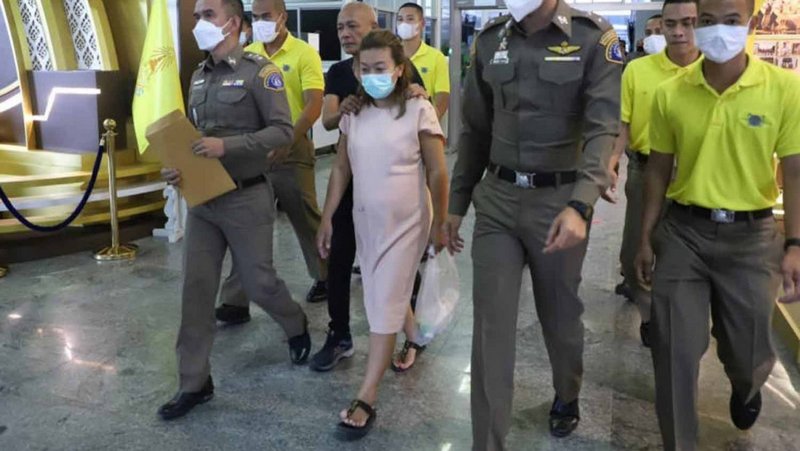
Judges said the prosecution could not establish how the defendant obtained or kept cyanide and found no convincing evidence of a financial motive tied to the offence. Citing the benefit of the doubt, the court dismissed the case, reports the Bangkok Post.
The indictment alleged that between Aug 22 and 23, 2020 Sararat mixed cyanide into the drink of engineer Nittaya Kaewbuppha, causing her death, and that she sought to profit from the crime.
The court, however, found the evidentiary chain incomplete on both possession and motive.
Defence lawyer Thannicha Eksuwannawat told reporters the ruling underscored that the prosecution evidence was insufficient and did not establish when, if at all, her client had cyanide.
She added that the court saw the defendant’s handling of a pledged car as normal pawnbroking practice. After Nittaya died, Sararat notified the deceased’s relatives and allowed them to redeem the car.
Although acquitted, Sararat remains in custody because the charge carries a possible death sentence. The court ordered her detained pending a decision by prosecutors on an appeal.
She has already been convicted and sentenced to death in another case.
Ms Thannicha said she would use the court’s reasoning as a framework in 10 other ongoing cases against her client. They fall into two groups: before and after Aug 9, 2022, when Sararat was found to have purchased cyanide.
Sararat, 39, is suspected of administering potassium cyanide to 14 people between 2015 and 2023 for financial gain. She was arrested on April 25, 2023 and two cases have been concluded.
On Nov 20, 2024, the Criminal Court sentenced her to death for murdering a friend with cyanide.
Last month, the court sentenced her to life in prison for killing a policeman in April 2023 in Nakhon Pathom. The judges initially imposed the death penalty but commuted it after a confession and useful testimony.