


But there are a few drawbacks too. The bigger urban centres are a bit drab and host little nightlife, English is not that widely spoken, and some of the rural roads are in a state of disrepair.
But do not let these speed bumps get in the way of exploring the country’s most unexplored region. You’ll need about a week to do the following itinerary, though it’s been designed so you can start in any place, or if you’re coming from Laos or northern Thailand do it in reverse.
Nakhon Ratchasima
Sometimes referred to as Khorat, this city on the Khorat Plateau is about three hours northeast of the capital.
It’s a sprawling city of a quarter million inhabitants well served by buses and trains from Bangkok. For an overnighter, book a room at the Hermitage Resort, a mid-range hotel with a good spa and Chinese restaurant. The hotel’s karaoke bar will give you an earful of the northeast’s biggest night out.
The city is a jumping off point for Khao Yai National Park and the dude ranch of Pensuk Great Western, which ropes in city slickers with cowboys, horses and Wild East trappings.
Renowned for producing popular dairy products, the Chokchai Farm milks the cash cow of agro-tourism on weekends and official holidays.
That’s when visitors come to learn all about life on a dairy farm. The steakhouse, which has several branches in Bangkok, is excellent too.
Phimai Historical Park
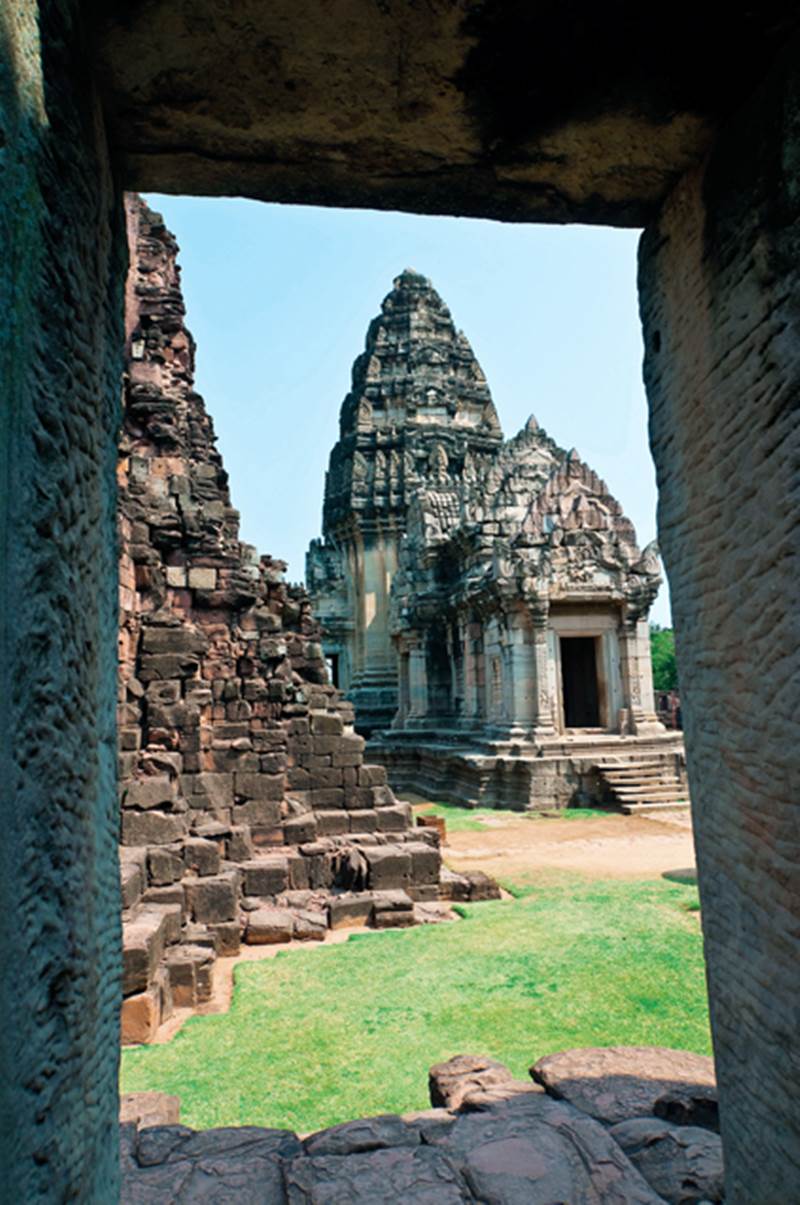
Situated some 60 kilometres from the capital of Nakhon Ratchasima, in the town of Phimai, is this former outpost for the empire builders of Angkor. In fact, some of these well-preserved structures in the historical park are thought to be older than parts of Angkor Wat.
Dating from the tumultuous turn of the 11th century, the centerpiece, Prasat Hin Phimai, is the most colossal sandstone sanctuary in Thailand. It is also the park’s focal point.
Land of the Dinosaurs
For those fascinated by reptiles and dinosaurs – and what boy isn’t? – taking a detour due north to the provincial capital of Khon Kaen is the real reptilian deal.
Ironically, the business and higher learning capital of the Northeast is situated in the midst of the region’s biggest dinosaur graveyard. A few skeletal specimens from here, first discovered in Thailand back in 1976, are on display in the Phu Wiang Dinosaur Museum.
The museum is on the grounds of Phu Wiang National Park. The park’s excavation pits show where some of these primeval monsters (several discovered only in Thailand) were unearthed.
For a full day out, combine the park and museum with a visit to Ban Kok Sa-Nga (“Cobra Village”), where locals raise and put on snake shows beside the temple, and Ban Kok Tortoise Town, where hundreds of sacred tortoises trudge through the streets, backyards and even the homes of the inhabitants, as they are treated like sacred cows in India. Both hamlets are about 50 kilometres outside of the capital and are well sign posted.
Buri Ram
Buri Ram means “Pleasant Town”. Not a place that strains for superlatives, this humble and unpretentious hamlet is the jumping-off point for the phenomenal Wat Khao Phnom Ruang.
Perched on a clifftop that affords heart-stopping vistas of the verdant countryside, this temple devoted to Shiva, where a stone phallic symbol remains a sexual object of veneration, is both massive and remarkably intact. After a morning spent touring the temple, it’s off for some wild times in the country’s capital of elephants.
Surin
Just down the road from Buri Ram, also on the main railway line, is this crossroads where Lao, Khmer, Thai and Kui cultures converge; the provincial seal is the Hindu god Indra riding a sacred elephant before a Khmer-style shrine.
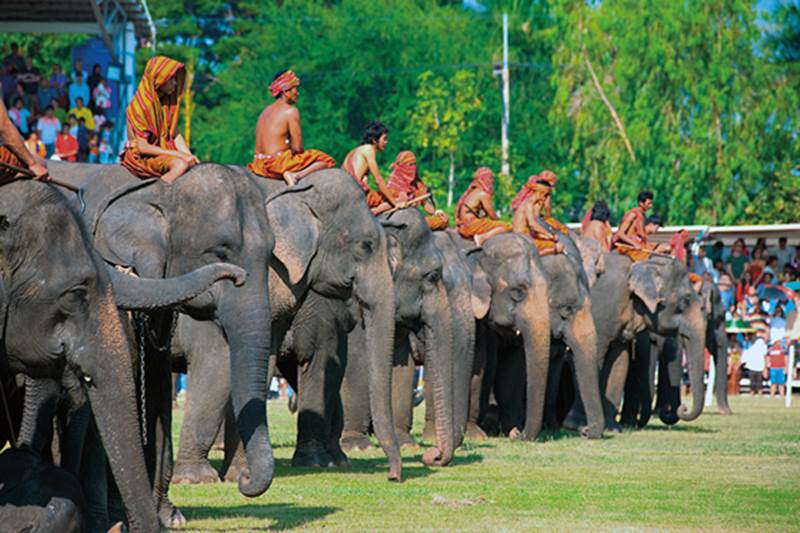
That sets the stage for Surin’s main act – a village where elephants are treated like members of the family. At Baan Ta Klang, many visitors do a homestay, learning to eat, sleep and live like locals.
At the Elephant Study Center, there are circus-like daily shows and elephant rides. For voluntourists, the new Surin Project is a spin-off of the Elephant Nature Foundation run by the famous conservationist Sangduen “Lek” Chailert.
The project requires paid volunteers to help with their new facilities for abused and abandoned tuskers, participating in basic elephant care.
Mekong Odysseys
As Southeast Asia’s biggest bloodline of commerce and culture, the Mekong River feeds and waters hundreds of coastal communities.
To tap this rich vein of history and sights for city-sore eyes, make your way up the porous border with Laos through Ubon Ratchathani and Yasothon, where visitors have a blast at the annual Rocket Festival, to the eponymous capital of Nakhon Phanom province.
It’s a sleepy city with a violent past thanks to its proximity to Laos during the Vietnam War. Between the capital and the airbase is Ban Nachok, the village in which Ho Chi Minh took refuge for three years. The Vietnamese leader’s former residence doubles as a museum celebrating his revolutionary life.
The province’s other main attraction is Wat Phra That Phanom, the region’s oldest and grandest temple, located some 50 kilometres south of here in the town of That Phanom.
Use the Nakhon Phanom River View Hotel in the provincial capital as a base of explorations. The semi-alfresco restaurant comes complete with gorgeous views of the Mekong.
Nong Khai
For soaking up more of the waterway’s maritime ambiance, this is Thailand’s Loch Ness, though part of the mystery it harbors is exposed during the Naga Fireball Festival held every October on the last night of Buddhist Lent, when orbs of light mysteriously rise from the river, arc hundreds of metres through the sky and promptly disappear.
The pious attribute them to Naga, the seven headed Serpent Lord whose body and crested heads forms the balustrades of temples. In one tale, these dragon-like creatures dwell at the bottom of the Mekong River. To pay homage to the Buddha every year, they shoot off the fireballs. A more scientific explanation is that the orbs come from methane deposits ignited every year by the full moon.
Whatever you believe, you can still soak up some of the city’s maritime magic at the legendary Mut Mee Guesthouse. It’s got rooms with Thai decorations overlooking the Mekong, a garden with hammocks, a good bar and restaurant and warmhearted staff. They also have yoga classes and massages.
In these parts, a paramount pleasure is renting a bicycle from the guesthouse to explore some of the riverside roads and the surreal sculpture garden called the Pavilion of Kaewkoo.
Designed by a semi-mad mystic of Lao ethnicity who claimed to be “half man and half snake”, the mummified remains of Luang Poo Boun Leua Sourirat are encased in glass on the third floor of the main building.
All in all, the garden of Bosch-like grotesques and beatific deities contains around 100 sculptures, many based on the Buddhist and Hindu canons. Some of them are 20-25 metres high.
Among gourmands, Nong Khai is also reputed to have one of the country’s best Vietnamese restaurants, Daeng Namnuang, serving up delights like pork spring rolls at a riverside venue.
Yet another local speciality is the sunset and dinner cruises. Mut Mee’s boat, the Nagarina, is a reliable choice. Unlike some of the tasteless versions of Thai fare the major hotel cruises offer on Bangkok cruises, this on-board meal, heavy on freshly caught fish, is the real McCoy.
Chiang Khan
After a night or two in Nong Khai, it’s time for a gentle drive to Chiang Khan, a rustic town on the Mekong in the mountainous province of Loei that epitomises the “slow travel” trend. On the main drag you’ll find a photogenic selection of old wooden homes, shops and inexpensive guesthouses, and life set to a sleepwalker’s pace.
The Chiang Khan Guesthouse is an old teak house enhanced with lovely river views to gorge your eyes on those cotton candy pink and fireball orange sunrises and sunsets.
Run by a Dutchman and his Thai wife, who are treasure chests of information, they will arrange everything from rafting trips and cooking classes to performances of local music and side trips to the famous Chateau de Loei winery. In the guesthouse’s superb restaurant, make sure you fill up on those staples of Lao and Isaan food: papaya salad, barbecued chicken, sticky rice and spicy catfish.
Loei
For Thais, the province’s most popular attraction is the Phu Kradeung National Park. The bell-shaped mountain is named after its centrepiece.
Hardier visitors hike to the pinnacle where there’s a camping ground with tents to rent. It makes for a wonderful overnighter.
During the day, there are 50 kilometres of walking trails to explore. At night, alpine breezes provide refreshment and the stars are rhinestones studded on a black velvet sky.
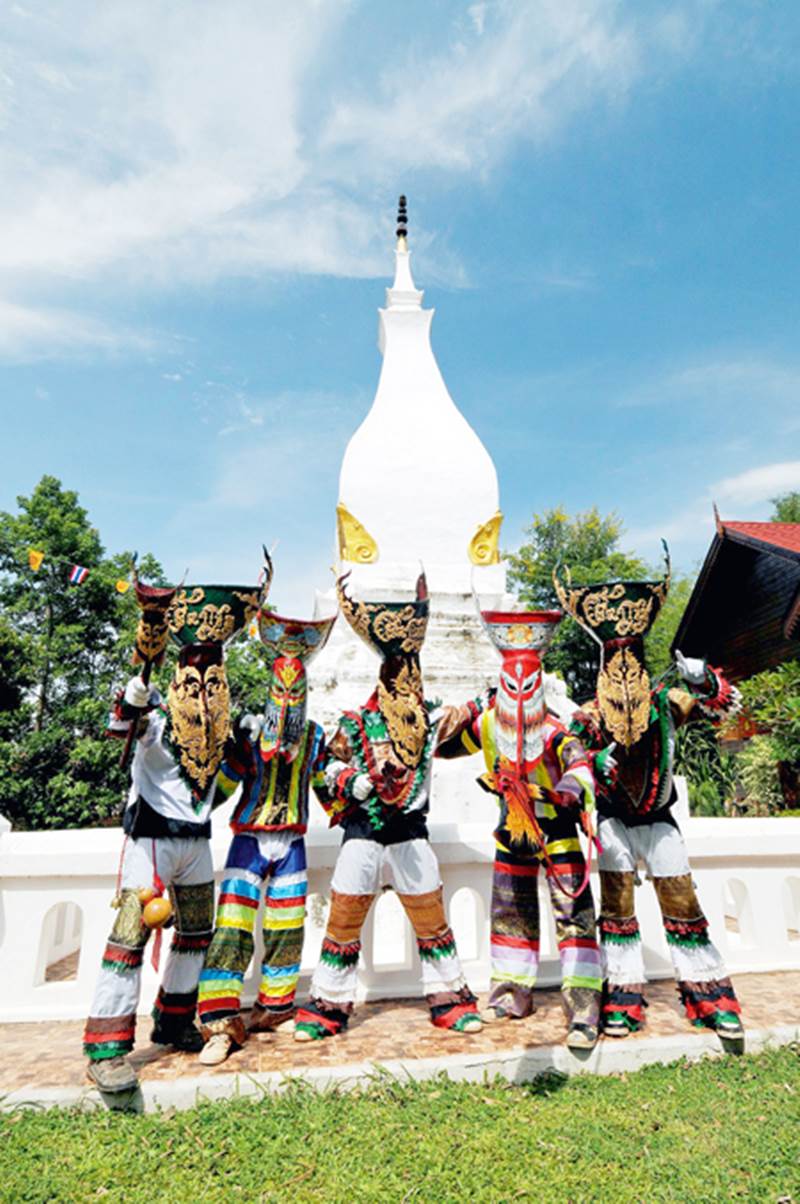
For foreigners, however, Loei’s main event is the Phi Ta Khon (“Ghosts with Human Eyes”) Festival held every June or July, when young men wearing colorful, ghoulish masks and waving enormous phallic symbols around take over the streets of the town of Dansai, where old men dress up as ladyboys and traditional dancers parade and pirouette through the streets during the reenactment of a Buddhist folk tale in which the sacred and profane do a mating dance.
This is an excerpt from Tuttle Travel Pack Thailand, published by Tuttle Publishing and written by Jim Algie. Priced at B465, it is available from all leading bookstores. tuttlepublishing.com