


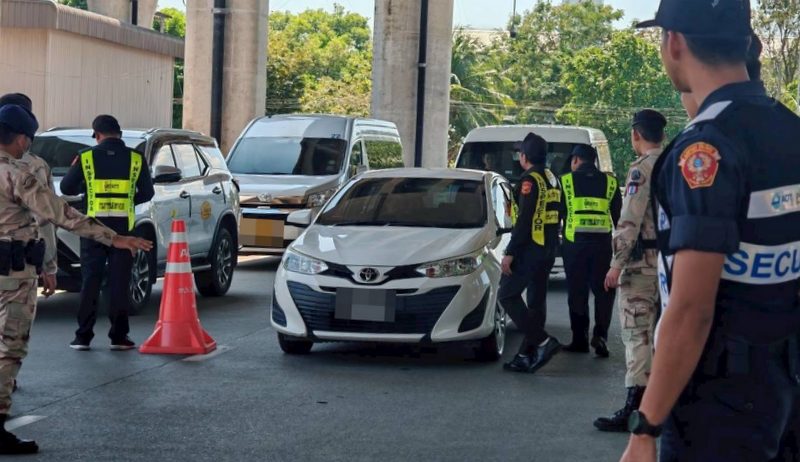




The island-wide operation was carried out yesterday under the policy direction of Phuket Governor Nirat Pongsitthaworn, as officials moved to address long-running complaints about unregistered taxis, passenger safety and damage to Phuket’s tourism image.
Phuket Vice Governor Adul Chuthong led the coordinated inspections alongside Phuket Land Transport Office (PLTO) Chief Atcha Buachan, with integrated teams drawn from the Phuket Provincial Police, the Department of Land Transport and local administrative authorities.
Checkpoints and proactive inspections were established across all three key districts ‒ Mueang Phuket, Thalang and Kathu ‒ with a particular focus on high-traffic areas including Phuket International Airport, seaports and major tourist attractions.
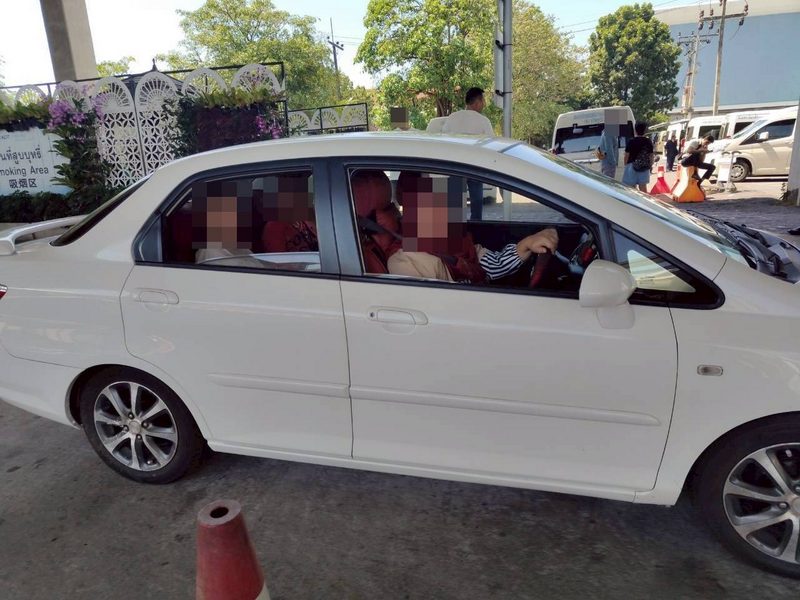
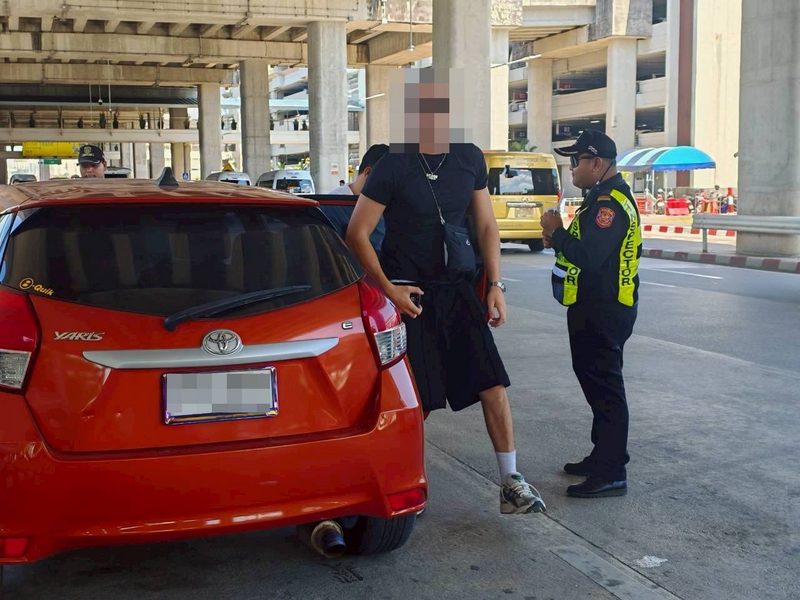
Officials reported that a total of 93 vehicles were found to be operating in violation of the law yesterday. Most offences related to the use of private vehicles for public transport without proper registration, in breach of Section 21 of the Land Transport Act.
Breakdowns provided by authorities showed the highest number of violations recorded in the jurisdiction of Phuket City Police Station, with 25 vehicles seized. Further cases were reported in Patong (12 vehicles), Sakhu (9), Cherng Talay (8), and several other areas across the island.
Provincial officials said the inspections were not limited to roadside checks but also involved targeted screening of vehicles suspected of operating as illegal taxis, particularly those soliciting passengers around tourist hubs or operating through mobile applications without authorisation.
GRAB TALKS
At the same time as the enforcement operation, Governor Nirat took parallel action on the policy front, holding high-level talks with executives from Grab Thailand at the Phuket Provincial Hall.
The meeting focused on strengthening regulatory controls over ride-hailing platforms to ensure full compliance with Thai law and to prevent illegal or substandard vehicles from operating through digital applications.
According to the Governor’s office, discussions centred on several key principles: controlling the number of vehicles permitted to operate on platforms, stricter screening of driver qualifications, inspections of vehicle standards, and the use of platform-based enforcement mechanisms.
Under the agreed framework, any driver or vehicle found to be non-compliant ‒ including those lacking a valid driver’s licence, proper vehicle registration, required certification or displaying inappropriate behaviour ‒ will be immediately removed from the application system.
“This is to ensure that illegal or substandard vehicles do not pose risks to passengers,” the Governor said, adding that enforcement must be swift, transparent and verifiable.
Grab Thailand executives confirmed their readiness to cooperate fully with provincial authorities, agreeing to upgrade driver screening and verification processes and to work closely with government agencies to ensure effective enforcement of the rules.
Governor Nirat said the rapid growth of ride-hailing services is an unavoidable reality of the digital and gig economy, providing additional transport options for both tourists and residents. However, he stressed that growth must remain firmly within legal and safety frameworks.
“The government’s duty is to regulate these services according to the law ‒ in terms of vehicle numbers, vehicle quality and driver qualifications ‒ while ensuring fairness for operators who comply with regulations,” he said.
To that end, the Phuket Provincial Office will combine intensified field inspections with data and cooperation from digital platforms to ensure that only legally compliant vehicles remain in service, he noted.
The approach marks a shift away from isolated crackdowns towards a more systematic, long-term solution. By integrating law enforcement with cooperation from private-sector technology providers, the province aims to prevent the illegal taxi problem from re-emerging rather than merely suppressing it temporarily, Governor Nirat explained.
“The policy is designed to protect passengers, support law-abiding transport operators and restore confidence in the island’s public transport system,” he said.
“This is not a one-off operation,” he noted. “It is about creating mechanisms that prevent recurrence, ensure transparency and raise standards across the entire system.”