


The four ballots are: one for electing constituency MPs, another for party-list MPs, a third for a referendum on constitutional amendments, and a fourth for a referendum on whether to revoke the memorandum of understanding (MoU) with Cambodia, reports the Bangkok Post.
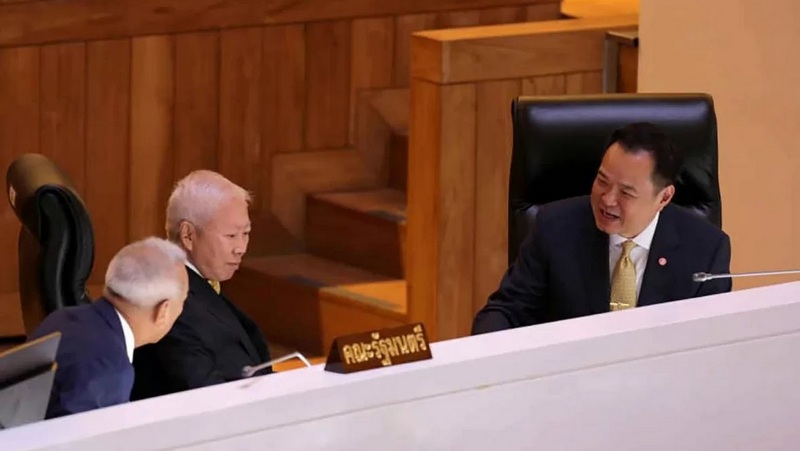
Speaking to a House session, Mr Bowornsak said the government’s policy clearly supports holding a referendum to amend the constitution, emphasising the importance of listening to the public and encouraging participation from all sectors.
This approach aligns with the Constitutional Court’s ruling and aims to uphold the democratic system with the King as head of state.
Mr Bowornsak explained that drafting the new constitution is the first step in the process. The second step involves a referendum to approve or reject the draft constitution, which will be the first question posed to voters.
The new draft constitution will introduce an additional Chapter 15/1 of necessary legislative details.
Among these updated and new provisions are a new stipulation regarding the formation of a 99-member constitution drafting assembly (CDA), whose members would be selected exclusively by parliament, to produce the document.
In the initial stage, parliament will determine how to involve the public in drafting the new constitution, in a manner that does not contradict the Constitutional Court’s ruling that prohibits a direct election of the CDA by the public.
Should parliament approve this, the second step will be to draft the new constitution by the CDA or other authorised persons as stipulated in Chapter 15/1, following the referendum, Mr Bowornsak said.
Mr Bowornsak said that two major political parties have already confirmed that they will not amend Chapters 1 and 2 of the constitution.
He explained that any changes to these chapters in the new constitution would immediately raise issues that could potentially contradict the current constitution.
Chapter 1 contains sections that define Thailand as a single, indivisible kingdom with a democratic regime and establish the King as the head of state.
Chapter 2, meanwhile, outlines royal prerogatives.