


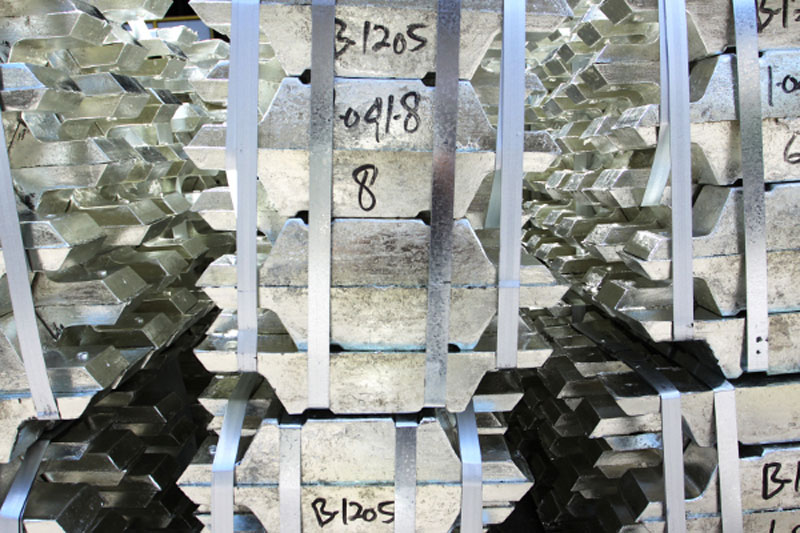
However, during a site inspection, authorities found no evidence of pollution emanating from the factory, and local community representatives, who joined the inspection, said they had no complaints.
“Thaisarco has always taken action every time we complained about problems,” said Sonthaya Autsarhar, village headman of Moo 8, Cape Panwa.
He said that sometimes dust was carried by the wind from the smelter to local villages, but that he personally believes that its impact on the local community is small.
Since five years ago, a local committee comprising representatives from Thaisarco and the local community has met monthly to discuss any problems relating to the smelter.
Thaisarco’s Commercial Director, Panya Toachareon, told the assembled officials that the company has always been very sensitive to the possibility of adverse environmental impact.
The company, he explained, uses a reliable consultant, certified by by Department of Industrial Works, to produce environmental impact reports every six months, covering air emission quality, working air quality, ambient air quality and water quality. A copy of the reports goes to the Office of Natural Resources and Environment Policy and Planning.
According to the most recent ambient air quality report, Mr Panya said, the air contaminant rate was only 30 microgrammes per cubic metre, one quarter of the maximum amount allowed by law.
However, he told the officers that, in light of the complaint letter, Thaisarco would conduct another environmental survey immediately to give the authorities more precise, up-to-date figures so that any doubts could be cleared up.
Thaisarco, a subsidiary of the British AMC Group, began its tin smelting operation in Phuket in 1987. With Thailand now no longer able to supply tin ore to the factory, Indonesia has become its main supplier.
The smelter used to process about 30,000 tons of tin ore a year, but this figure is now down to just 1,000 tons, due to dwindling supply sources and rising transport costs. As a result, the factory’s heavy machinery now runs only once every three months.