


The threat came true: President Siad Barre was ousted in a 1991 coup, and the once elegant, Italian colonial-era seaside town was reduced to a wasteland of ruined buildings in years of bloody battles between rival militias.
Now, 21-years later and eight months after Al-Qaeda-allied insurgents abandoned much of the city following pressure from the African Union and government forces, the capital is showing signs of life, with reconstruction underway and land prices soaring.
“Security is still not reliable, but people decided they wanted to return life to normal,” trader Ahmed Sheikh Gure said.
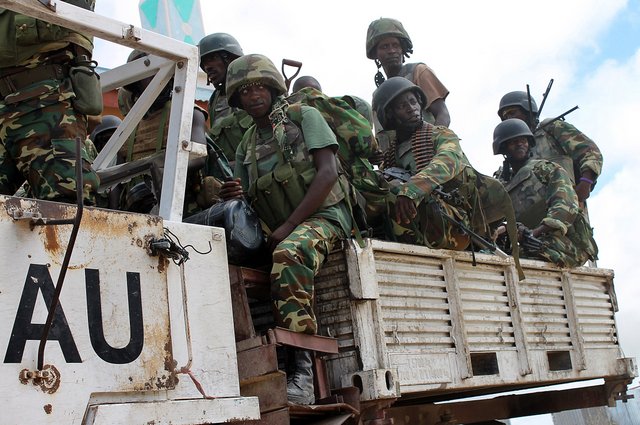
Though Somalia’s war is far from over, a regional offensive did force Islamist Shebab insurgents from many strongholds and they abandoned the city in August.
The scars of war remain clear, with hundreds of thousands of displaced people living in and around Mogadishu, many in basic rag-and-plastic shelters, some in the crumbling ruins of roofless houses.
In Bakara market, the capital’s war-torn economic heart, the signs of battle are fading slowly.
“You don’t even think that war has ever taken place here,” Gure said. “Thanks to God, because people have the opportunity to rebuild.”
Bakara for many months was the epicentre of violence in one of the world’s most dangerous capitals, forcing residents and businesses to flee.
Despite an ongoing regional offensive with Ethiopian troops fighting in the west, AU troops in Mogadishu, and Kenyan troops with the AU battling in the south, many Somalis are returning, bringing back capital earned abroad.
“People are rebuilding their homes,” government spokesman Abdurahman Omar Osman said. “The Somali diaspora are coming back to help ... businesses are reopening.”
Fighting erupted in Somalia in the late 1980s against Barre’s dictatorship, escalating into a brutal civil war following a 1991 coup, with rival militias, warlords and Islamist fighters battling ever since for control of the lawless nation.
Less than a year ago, troops and insurgents exchanged daily mortar fire along frontlines, before Shebab fighters abandoned fixed positions and quit the city.
Now it is the construction industry that is busy.
Reconstruction is expensive, but those who can are repairing their homes, plastering and painting over bullet-pocked walls, and blocking up holes punched into masonry by rocket-propelled grenades.
Among the ruined buildings is a dramatic Catholic cathedral, built during Italian colonial days. Its stonework was used as target practice by Islamist fighters and now houses displaced people fleeing fighting outside the city.
Mogadishu’s rebuilding has also sparked land speculation, with some fearful that reconstruction efforts may be wasted if the dark days of war return.
Shebab fighters carry out guerrilla attacks including car bombs and mortar strikes.
Analysts warn that the rebels, Somalia’s most brutal, remain a serious threat to international efforts to stabilise the nation.
But the March reopening of Mogadishu’s ruined national theatre was hailed as a symbolic step forward for the city. As land prices increase and repairs are made, the cost of living rises too, a problem for many in this grossly impoverished city.
Many borrow money to pay for renovations, then pay off the loans by renting out rooms to those returning to Mogadishu.
“Houses have become very, very expensive – a room that used to cost $10 (a month) to rent ... today, you will not get a room like that for $40,” estate agent Mohamed Abdullahi said.
“God willing, I hope people return and rebuild the country.”