


But recently more and more people have been paying attention to growing rumours that Nan Province, to the east of Chiang Rai, banging up against Laos, is a must-visit.
It seems to have started when Banthoon Lamsam, chairman and CEO of KasikornBank, discovered Nan. He was so delighted he took most of a year off to research and write a 608-page novel, Sinaeha Montra Lanna (The Seductive Spell of Lanna), much of it set in Nan.
It was an immediate hit. After it was published in May 2013, the print run went up to 20,000 in the first two months. Readers felt they just had to see Nan.
And it is a delightful place. A small kingdom until the time of Rama V, with a large teardrop-shaped valley surrounded by impressive mountains, it was largely unspoiled by the modern world, prospering from shipping out the vegetables grown in the valley along the meandering banks of the river Nan.
The history that can be seen, walked around in, is impressive. There are temples that were founded more than 800 years ago and that are still in beautiful condition. There are regal old teak houses – though most of these can be admired only from outside because they are still inhabited by the original families, who feel no need to turn them into museums or B&Bs.
It’s not perfect – one sad aspect is the bare slopes of many of the mountains, slashed and burned by subsistence farmers planting maize and mountain rice – but it has a slow and gentle pace, the people are unfailingly polite and friendly and will invite you home for supper five minutes after they first meet you.
The provincial capital is awash with temples, some just a dozen steps from the next one. Pride of place goes to Wat Phumin, with its unique cruciform ubosot riding on the backs of two Nagas. Originally built around 1595 it was restored 150 years ago, with Thai Lue artists brought in to paint the murals.
Apart from the usual lessons to the faithful, the artists also painted delightful scenes from local life, some of them decidedly raunchy. There are also darker references: scenes of Western men and women disembarking from boats, a reminder of how the French empire annexed half of the province.
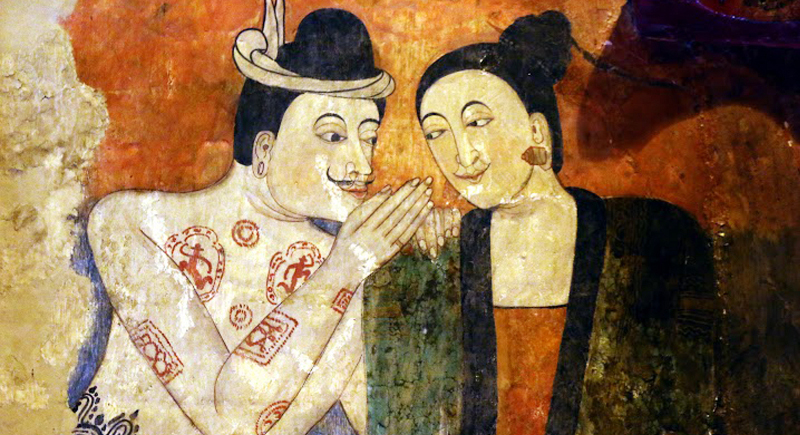
There is one particular mural of a rather caddish chap with lots of tattoos whispering in a woman’s ear, which has become an icon of Nan. You’ll see copies of it all over the province.
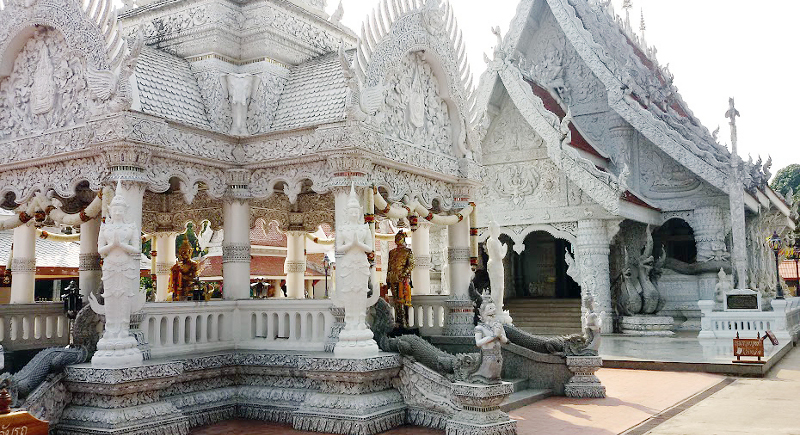
Other temples in the town that delight are Wat Ming Muang, a confection in white, and its “twin”, Wat Sri Phan Ton, painted entirely gold. There’s not a single square centimetre of either that is not decorated with intricate stucco.
On the edge of town is Wat Phra Tat Khao Noi, with a large Buddha image that strides toward the rising sun across the other side of the town. Well worth getting up early for.
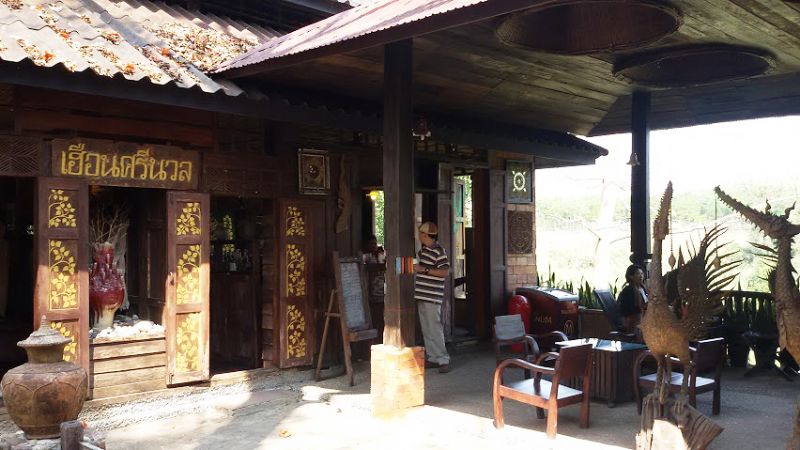
As in much of northern Thailand, art still thrives in Nan. Some 20 kilometres north of the city, on the way to the town of Pua, once the provincial capital, is the Nan Riverside Gallery, founded by celebrated Nan artist Winai Prabripoo. Large airy rooms display his art and that of others, and there is a coffee shop where one could easily spend half the day in serene enjoyment of the calm surroundings.
Many visitors head for the mountains, hiking up to the summits and camping overnight, waking in time to see the sun rise over the ranks of peaks marching away towards Laos.
In February Nan hosted a three-day arts festival, with puppet shows, art exhibitions and musical performances culminating in a concert by Carabao. That drew plenty of people in, especially with AirAsia and Nok launching cheap flights from Bangkok just months earlier.
And then there was the spectacular banquet, a few day later, in the grounds of Wat Phumin, hosted jointly by HRH Princess Sirindhorn and prime minister Gen Prayuth Chan-Ocha. Press photos and TV coverage of that threw an extra spotlight on the province.
Hoteliers were delighted by the rising tide of visitors that filled Nan Town’s 3,000 rooms, and there wasn’t a hire car available for love or money.
Other people are not so happy. They worry that the influx of thousands (maybe tens of thousands) of outsiders will bring unwelcome changes to their way of life. “I’ve already noticed some people getting more greedy,” a song taeo driver remarked.
That’s why you really shouldn’t go to Nan. But you probably will.