


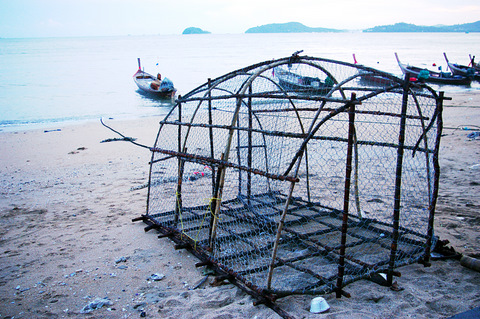
There are more than 300 Orang Laut families who have lived at Laem Tukkae (meaning Tokay gecko peninsula)for hundreds of years, long before technology and development came about. The Orang Laut people inherited certain legends, beliefs and rituals about their ancestors and maintain their own social and cultural patterns.
People here can still speak both Thai and their own Orang Laut language, but in the future younger people are more likely to speak Thai only as the language is being gradually lost.
One of the elders of Orang Laut, Uncle Manee Pramongkij, believes his people are some of the best fisherman around.
“People here have done nothing else except fishing. The word Orang Laut means sea people so fishing is the way of our people,” Uncle Manee said.
Development has meant fishing is now a means of gathering income by selling fish and other items from the sea, and is not used only as a means to feed the family. Money is now exchanged instead of simply trading goods. Small row boats have been replaced by long tail boats with engines.
Certain people, mostly developers, have tried to drive out the sea gypsies and develop accommodation. A large majority of the villagers are uneducated and do not know what a chanote (a freehold title deed) is.
“They want us to move but our home is here. We were born here so why do we have to move?” Uncle Manee said.
Many arguments have occurred between the sea gypsies and those who want the land, but now the OrBorJor and OrBorTor seem to want to protect the land on behalf of the sea gypsies, and have added more electricity networks, water supply and public transportation for the people there.
--Sukhunya Phoonpong