


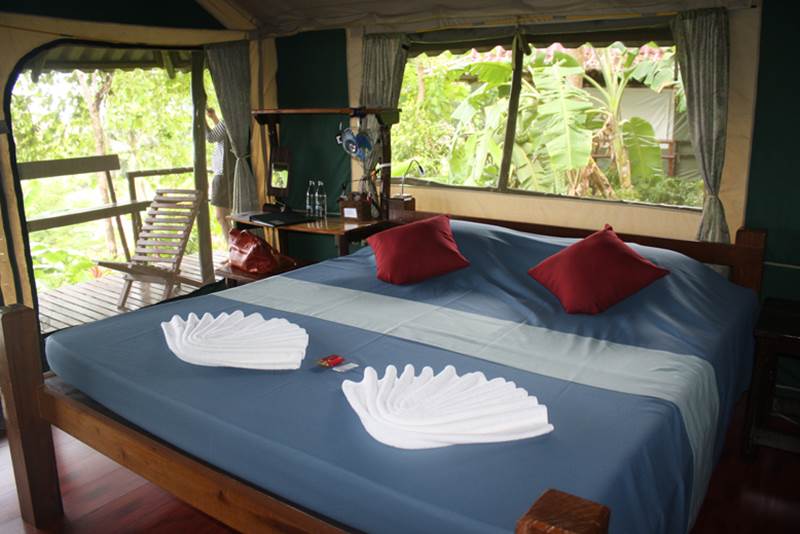
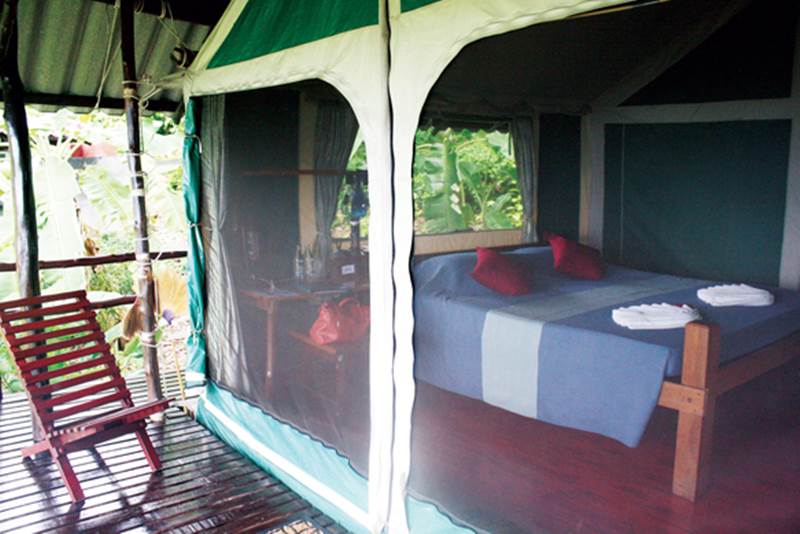
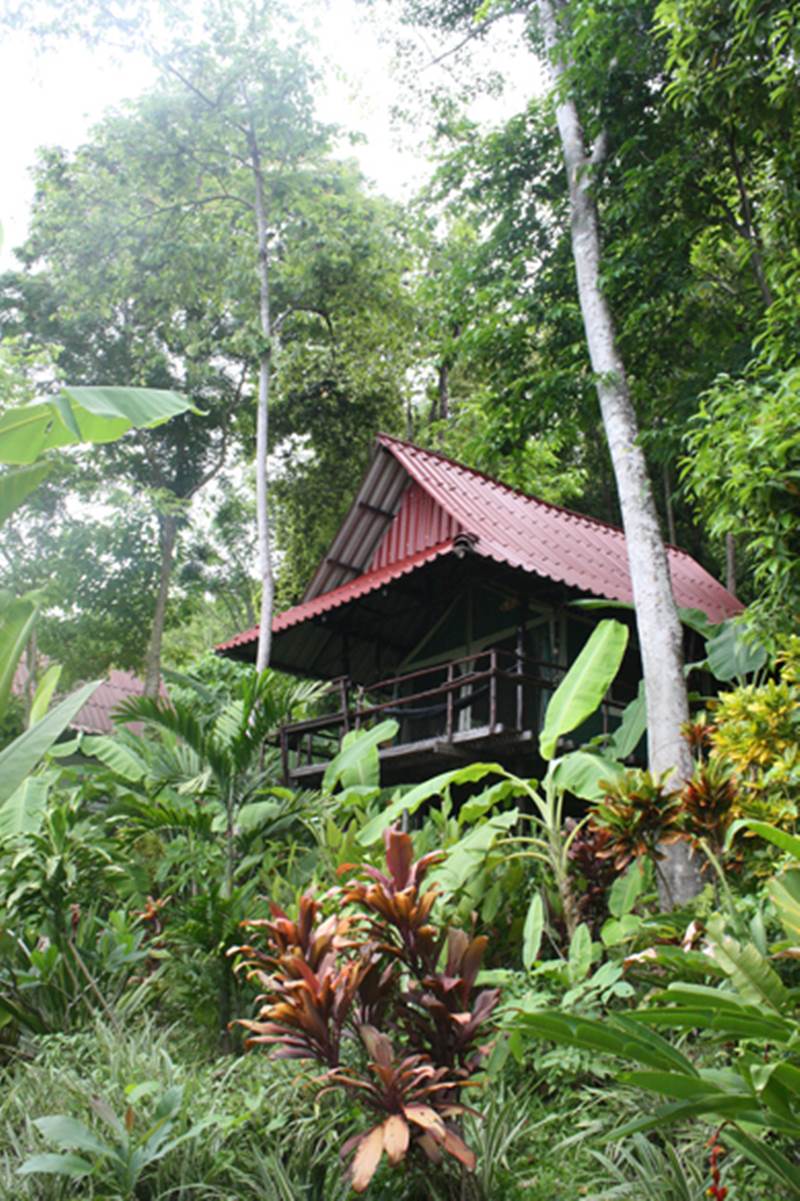
He leads me enthusiastically to my home for the next two nights – a large tent with no electricity, situated some 40 metres up a hill to catch much needed cool breeze.
But this is not your average tent. It has a wooden bungalow-type floor and roof. The tent is set up between these two structures, effectively providing the walls of the “bedroom”.
Welcome to Tenta Nakara, a resort where you can experience camping at its best, all the while feeling close (sometimes too close) to nature and its wonders.
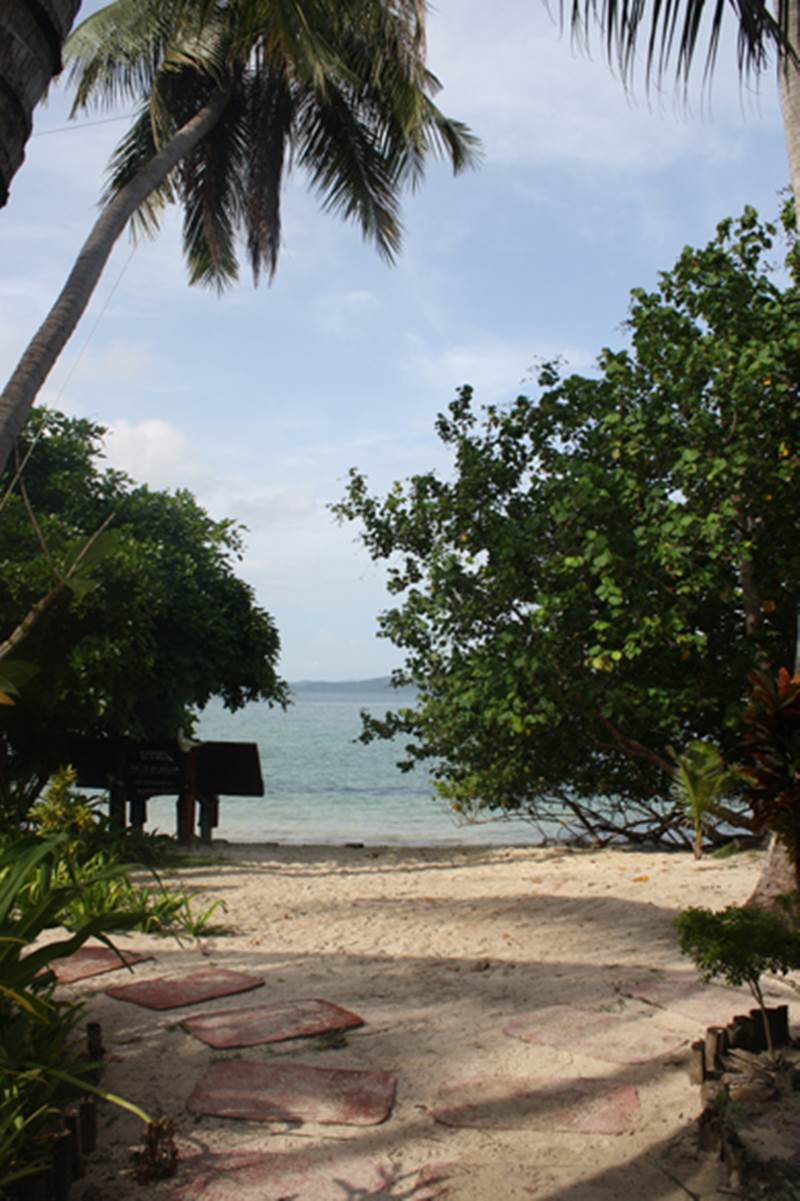
Tenta Nakara (a play on the words “tent” and “Naka”) is situated on Naka Yai island, around 15 minutes by speedboat from Ao Po Pier, on Phuket’s east coast. Dubbed “luxury-style camping”, the accommodation consists of 16 specially-made tents.
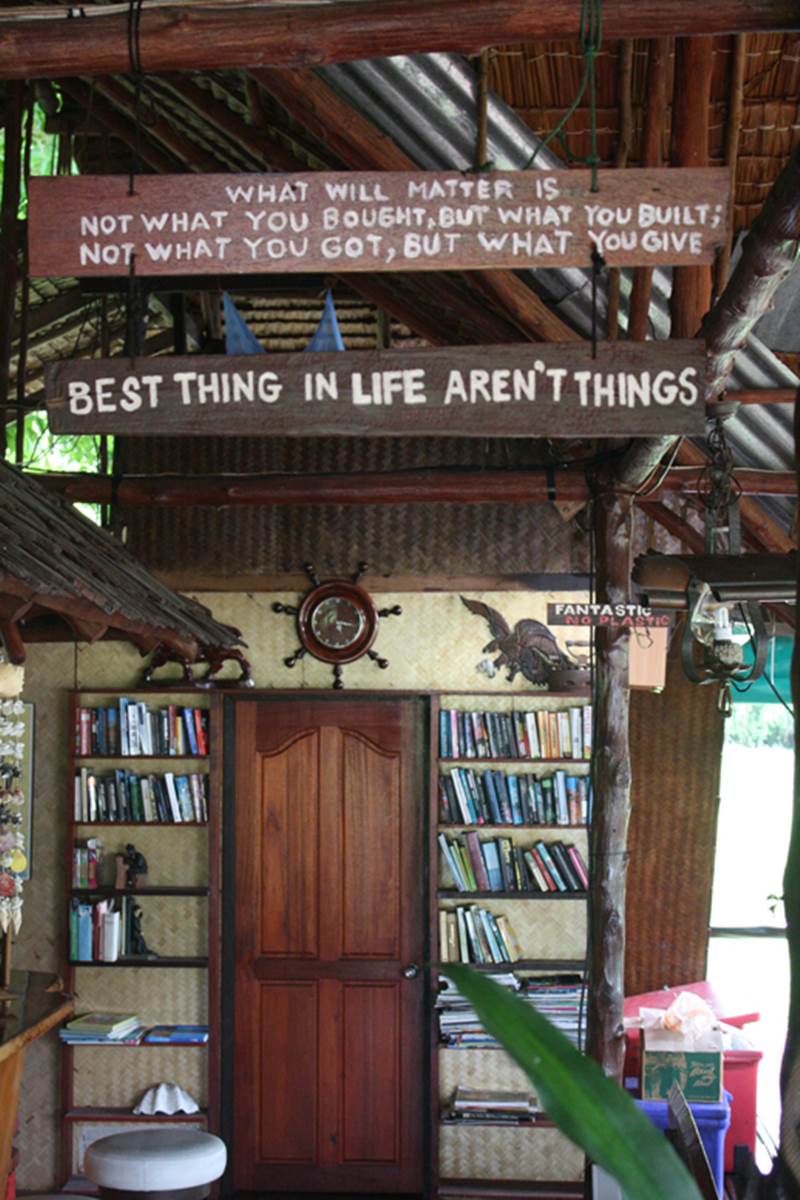
Down by the beach is the large dining area, consisting largely of teak furniture, and a communal hangout at most times during the day.
Tenta Nakara was first opened in January 2008, and is the brainchild of Bangkok resident Chulpol “Paul” Burusratanaphan. Set on around 1.6 hectares, the resort was originally planned as Paul’s private getaway, after he purchased the land in 2005.
Paul explains he initially wanted to build a simple “camping” style house for him and a few friends to meet at for a holiday, to escape the big city life where he worked as a property development consultant.
But when they were discussing the way to design the place, Paul realised they were suddenly not so young anymore, and could probably do with a few comforts such as a clean bed, kitchen and toilet.
“Then we realised we weren’t using it 365 days a year, so why not rent it out,” Paul says.
“I did a lot of camping in Arizona [in the United States where he attended university], and I’ve been living in big cities all my life, and I really enjoy the outdoors.”
Now he’s working as a trader in upholstery fabrics, and visits Tenta Nakara twice a month in high season and once a month in the low season.
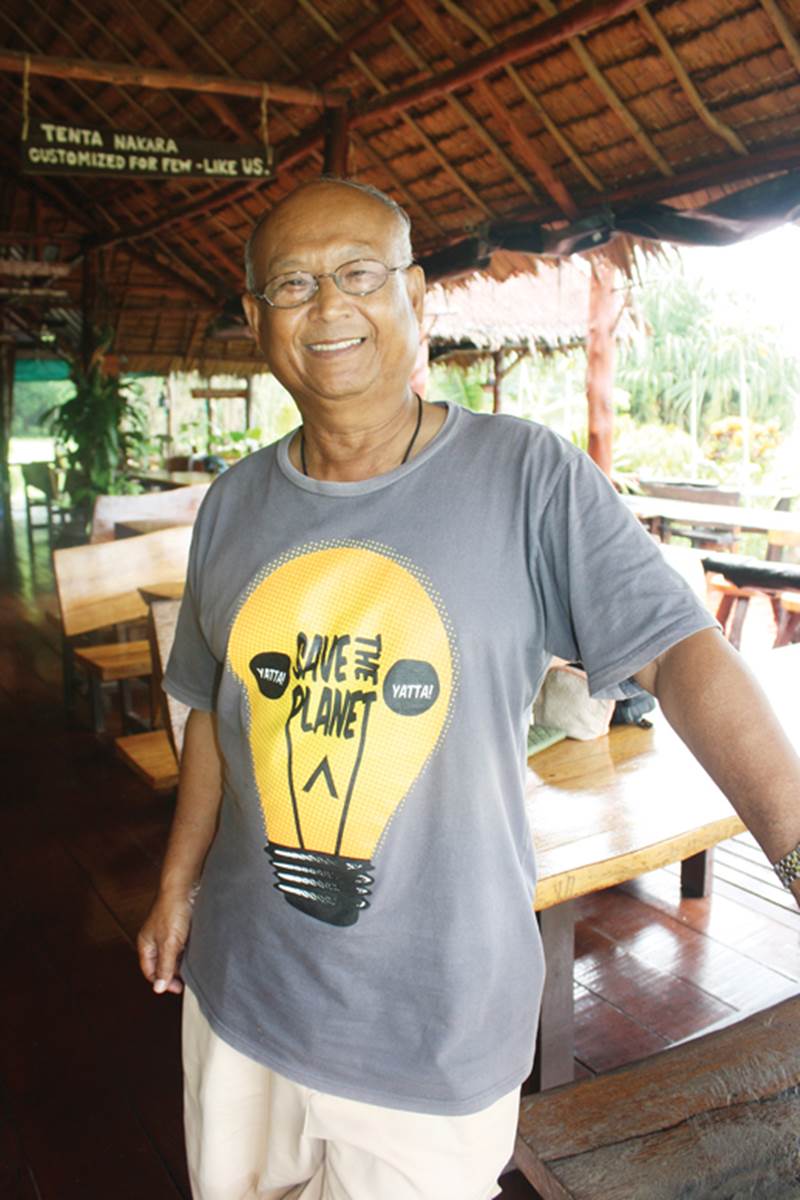
Paul’s good friend Sak, a retired Air Marshall with the Royal Thai Airforce and the current GM, spends around 10 days a month at the resort during high season, and seven days during low season.
The resort attracts, perhaps surprisingly, a steady number of visitors, most of them Westerners.
Sak says in the low season two or three ‘bungalows’ a day are occupied, and in the high season usually 13 or 14 on average.
October through to March is the best time to visit, Sak says, because it’s not too hot. Visitors who stay between April and June must be hardy – with no electricity (in other words, no fans or air-con) this means some hot nights in the tent.
The mantra of the resort is “nature in the natural way,” and indeed the place is very environmentally-friendly. There’s no rubbish on the beach thanks to almost daily beach clean-ups by staff, and the large forest area surrounding the resort is also free of trash.
“It’s very easy to solve problems with chemicals and technology,” says Paul. “But it’s more friendly if you use a natural approach. It’s more difficult, but it’s fun.
“For instance, during the rainy season the grass area around the restaurant floods. It would be easy to pour chemicals into it to kill the mosquitoes. But then it also kills the fireflies and butterflies.”
To say the resort is entirely electricity-free is not quite true – a diesel generator runs from 6pm to 10pm and powers the restaurant and it’s during these times guests can charge electrical devices such as cellphones.
Sak says they are lucky that Tenta Nakara has a natural well, the only one on the island. This provides them with clear, clean water from deep underground, and the resort uses this water for cleaning, the toilets (non flushing) and showers (cold water only).
Also worth a special mention is the resort’s organic garden, full of cucumbers, long beans, morning glory and bean sprouts, all free of insecticides.
Indeed, the whole resort is chemical-free aside from the sprinklings of sulphur under the bungalows and around the restaurant, which Sak says is essential to keep snakes away.
“Here we are lucky that there are not a lot of bugs that eat the food. In about two or three months we plan on launching a new project, a hydroponic garden. Usually you need electricity for this but we can hopefully use rechargeable batteries.”
While electricity is connected to a small part of the island, next year there are plans to introduce it island-wide. Paul isn’t sure what this will mean for the resort, but says replacing the expensive generator (which costs them B400-500 per day to fuel) with an electricity connection might be an option, but they would still only use it from 6pm to 10pm.
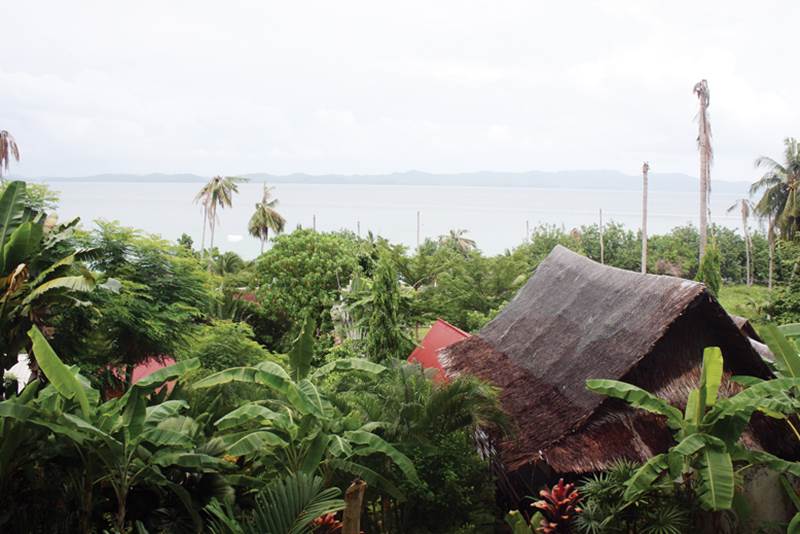
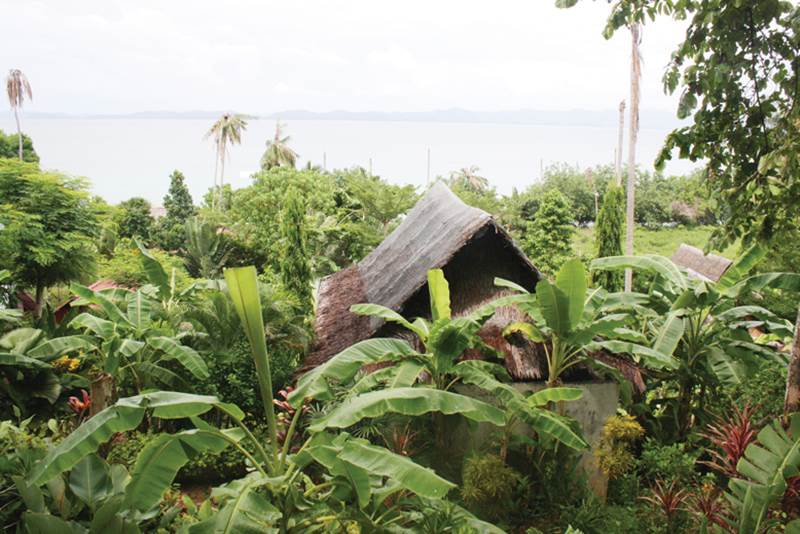
With all its lush greenery, the area is a haven for exotic insects and animals, including birds, butterflies, moths, large praying mantis, monitor lizards, hawks and green snakes.
There’s also the resort’s family of five geese, which many Thai people believe are good for warding off snakes. And not to forget Chaya and Nara, the resort’s pet dogs.
There are lots of nature-based activities to do on the island, but primarily the resort is a place to relax and unwind – don’t expect to be entertained.
There are kayaks for hire (see if you can beat the resort record of 1 hour 2 minutes for the quickest time kayaking around Naka Yai set by a pair from Norway) as well as tours to nearby islands.
The Naka Yai village is a 20-minute walk over the hill (you’ll need decent walking shoes in the wet season and plenty of mosquito repellent) where you can find the local school for 21 students.
This village is home to around 200 or so residents who live on the island, though around 150 of these working on Phuket during the day.
On the rainy Sunday we visit, there’s barely any activity in the village – only a few women out walking with their children. There’s an impressively long pier too, and a few fishing boats parked on the sand.
Sadly not everyone who lives on the island is as environmentally friendly as Paul, Sak and the team at Tenta Nakara. In the village there is plenty of discarded trash in the forest, and broken glass and plastic on the beaches.
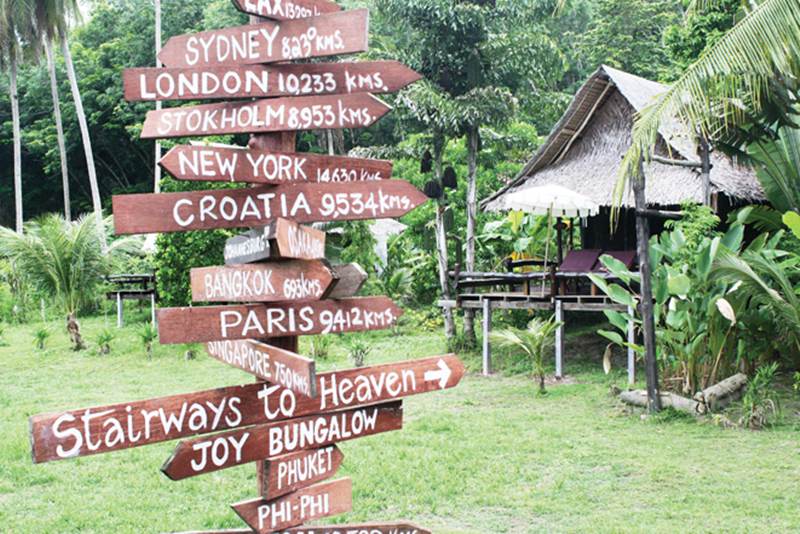
After five years experience running Tenta Nakara, plus another 20 running sister property Joy Bungalow in Krabi, Paul believes tourists are generally very respectful of the environment.
“I would blame it on the construction workers and and the locals – they are not treasuring what they have. It’s very sad when you see the Ao Por area too – it’s terrible. When you throw plastic into the sea, it stays for decades. The locals don’t realise what they’re doing.”
Sak’s also aware of this problem and he hopes the resort’s positive attitude toward the environment will have a knock-on effect on others living in the area.
He and the 15 or so staff at Tenta Nakara try to educate the island’s youth by holding environmentally-themed drawing competitions with large cash prizes in the hope they will learn how to dispose of waste responsibly.
Speaking of waste, Sak says all plastic waste from Tenta Nakara is taken to Phuket, where it is given to collection staff at the municipality. Leaves are disposed of underground or used as compost and fertiliser, and wood is occasionally burned if there is too much lying around.
Sak acknowledges this isn’t ideal, and they are working on new ways to dispose of large amounts of it.
Paul says modern incinerators. which leave a smaller environment footprint, are not really suited for a place that has such a small number of bungalows, but might be an option in the future, along with solar energy. Toilet waste goes into a large tank, which is treated with EM (Effective Microorganism) technology; organisms used to break down bacteria and reduce waste and produce fertiliser.
“I love the concept because it’s very different from other places,” Sak says.
“We love to help save the earth. It’s amazing really; when I first started I didn’t think there would be so many guests who would love to stay at a place like this.
“There’s no electricity, no hot water, no air conditioning, and you’re sleeping in a tent – but some guests stay as long as two weeks. Most stay two or three days, though.”
Sak says since Tenta Nakara was built, it has considerably grown in popularity.
“Ninety-five per cent of guests love this place and are satisfied. Maybe five per cent don’t know that much about it before they come, and then they arrive and there’s no television,” he says.
Visitors are mostly European, with those from Denmark and Sweden coming in large numbers. Close behind are guests from Russia, Germany and the UK, with growing numbers coming from China.
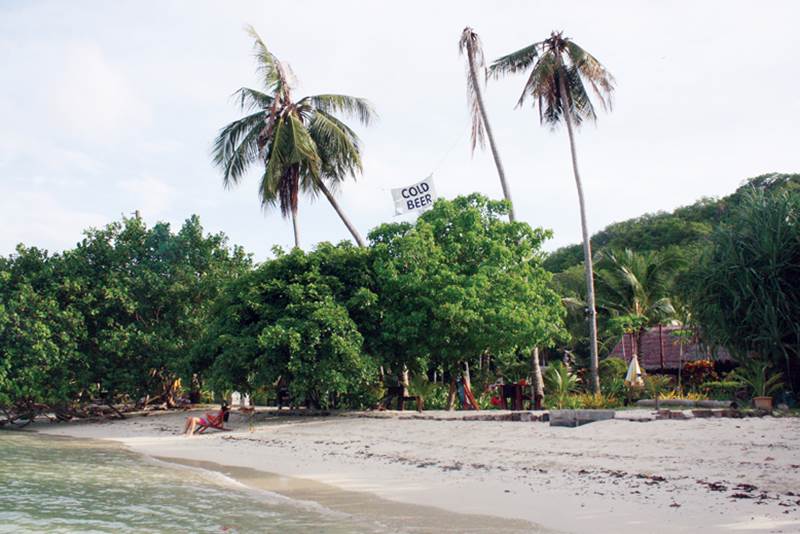
But people don’t always have to come for the night, Sak says. There are many “drop in” tourists who are simply attracted to the place by the large “cold beer” sign strung high up in a coconut tree near the water.
It’s visible from afar, and probably a welcome sight to those who are on a long kayaking trip, or simply need a stop.
Phuket residents are encouraged to come out for a day trip or in the evening for dinner and drinks, and just need to call the resort 30 minutes or so before they want to come over by longtail boat (B600 per boat trip – more after dark – and it usually fits eight people).
Coming for dinner is certainly recommended. Comments in the resort’s guest book praise the food at the restaurant, with some even writing that it’s “the best in Thailand”.
A bold claim perhaps, but the food really is good. Recommended is the miang kham, traditional Thai finger food consisting of betel leaves filled with a mixture of toasted coconut, red onion, dried shrimp, peanuts, chilli and ginger.
Tenta Nakara’s website blurb is simple: “Our commitment is to give you nature in the most natural way, to preserve the environment with its rustic simplicity, unobtrusive design and attention to comfort without compromising the ecosystem.
“Prepare to stay longer than planned because once you are settled you will not want to leave!”
For more details visit tentanakara.com or email info@tentanakara.com