



Sit down for a chat with most property developers and the talk will be entirely about the product – why it’s world-beating, the gorgeous views, the high resale value, the rentability and so on.
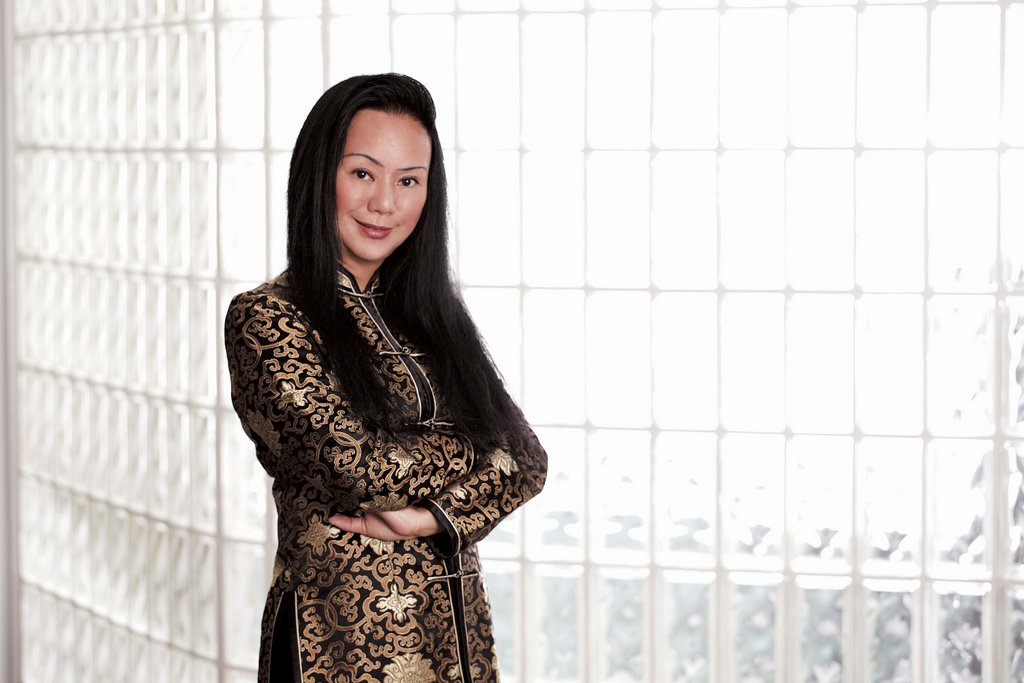
But sit with property and hotel developer Ho Kwon Ping, Executive Chairman of Banyan Tree Holdings, owner of the Laguna complex, and his wife Claire Chiang – as The Phuket News did recently – and you quickly find yourself talking about values and ethics.
This is unusual and refreshing.
Mr Ho – known to employees and associates alike as KP – and Ms Chiang are baby boomers, born in the early 1950s.
Both of them are still heavily influenced by their activism in the political and social turmoil of the 1960s when she was a development sociologist and he was a development economist, both of them determined to change the world.
Their partnership is very much an equal one. Claire recently described KP as a “capitalist in his pocket and a socialist in his heart”. Talking with The Phuket News, she adds, “He’s also a romantic in spirit.”
Claire says she is “his conscience. Those are my initials: CC, for conscience and clarity. We play check and balance … so there are certain things I help to moderate or tackle or contradict, and vice versa. Very often we are each other’s best competing friend.”
Does KP see himself as capitalist/socialist/romantic? “It’s not a matter of how you see yourself,” he replies. “Let me ask you, ‘Have you changed that much fundamentally from when you were 25 to 30 years old, in terms of your values, in terms of what you think of life?’
“You’ll probably say no – you’ve changed your profession, you’ve changed your hairstyle. But especially for those of us from the baby boomer generation, we went through the Vietnam War, through [the student riots in] Paris in 1968.
“Compared with my children’s generation [the couple have two sons and a daughter], we went through a period when we had a lot of ideas, and I know a lot of my friends from that time are businessmen now, like myself.
“Some of them have totally sold out – investment bankers and so on. But there are others like myself who still truly believe that what we are doing today is related in some way to what we wanted to do in the past.” Slowed down, perhaps.
KP protested against the Vietnam War when he was a student at Stanford, and also ended up on the uncomfortable end of establishment reaction to baby boomer ideas when, as an economics writer for the Far Eastern Economic Review, he spent two months in solitary confinement as a guest of the Singapore government.
In a BBC interview 18 months ago he described this “sobering experience” as a turning point.
“You realise in solitary confinement who you are and who you are not,” he told his interviewer. “I realised I was not a Nelson Mandela. I was not ever going to be.
The causes for which I might have been imprisoned were not the causes that … I really could identify with.”
While in jail he proposed to Claire. After he was released the pair settled on Lamma, one of Hong Kong’s outlying islands, for an idyllic four years in a 40-square-metre apartment in Yung Shue Wan, or Banyan Tree Bay, hence the name of their company.
With their development backgrounds, both he and Claire, he says, wanted to do something to “bring development to the Third World”.
Claire says, “The values [we acquired in] the ’60s are so much a part of us that we are habituated to thinking about the world, working the family relationships, the way we brought up our children … it is all related to what we believed in as young adults.
“We were children of the school of development. We were also born in an era when nation building was at its height. It gave us a texture of what is in the future and what we can do and should do and must do.”
Believers in change in the 1960s were often ready to go out on the streets and scuffle with the police to further those beliefs.
But as people get older, she says, “We are more restrained. If capitalists were more restrained in the way they do business we would not be in such a mess. The lack of restraint and the lack of a sense of responsibility towards the world are causing all the downfalls.
“That restraint comes with age, with the love for the traditional, the conventional, the basics.”
In modern society, there is, she says, “too much hurry and the lack of a moral compass”.
KP sees age as bringing a modicum of wisdom. “I don’t think we’ve changed that much. We’ve got a bit wiser. We try to make money…”
Not that the company is making too much of that these days. From a high of S$2.23 in October 2007, Banyan Tree’s share price plummeted to 28 cents in Mar 2009, and has recovered only to 56 cents today.
The property side of the business is to blame. KP has appointed Abid Butt to look after the hotel side – “I don’t even look at the hotel business now, because I have to spend most of my time trying to get us out of this hole.
“The hotel side is doing very well, but we’re not doing very well in terms of return on overall assets, which is why I’ve been selling assets, selling some very profitable assets and some relatively unprofitable assets, both, to get the cash to reinvest in projects that will give us a faster yield.”
In both Vietnam and China, despite the company’s high profile, it has only 14 or 15 per cent equity in projects in which it is involved.
“We will never, ever, invest 100 per cent in any hotel any more because it’s just too slow a return.” The secrets of his success so far? “You must know your destination and, largely, the direction. Others can probably help you plan the GPS to get there.”
Business success, he firmly believes, is a combination of intent and luck. “The two are absolutely indispensible.”
Does he make his own luck? “I don’t think so, but you can either ride the wave or the wave goes out ahead of you. It’s not a pure matter of luck. You’ve got to know what you want to do, your direction, and when something happens, you need timing and judgement.
“I learned from my father that things happen in ways and patterns and cycles that do not change. Age helps. When you’ve been through a few bad cycles you learn that history always repeats itself.”