


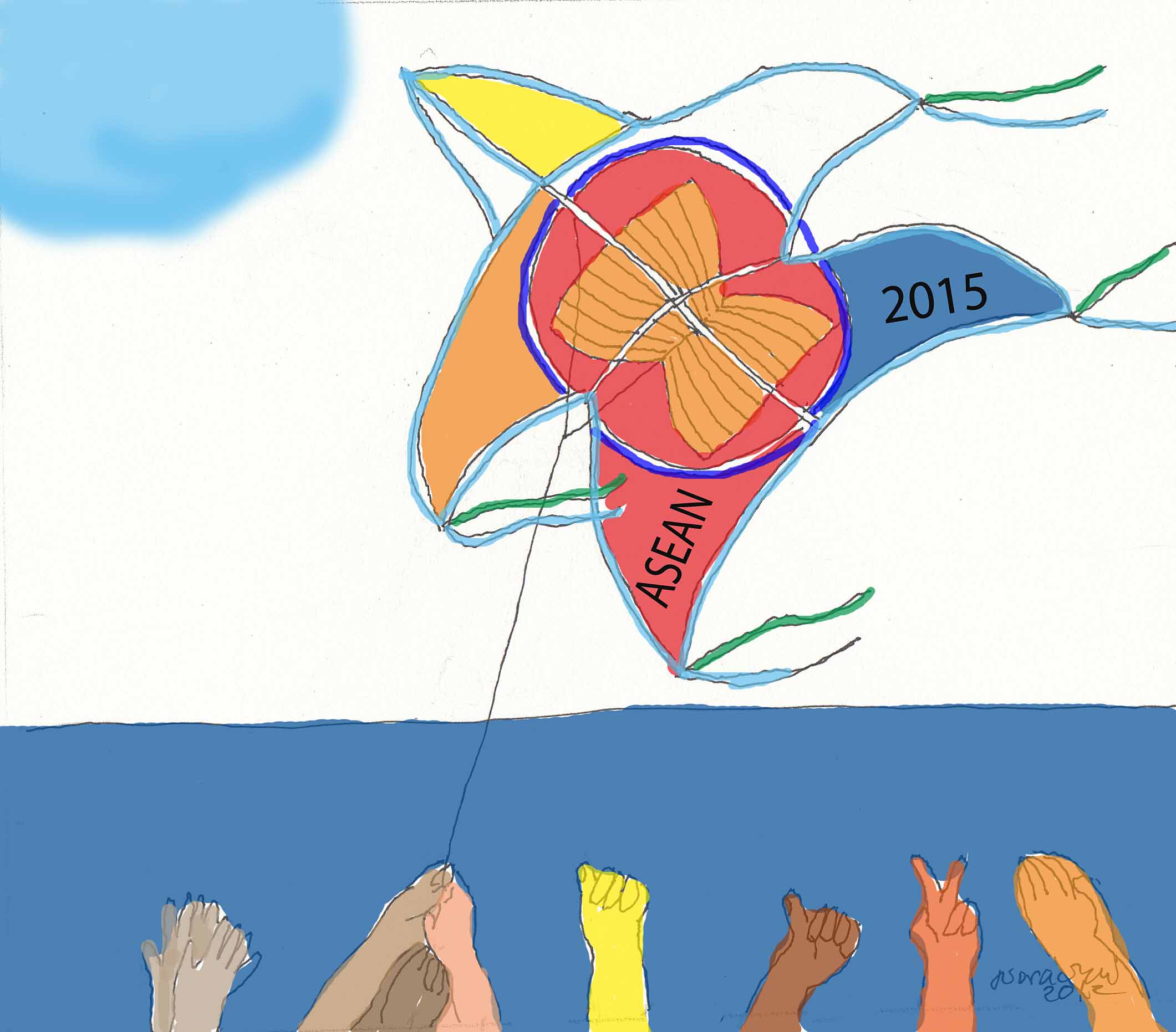
ASEAN secretary general Surin Pitsuwan's recent comments extolling the virtues of the positives of an ASEAN community assume a more sinister aspect when one considers his background as a fellow of the Ford and Rockefeller Foundations, his post at the American University in Washington, and his connection to the US Congress.
Some argue that the unrestricted free trade agreements (viz. NAFTA) and de-regulated investment are destroying the middle class in EU and North America, manufacturing, education and social security. This begs the question as to whether the same will happen to ASEAN countries.
Unemployment throughout the so-called developed world hovers officially at 10 per cent, and unofficially, much higher. In the US the government had to implement a revised formula for assessing unemployment numbers to get the rate below 10 per cent. Using the old formula, it is closer to 25 per cent.
Southeast Asian nations, with their high tariffs, have pursued until recently a course opposite to those in the EU and NAFTA. The result has been remarkable growth and improved living conditions for people who have also found that ladders of upward mobility have room for them, too.
Now there’s a real possibility that this could change under the stewardship of Surin, who some believe carries the hod for his mentors in Washington. Investment will naturally chase opportunity for highest profits, meaning those nations that depress wages, depress employment, minimise the public sector and eschew social and environmental safeguards will receive the odd bone. Profits will fill the pockets of a few, mostly foreign, investors, and the rest will be digging through the sand for lost coins or gnawing at roots.
The great question is, why change a system that enabled peoples whose economic and social conditions barely changed over a period of 800 years to become 'tigers' within three decades? But if unrestricted free trade and de-regulation can result in the repeated panics and de-industrialisation of Europe and America, with their vast and time-tested manufacturing bases and legal systems, just imagine what can happen here.