


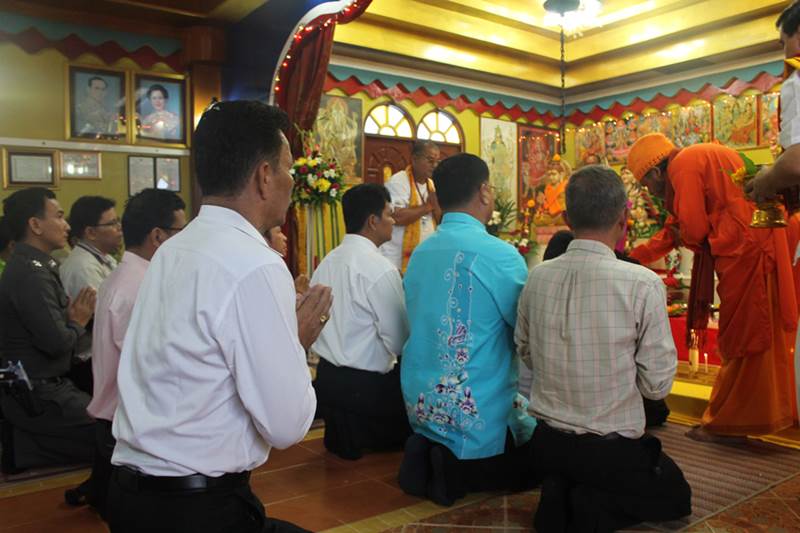
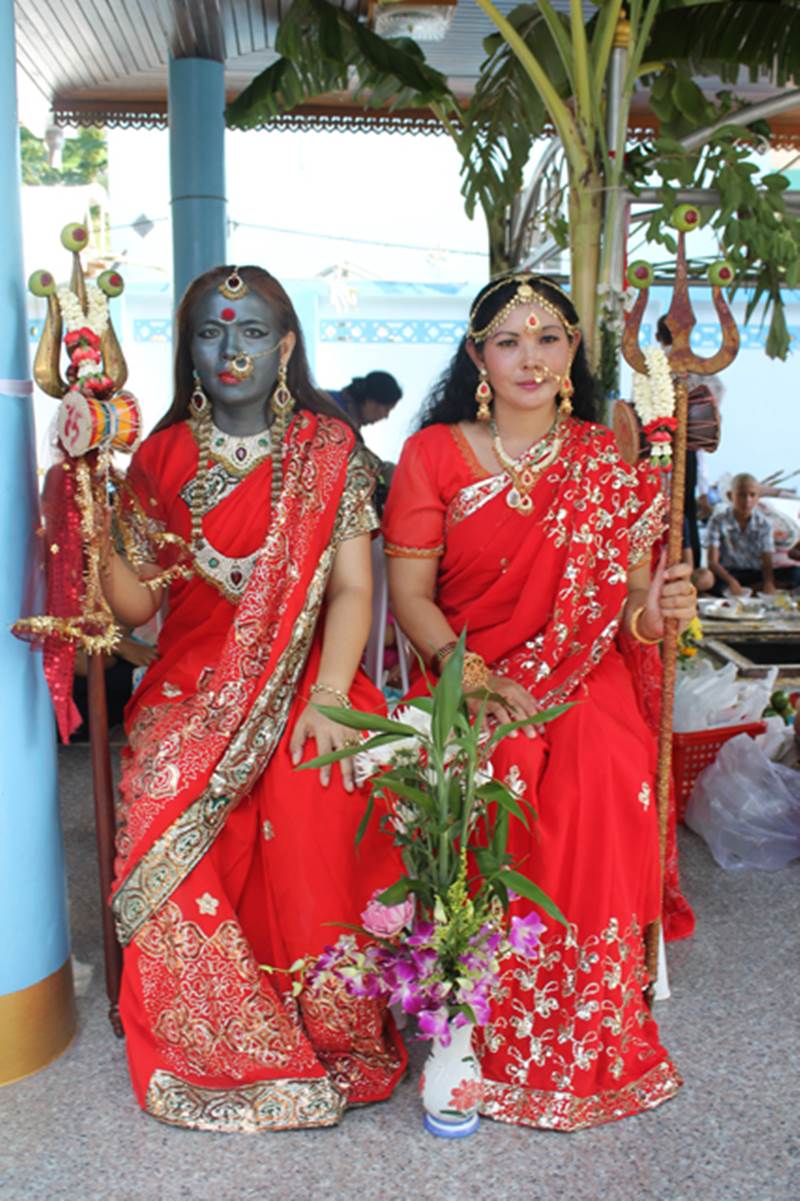
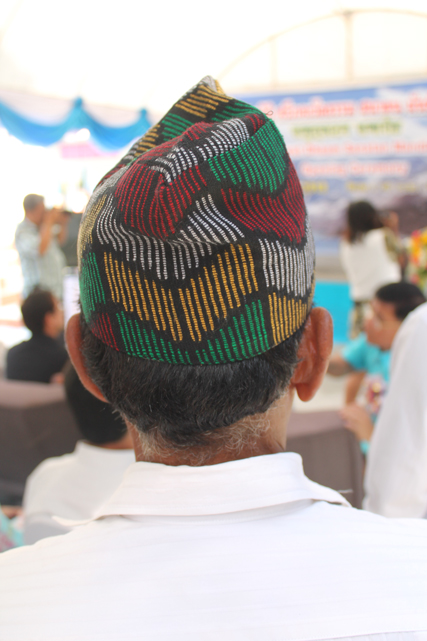
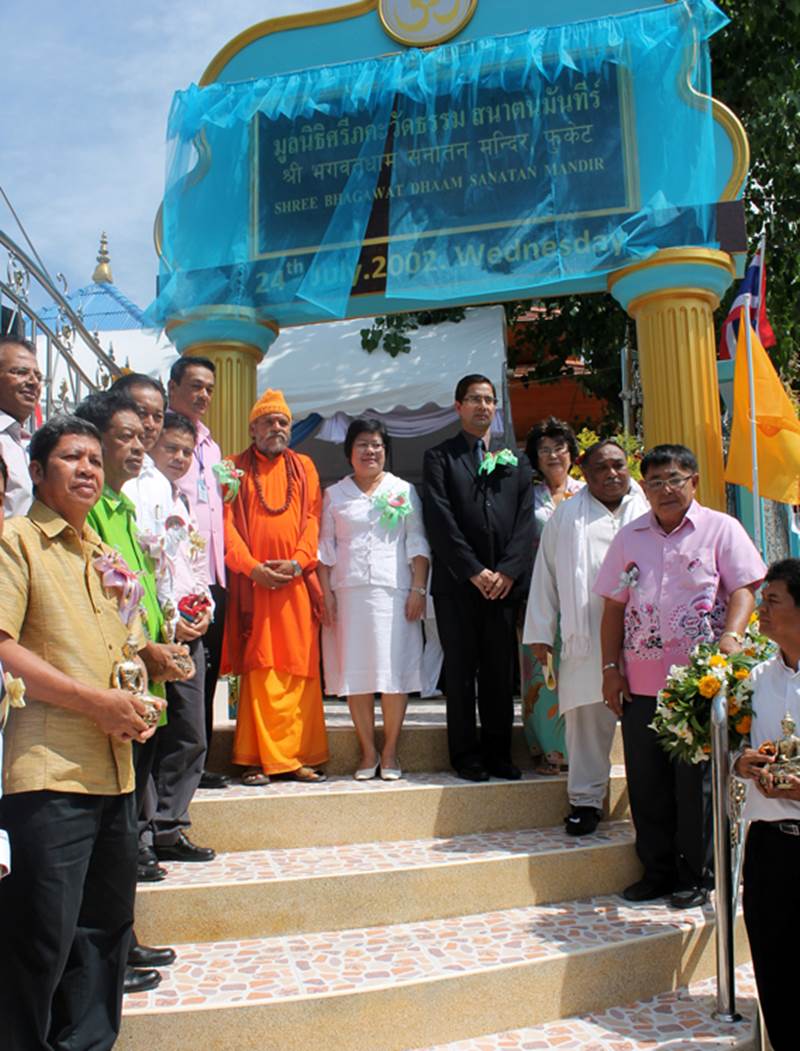
The event attracted hundreds from the local Nepalese community, many of whom work in the tailor industry in Patong and other tourist areas, as well as a select group of politicians and local government representatives.
In-between shaking hands and overseeing the day’s proceedings, Phanuphong ‘Daniel’ Limbuprasertkul, president of the Thai-Nepalese Association, took time to speak to The Phuket News.
“We have many VIP guests here today, including nine Hindu priests from Nepal and of course the Ambassador of Nepal,” Daniel said, as we watched the lighting of incense sticks and offerings of food.
The whole bright and colourful celebration had begun a few days before, with the initial offering of donations that included water, milk, honey, butter and rice to several newly installed statues.
“These objects represent life,” explained Omjee Khodomkul, just one of the devotees wearing traditional dress, “and on this day we give these things back to those from whom we received life.”
“The design of the temple was mainly done by Nepalese designers and painters,” explained Daniel, “Lord Buddha is one of our gods, but we also have many more.”
Although similar to Buddhist ceremonies in certain aspects, Hindu events are also very different, with many acts such as the ritual walking in circles around the new statues by devotees.
“This reminds everyone that we are constantly going around the universe by dying, being reborn, and dying again,” said Daniel.
Phuket Vice Governor Sommai Prijasilpa, representing the island’s government at this culturally significant ceremony, expressed the importance of the Nepalese community to Phuket.
“There are around 1,500 Nepalese in Phuket and they do business very well and are important for Phuket industry – they are especially very good at tailoring.”
V/Gov Sommai joined the devotees in many parts of the ceremony, including the pouring of holy water on her hands by the visiting priest.
Milan Ghimire, the assistant secretary of the Thai-Nepalese Association of Phuket, explained the significance of this, “In Hinduism, when somebody goes to pray at a temple, after they finish our priest pours water on their hands. This is holy water and very similar to when in the Catholic faith, a wafer is given to devotees at the finish of the ceremony.”
Another curious sight for the uninitiated was the presence of groups of young boys with shaved heads and ponytails.
Unlike in the West though, where the sight of a group of teenage skinheads might cause alarm, for the Nepalese this is an entirely peaceful practice and an act of devotion performed by young men on the day of Rama Navami, the birthday of the god Rama, which fell this year on April 20.
“On this day we want our youth reborn as Brahmins (as scholars are known in Hindi society), meaning someone who comes close to Brahma, the supreme. From that day on, they pledge to always remember the supreme god and have to regularly meditate to the supreme god,” said Mr Omjee.
“Removing the hair means making the head clean and the thinking new. They become a new person that is responsible, honest and thoughtful. To leave the ponytail is a symbol of Hinduism,” he added.
Preparations are already underway at the temple to celebrate Nepal’s biggest festival, the 15-day long Dashain festival, set to take place in October. In the meantime, visitors of all nationalities and religions are always welcome to visit the temple, located down a side soi on Patong Hill.
For more information, email sbdphuket@gmail.com or call 089 719 1600.