


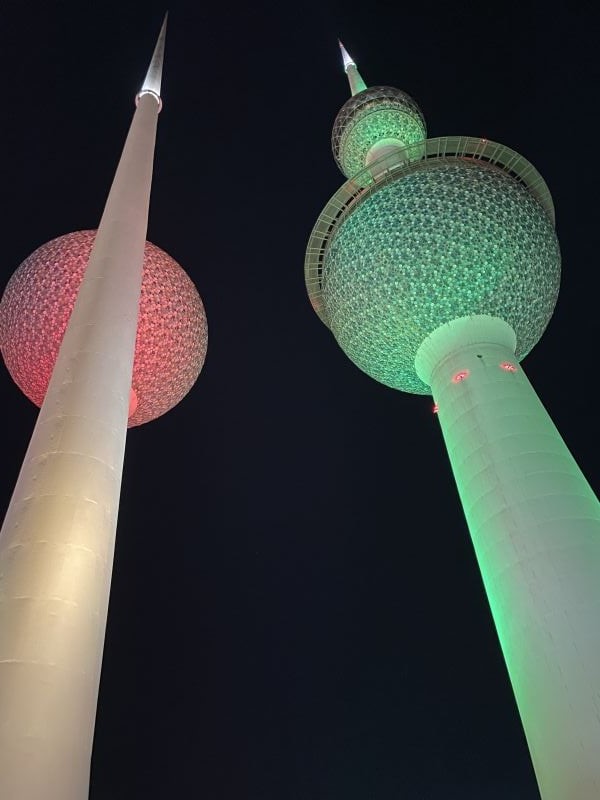
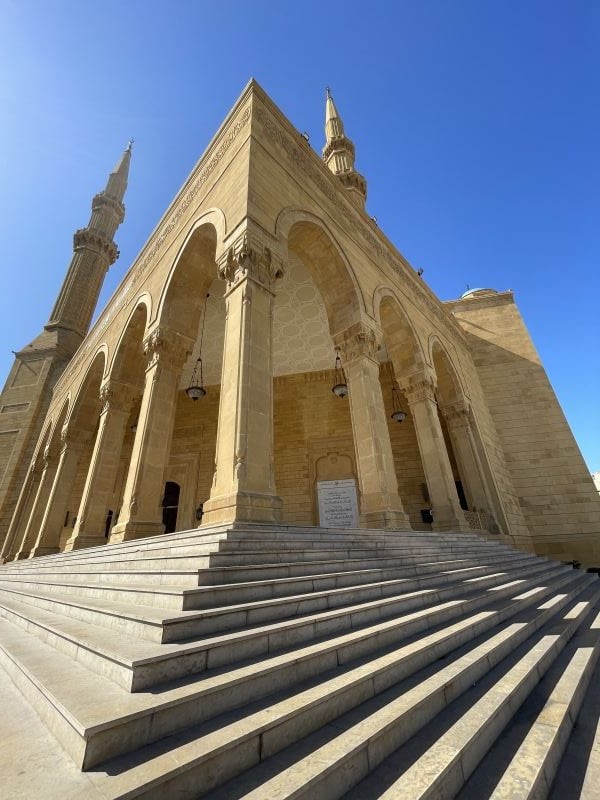
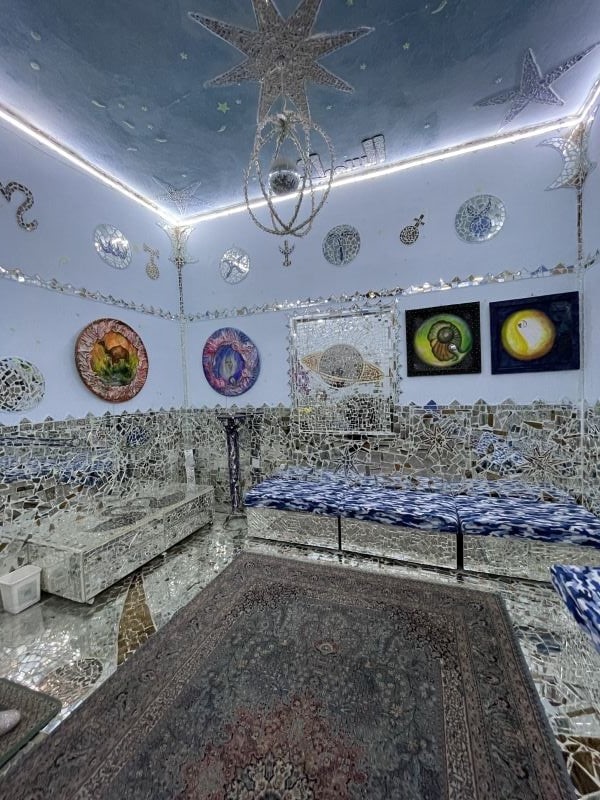
Recently, I tried exactly that. I tested AI travel planning in Bahrain, Kuwait, and Beirut – three destinations where reliable information can be scarce, opening hours inconsistent, and ground truth very different from online descriptions.
The results were enlightening, occasionally frustrating, and sometimes unintentionally hilarious.
Bahrain: AI Starts Strong
My experiment began in Bahrain, where AI performed surprisingly well – so well, in fact, that it encouraged me to continue the test.
I asked AI to plan a detailed itinerary: what to see, where to go, and when the lighting would be best for photography. The recommendations were clear, logical, and – crucially – mostly accurate.
One of the best tips was that I could visit the Al Fateh Grand Mosque until 7pm. I had no idea it stayed open that late. That single piece of information transformed my day. I arrived just before sunset, when the last golden light filtered through the arches. The mosque was completely empty – no crowds, no tours – leaving me alone with the stillness and the geometry of the space.
AI also suggested specific photographic details and vantage points, which genuinely improved my shots. For once, I felt like I had a competent digital assistant guiding my trip.
It wasn’t perfect. AI recommended visiting Block 338, the dining and creative district, around 7pm. This was technically a good suggestion, but the area was nearly dead at that hour. In Bahrain, nightlife doesn’t really come alive until well after 9pm.
Still, AI had performed well enough that I thought: Why not try this again in Kuwait?
Kuwait: The Desert of Misinformation
If Bahrain was encouraging, Kuwait was a spectacular tumble into the sand.
With only a day to explore, I asked AI to prioritise the must-see sites. The first suggestion? A remote island requiring boat transfers and far more time than I had – and possibly impractical altogether without private arrangements.
Not a great start.
Next, AI assured me I could visit the Grand Mosque from 9am to noon. Confident, I arrived at 9:30am on Saturday… only to be told, politely but firmly, that the mosque is closed to visitors on Saturdays.
Strike two.
Still trying to salvage the plan, I followed AI’s enthusiastic recommendation to visit the Martyrs Museum, described as a powerful and moving experience. I took a taxi 30 minutes out of the city, only to find the building completely closed.
Strike three.
When your “intelligent” travel assistant sends you on a half-hour ride to a museum that is closed, you begin to question how smart it really is.
By the end of my Kuwait day, I had abandoned AI entirely and returned to old-fashioned human advice – asking locals and adjusting on the fly. The best recommendation in Kuwait, to visit the Mirror House, came from comments I discovered in a travel forum.
Still, I was curious: was Bahrain a fluke? Was Kuwait an outlier? That curiosity followed me on to my next stop: Beirut.
Beirut: Where AI Fell Apart Completely
If Kuwait was a comedy of errors, Beirut was an exercise in chasing AI-generated fiction across a city.
I asked AI to design a photography-focused itinerary that included the Blue Mosque, the Yellow House, and several architectural highlights. It produced an elegant route with recommended lighting times, suggested angles, and even an efficient walking loop.
There was just one problem: this plan ignored opening times.
AI sent me to the Yellow House while it was locked. So I reshuffled and returned later – only to encounter the Blue Mosque closed at precisely the time AI had me scheduled to visit. I ended up zig-zagging across central Beirut, doubling back repeatedly, wasting hours and hemorrhaging energy.
By mid-afternoon, it was obvious: AI had created a perfect itinerary for a fictional Beirut that existed only in its training data. In the real world, it was utterly useless.
I managed to get the photos I wanted, but I was exhausted by all the duplicated visits.
So, What Did the Guinea Pig Learn?
Across Bahrain, Kuwait, and Beirut, the lesson was clear: AI is impressive, but it is not reliable for real-world travel logistics – especially in places where information changes quickly or isn’t maintained online.
AI excels at structure, creativity, and inspiration. It’s brilliant at suggesting themes, photographic ideas, and routes. But when it comes to the gritty details – opening hours, closures, transportation realities – it can lead you spectacularly astray.
And yet, when it works, as it did in Bahrain, it feels like a superpower. A private travel assistant available 24/7.
The Bottom Line
AI is not a map. It’s a compass. It can point you in a direction. But you still need to navigate yourself.
And sometimes, that’s exactly what makes travel – and experimentation – so rewarding.
Adventurer Todd Miller has explored more than 120 countries. He authored the best-seller ENRICH: Create Wealth in Time, Money, and Meaning. www.ToddMiller.asia.