


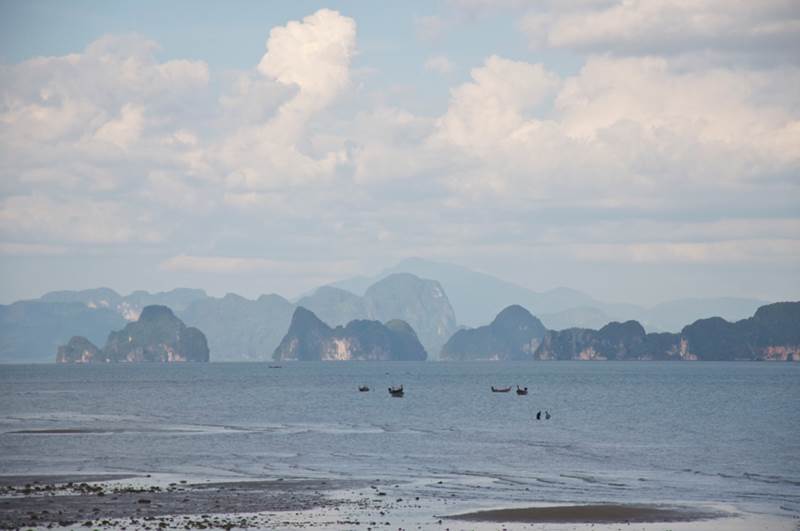
It takes only a short boat ride from Phuket to reach the largest island in the Koh Yao archipelago, but you may as well be travelling back in time.
Whereas Phuket has become an overdeveloped destination for mass market tourism, with all the tawdry nightlife, environmental destruction, and souvenir shops that entails, Koh Yao Yai – a third the size of its more famous neighbour, it’s home to only 8,000 people compared to the 600,000 just across the water – is a sleepy backwater, and all the better for it.
We reached the island by way of boat from Phuket’s Ao Po Grand Marina, part of the airport to resort transfer offered by Koh Yao Yai Village, where we had booked in for a long weekend getaway. The comfortable boat can easily seat 20.
You can choose to sit in the cabin, on the covered back, or take in the views from up top – we fortunately had the boat all to our little family.
Our destination was the Klong Hia Pier, one of the main two on Koh Yao Yai, which sits in a sheltered bay on the north shore of the island, facing the more-developed Koh Yao Noi (it means ‘small long island’, ‘Yai’ being the Thai word for big). Hotel guests are met at the pier by the Koh Yao Yai Village’s own brightly painted po tong, or open-backed bus, the main type of public transport on the islands.
As we sat in the back, faces buffeted by the breeze, bouncing along the concrete road, girls in colourful headdress (the island is overwhelmingly Muslim) waved from passing motorbikes, while little children peeked out from doorways, curious about these new visitors to their home.
After 10 minutes or so, our driver turned off the main road (there is really only one on the island, running north to south) and down a smaller track sheltered by the foliage of rubber and coconut trees.
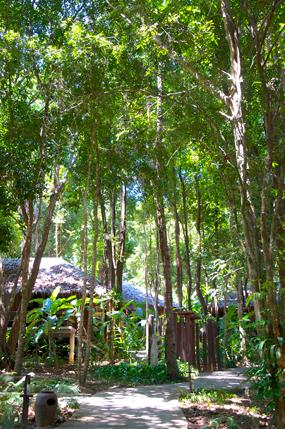
We passed a small rice paddy and dozing water buffalo, before coming to a stop next to the ‘lobby’ of the Koh Yao Yai Village resort, in reality a series of platforms housing the activities desk, gift shop, library and reception – it’s like entering a ground-level Ewok village, but without furry denizens (unless you count the odd cat wandering about).
Sipping on a welcome chilled roselle water, as staff take care of your check-in, you catch a glimpses of the Andaman Sea in the near distance.
Like much of Phang Nga province, the east side of Koh Yao Yai is extremely tidal, with sea levels that can vary by up to 3 metres. It means that depending on the time of day you head to the beach, you could be swimming just off your beach chair, or will need to make a long trek out (and even then, you’ll probably be walking in waist deep water).
Catering to a mix of honeymooners and families, the Koh Yao Yai Village resort has a variety of accommodation – with our two young ones and the mother-in-law in tow, we had booked one of the spacious family villas located up the hillside, in the middle of what used to be a coconut and rubber plantation.
The next day we’d signed up for the Village Tour, a five hour exploration of the island by po tong. My 18-month-old son was particularly excited about taking the “bus”, and had clambered up into the back before the driver had even arrived, insisting we should “go, go, go!” Luckily for us, our guide arrived shortly afterward, and we were off.
With a beaming smile, Yob was quick to introduce himself and begin the tour. As it turns out, his grandfather used to own the coastal land the resort was built on, and as a child Yob had roamed the shore, helping collect coconuts for sale.
His connection to the land was such that after the hotel had been constructed, he went to the general manager and asked for a job. We couldn’t have asked for a better guide, as he seemed to know everyone we passed along the road.
Our first stop was at a small wooden house on stilts – most of the island’s homes are built in the traditional Thai style, living quarters raised above a storage area where animals are commonly kept – tucked away down a small side road. As we clambered off the po tong, the first thing we noticed was the scent of sweet coconut in the air.
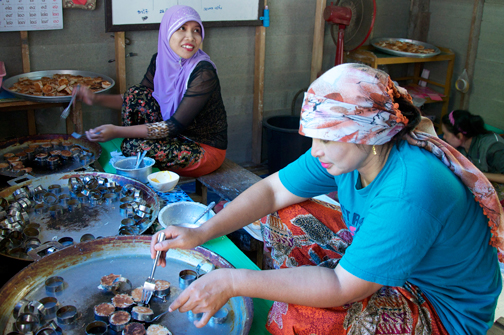
Climbing up to the house up a set of steps, we entered a small room occupied by three women sat on the floor, involved in what appeared to be a small assembly line – one lady heating small, circular mixes of coconut, water and sugar, the next spooning them out of the metal mould and placing them to cool, and the last wrapping them in plastic before bagging them up in bundles. These desserts, we were told, were hugely popular in Phuket, so much so the three ladies made on average 2,000 pieces per day.
After purchasing a bag to snack on, we boarded the bus and headed for the southwest coast, and one of the island’s few white sand beaches (as it is sheltered on three sides by Phuket, Phang Nga and Krabi provinces, much of the shoreline on Koh Yao Yai is mangrove or estuary-like).
Our first sight of the sand came through a large construction site. This, we were told, was a new resort being built by a Taiwanese investor, and a sign that Koh Yao Yai is slowly appearing on the radar of international tourism.
After a short stop to try some dried fish, which were laid out on blue sheets stretching across a field (word of warning, rip off the head and tail before eating otherwise you get a mouth full of bitterness), our driver next stopped in the middle of a rubber plantation so we could see up close how the sap is taken.
Tappers have to wait for about eight years before a rubber tree is ready to be harvested, but after that it will be productive for at least a quarter century. Thailand, along with Malaysia and Indonesia, is one of the world’s largest suppliers of natural rubber, and locally it remains big business – though tourism is gradually supplanting it. It was a reminder of just how rural this island remains.
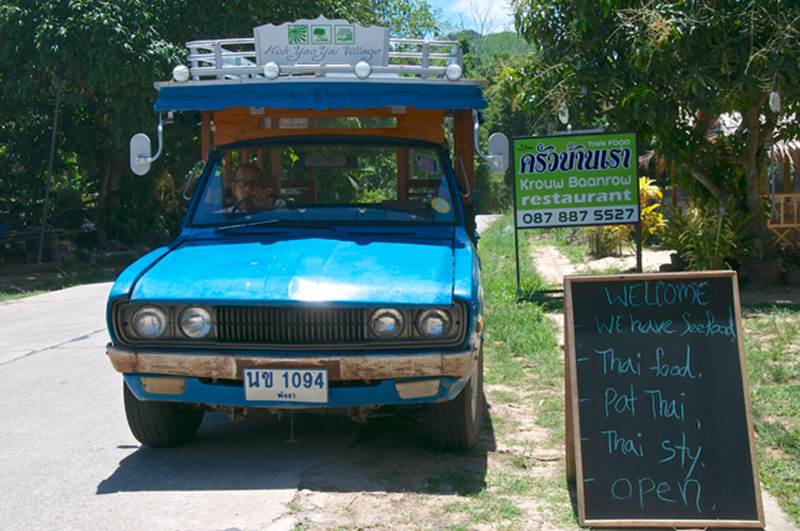
After a packed morning schedule, it was time for lunch. Yob knew just the place, and 15 minutes later we were at a small roadside restaurant run by his friend, sitting down to a meal of steamed fish, sticky rice, and fresh morning glory – plucked from the garden just minutes before.
Only a 5 minute drive from the Koh Yao Yai Village resort, the restaurant attracts guests in the evening for Thai cooking classes with the friendly chef and owner, as well as to enjoy the simple home cooking. Having just finished our excellent lunch, we were surprised when Yob suggested we might want lobster – turns out he meant that the next stop on the Village Tour was an offshore lobster farm.
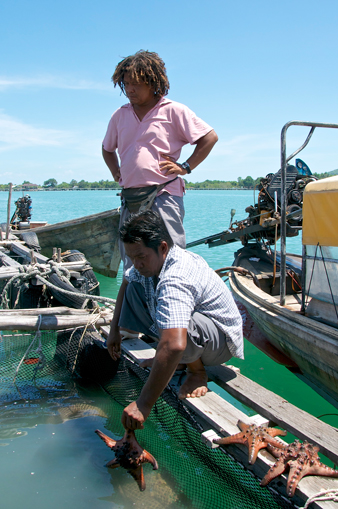
In the sheltered waters between the twin islands of Koh Yao Yai and Koh Yao Noi are anchored a group of tin roof huts resting on tethered bamboo rafts. A boatman with a huge afro, who Yob said was nicknamed ‘Bob’ after the reggae great, ferried us a few hundred metres offshore to the largest of the group. As we pulled close, a wiry, bearded man emerged from his simple dwelling to give us a tour of his floating home.
His ‘garden’ consists of a series of nets split by bamboo poles, which each housed a variety of fish including grouper, starfish, and huge, valuable lobsters. Grabbing the net closest to us, he quickly pulled it in and out of the murky gloom emerged a long tail at the end of a spotted body – it was a leopard shark.
Apparently, the fisherman keeps several of the animals as ‘pets’, the predators acting as guard dogs to warn off those tempted to steal his precious catch while he sleeps. It was all like Waterworld, without a pony-tailed clad Kevin Costner patrolling the area on jetski.
And then it was time to head back to the resort, via a quick photo-op with several coconut-picking monkeys.
It may seem quiet and underpopulated, but there’s an awful lot to see on Koh Yao Yai, as we discovered over our long weekend. It’s like Phuket used to be, and long may it stay that way.
Where to stay
The Koh Yao Yai Village has 50 distinct villas to choose from, with a 700sqm infinity pool, and variety of activities including the Village Tour. See www.kohyaoyaivillage.com for more information.