


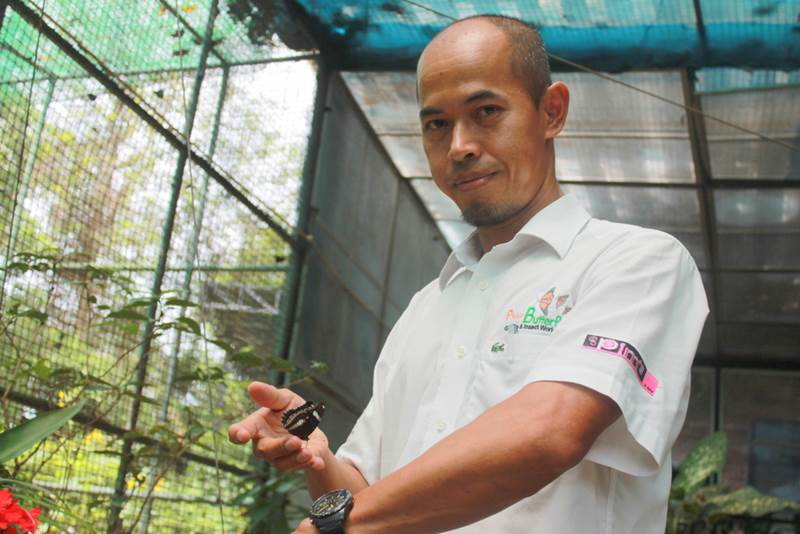
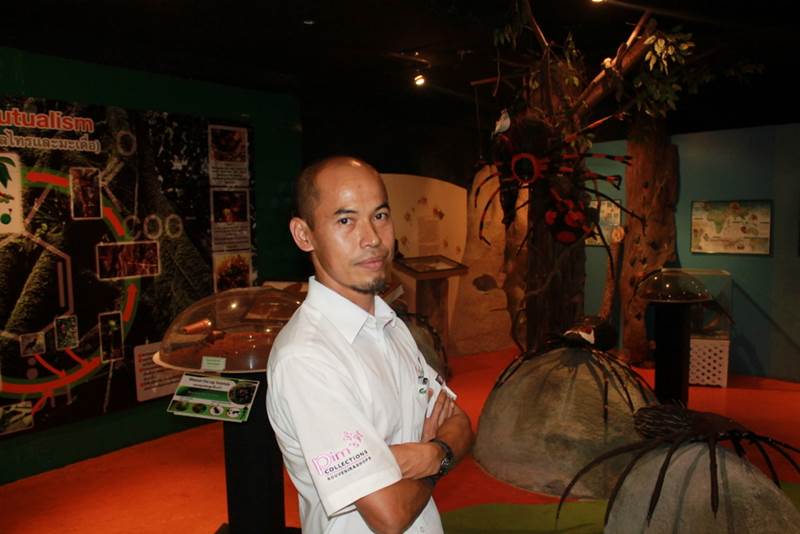
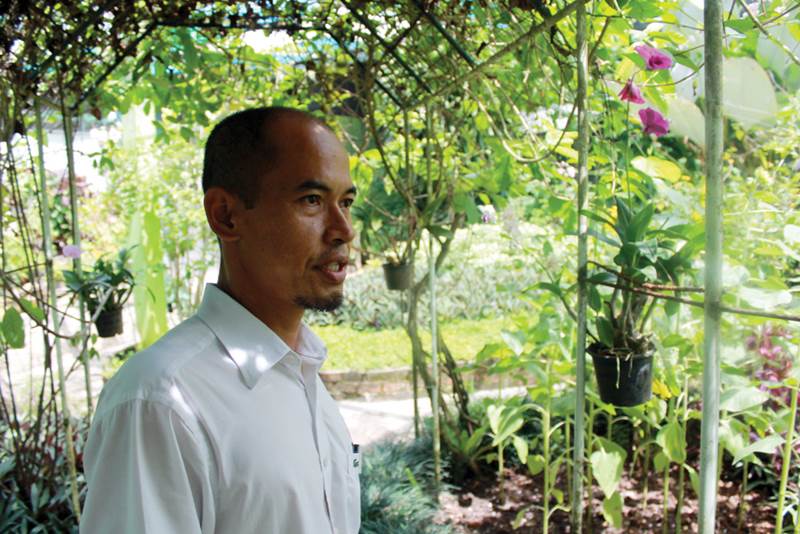
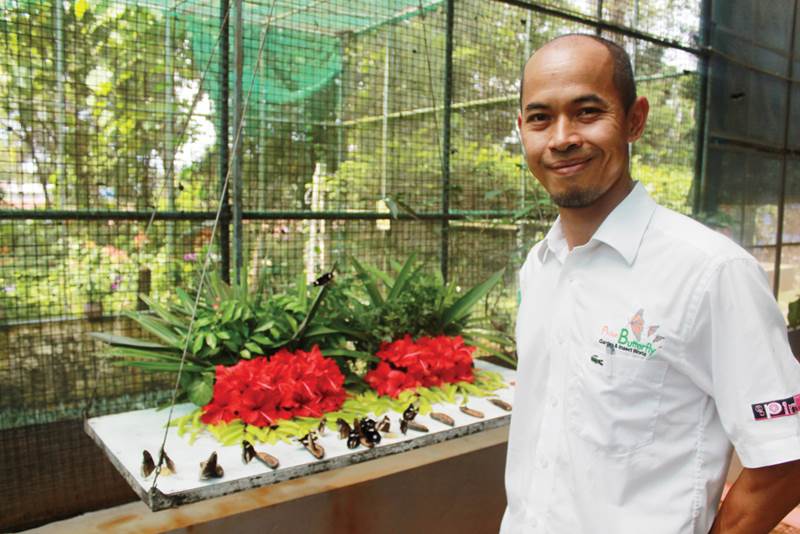
Mr Jaipet is speaking to The Phuket News in the garden’s new Pim Cafe (it’s named after his daughter), the latest addition to the expanding complex.
“I would say that we’re about 60 per cent complete,” says Mr Jaipet. “We’ve extended the parking facilities and now have a great dining section. But we would still like to do much more, including extend the insect museum, and have more entertainment, perhaps with multi media. We would also like to update the silk section.”
The Phuket Butterfly Garden was opened more than 20 years ago by Mr Jaipet’s father-in-law, Dr Prasit Koysiripong, but back then the set-up was much more basic.
Dr Prasit had become interested in butterflies when he visited the famed Penang Butterfly Farm in Malaysia, deciding to open up a Phuket version upon his return.
But back then, as Mr Jaipet explains, it was much easier to attract tourists, “At that time in Phuket there weren’t as many tourist facilities to compete with.”
After around 10 years of being operational, the garden closed for six years, falling into disrepair.
It was Dr Prasit’s daughter – Mr Jaipet’s wife – who reopened the garden in 2006. Just a few years later Mr Jaipet left his long career in hotels and the hospitality industry to join the family business.
“I’ve worked all over, including in Phuket, Hua Hin, Samui and Dubai. I left the industry because we had a child, Pim, and I wanted to have stability. Working in hotels, you never really know where you’re going to be stationed next.
“We also wanted to work in conservation, so it was a natural step really. We thought, ‘Why not get involved in this business?’”
It’s a business that, although one he loves, he believes has become much harder than it was in his father-in-law’s days, and this is not just because customers’ expectations are that much higher.
“Now it’s more difficult to maintain... Phuket has changed, the weather has changed, the cityscape has changed, and what people want and expect is different. As we breed butterflies, we need to provide food plants to them to help them grow.
“This is something that has always been difficult and in fact it’s getting harder and harder as increased pollution [in Phuket] makes it harder for plants to survive.
“We used to only have to go five kilometres away, now it’s more like 30 kilometres. Every other day we have to go to Paklok and even Phang Nga to pick up the butterfly food plants.”
The butterfly garden is extensively stocked with butterflies, exhibits and information pertaining to the 6,000 to 13,000 butterflies in the garden at any one time – all of which are native to southern Thailand.
It’s come a long way since it reopened, but the enthusiasm and love of the insects has remained the same.
“When we started it, we realised quite quickly that we loved it and it was very unique. There’s no other business like this,” he says.
And the business is growing slowly and surely – the butterfly garden was recently awarded a Trip Advisor Certificate of Excellence for 2013.
“When we first reopened a lot of the feedback we received was positive straight away. We’ve since updated the facilities and the quality of service is at a hotel standard. Now I think we’re actually ranked eighth in the world in terms of size.”
But Mr Jaipet is not going to stop there, “As said, we’re only 60 per cent of the way through our renovations, and we still have a lot to do. We always listen to our guests in order to improve.”
“The majority of our guests are European or come via tour operators, but we also get a lot of students from local schools – more and more Phuket people are coming.”
The garden uses its annual butterfly release event – now in its seventh year – to raise awareness of the centre and also the environmental factors that affect butterflies.
“As we can’t release them in Phuket Town [owing to pollution and building work] and instead do so at the Bang Pae Waterfall, it hopefully teaches people that we need to respect nature in order for butterflies to survive.”
Phuket Butterfly Garden and Insect World, 076 523 609; phuketbutterfly.com. Open daily 9am-5pm.