


Splish-splash
Don’t let water shortages get in the way of fun, for it’s that time of the year for the ultimate wet and wild celebration, a good excuse to cool off in the hot summer.
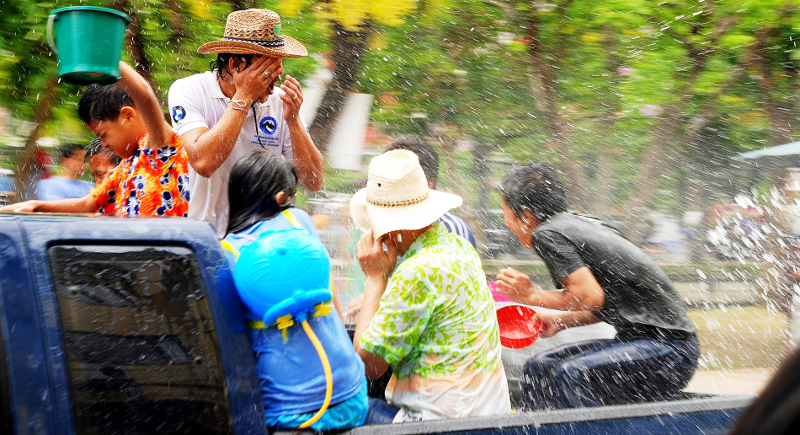
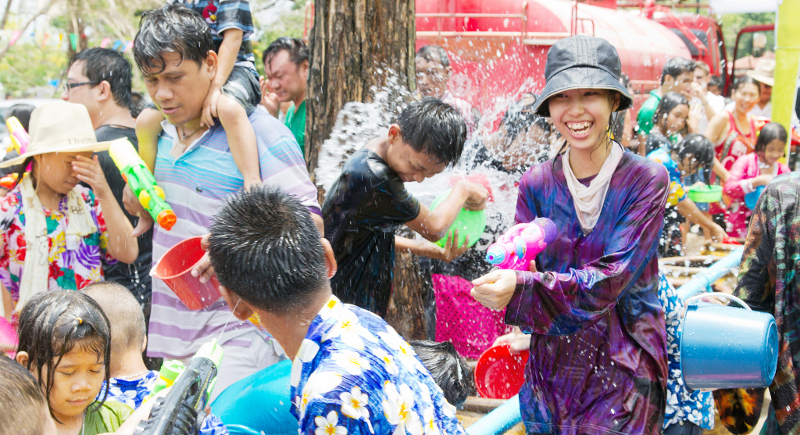
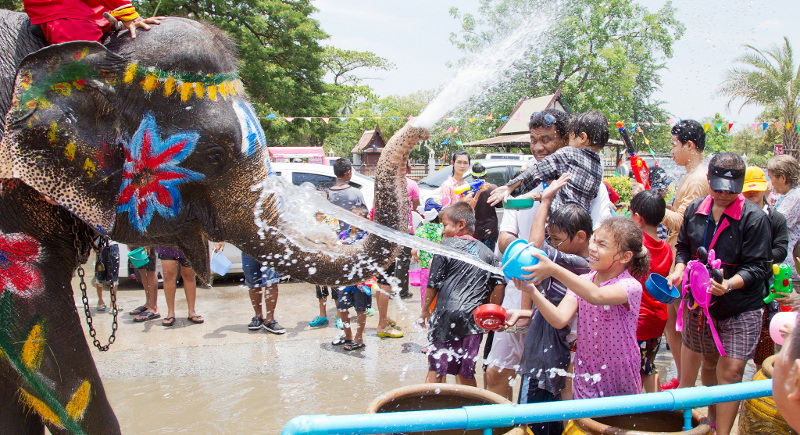
Huge drums are filled with water from homes, canals, lakes, wells and any other abundant “fresh” water source; a common addition these days are big blocks of ice to ensure the ammo is piercing cold, especially for unsuspecting victims.
The troops – toddlers, teens and adults who never quite grew up – are decked in bright tropical summer attire, if not branded by random yet trendy second-hand pop-culture icons.
They pile and pack into the back of pick-ups like migrant workers, only their meaner is much less reserved.
Armed with make-shift suction pipe guns and the latest, plastic super-soaker toys, these Songkran soldiers are voluntarily being deployed for the ultimate street battle.
The enemy? Everyone who crosses their path – other patrolling convoys, and especially the stationery party crowds posted along the road, who you’ll hear long before you see.
The marathon festival is fuelled by lots of bass and booze while possessed revellers dance and howl as they’re doused and smeared – forgetting all their worries, debts and heartaches. Release and full submission to pleasure.
Anyone who stands out – pretty young girls, wide-eyed farang – are popular targets, not only to be drenched, but for a quick grope, accidentally or otherwise.
The white powder or chalk, which becomes a messy paste when wet, allows the exchanges to get a little more intimate, as faces, limbs and everything in between get smeared.
See also: tinyurl.com/Songkranrules
Party Potty
For fresh tourists and other curious thrill-seekers yearning for some action, by all means, get your fill; find some Thai friends with a fully-stocked beverage cooler and the loudest bass-bumping speakers on a busy street-side. Let loose!
And if you feel so obliged to enjoy the party in motion on the dangerous, under-regulated and slippery roads, do so at your own risk.
Better yet, head to party central in Patong, where the water war carries on for day and night. (See also News Page 3)
Or you could be a little adventurous and head to a different part of Thailand, such as Chiang Mai where the festivities last for an entire week.
No matter where you celebrate, the party atmosphere will pretty much be the same – lots of energy, adrenaline, drinking, and likewise, road accidents – double the usual in fact.
What started out as a fun way to cool down at the height of the hot Thai Summer has quickly turned into a massive, chaotic street party that seems to have lost touch with its roots.
Origins
The Thai Songkran tradition – aspects of it anyway – most likely derived from the ancient Indian Hindu “Holi” festival, which typically occurs in March and can be described as a “Carnival of Colours” in which participants play, dance and spray each other with coloured dry powder and water.
From 1888 to 1940, the day April 1 was designated as Songkran in then-Siam, but finally the day was changed to April 13, based on some refined Thai astrological calculations.
Basically, Songkran marks when the sun’s position in the sky transitions from the “March” zodiac (Rasee Meen), and enters the new “April” zodiac (Rasee Mes), which represents an approximately 1-degree shift.
This transition is said to take about three days, so therefore the observance of Songkran officially lasts for three days. Songkran Day, or “Wun Maha Songkhran” is on April 13, while April 14 is known as “Wun Nao” and April 15 is called “Wun Thalerng Sok”.
April 13 marks the start of the transition, while April 14 would be the main transitional day between the two years, and April 15 is the first official day of the New Year.
Superstitions
Up until recent decades, Thai people and their traditions had long been tuned into the phases and trends of the stars, moon, sun and earth.
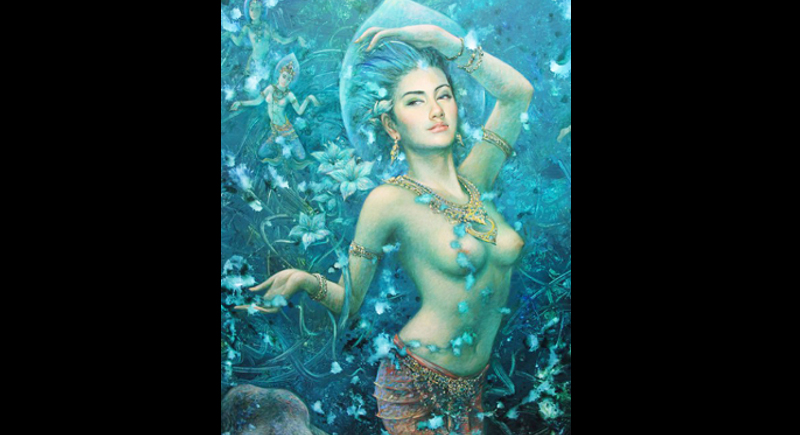
Traditionally, it was important which day of the week Songkran falls on, which coincides with one of seven Songkran angels, or Nang Songkran.
This year, the first day of Songkran falls on a Monday, which coincides with the angel known as Nang Korakathewee, while Wun Nao coincides with Nang Raksathewee and Wun Thalerngsok coincides with Nang Monthathewee.
According to one Thai horoscope interpretation of the implications this year, the government and military leaders will be powerful, fruits will be expensive, while philosophers and scholars will be happy.
Clean blessings
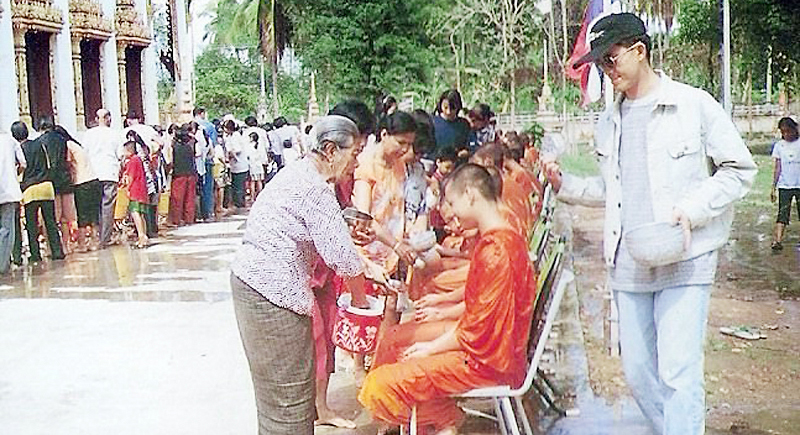
Traditionally, throughout the three days of Songkran, various “cleansing” ceremonies and merit-making activities are performed. This includes cleaning of homes, making alms offering at temples and conducting water blessing ceremonies known as “Rod Naam Dum Hua”.
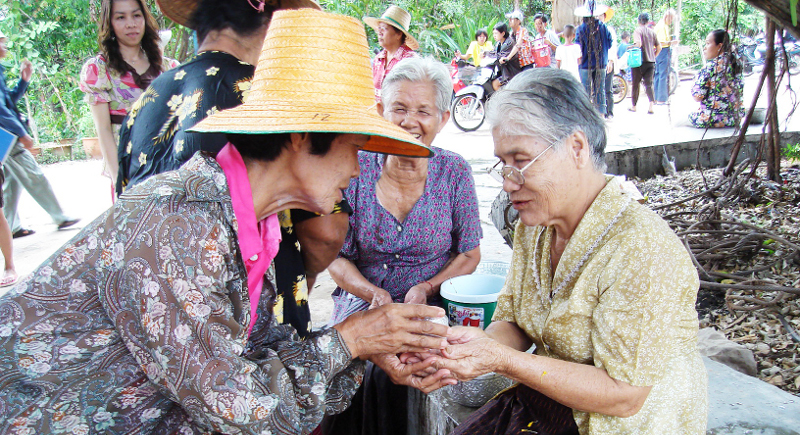
It involves pouring scented, lustral water on someone while giving a verbal blessing. If it is someone younger giving the blessing to someone elder, the water is poured on the elder’s hands.
But if an elder is giving the blessing to someone younger, then the water is poured on the head.
Pouring water on someone symbolises the washing away of bad luck and energy. You may also see people perform this rite on teachers, monks or a sacred Buddha image, for example.
Throughout North, Northeast and Central Thailand, such customs and rites are still prevalent and preserved, especially by the older generations. But in the South and Phuket, less so.
Throughout Phuket Town, there will only be water fights on the streets on April 13, though the festivities will last for several days in Patong.
Some locals may perform blessing rituals at home, the temple or even the mosques, but generally, will just try to enjoy the day off from work.
Therefore, to really experience the Songkran tradition authentically, it is highly recommended you visit the North – Chiang Mai, Lampang or Lamphun, for example – and don’t wait for the fading customs and traditions to die out completely.
In closing, The Phuket News would like to wish you a “Sawasdee Pee Mai” – Happy Thai New Year !