


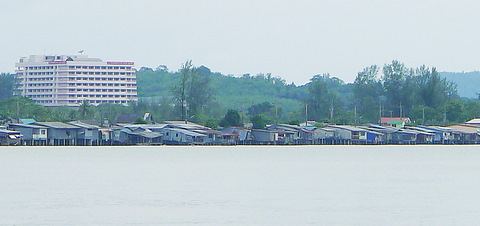
As usual, there is the contrast between that shanty village by the sea and the cement tiers of resort and apartments built into the hills on other coves in the coastline stretching further north into the sun.
Trying to drive closer to the village in Talat Yai Sub-district from the park, past the Songkla University Academic Centre, the road narrows and turns right towards the beach. It’s better then to park the car and explore the village on foot.
Stopping for a cool drink not far from the shore, the local people say the 2004 tsunami wave never reached this shop. They say no lives were lost as the villagers had some warning and simply ran for it.
The waves would have easily washed away the shacks that lined the swampy shore, then as now.
A rotting hulk of a ship is beached near a lake that fills the excavation pit of an exhausted tin mine of long ago. Restaurants line the other side of the lake, ready for evening dining.
Walking along Lim Sui Ju Rd takes you through shacks and shops of the village that look like they were built on land reclaimed from the sea.
An old man passes the hot afternoon seated on a plastic seat under a tree next to a painted spirit house. No doubt his favourite place to watch the passing parade.
Many of the shacks are actually in the sea with their support posts standing deep in tidal sea water. Generations of residents have lived in this no man’s land where the land in theory belongs to the Crown, but in reality to the mangroves and its sea creatures.
But as usual, humanity makes a mess in its environment. The human waste from the toilet must go straight into the sea, that under the houses becomes a grey tidal sludge, clogged with plastic debris.
But nature mostly can cope. As always, the mangrove forest lining the shallow shore provides the best nursery for baby fish, prawns and crabs.
Green-brown mud crabs feed and thrive on the organic waste of humans and grow large, fetching high prices sold live in the market, with their fierce large claws tied up. Ironically then, they become luxury seafood meals for the rich, completing an odd cycle.
A resident sits smiling on the little porch of his timber shanty with a tin roof and thin woven rattan walls. He is cool as his home is all open to the elements but there must be some rough nights when it’s stormy out at sea. His chickens and ducks are free-ranging in their enclosures on firmer land.
His nearest neighbours through mangrove trees have a more substantial timber house with a balcony on the second floor where the family is sharing a meal. A big shiny pickup truck stands ready nearby.
– Norachai Thavisin