


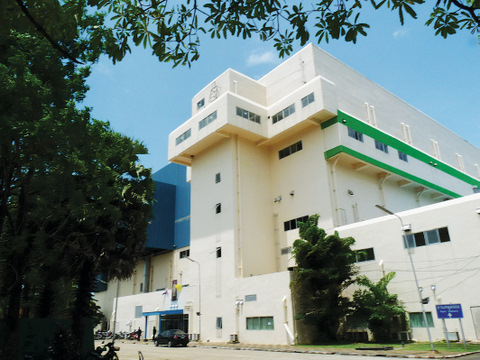
By following the convoy of rubbish trucks heading to Saphan Hin and their trail of methane gas, you could be sure that you are heading to the large municipal incinerator, located near Phuket Town.
At their destination, the trucks that come from all over the island dump their loads of rubbish, including paper, aluminium cans and bottles, if residents haven’t already separated them out for recycling first.
Phuket province’s total daily refuse of more than 550 tonnes turn up each day at the plant at the end of Rattanakosin 200 Pi Rd. Of that, only 250 tonnes a day can be burnt, which goes into a huge receptacle at the Phuket Solid Waste Incineration Plant. The remaining 300 tonnes that cannot be burned are buried in landfill south of the plant, near the sea.
Included in the 550 tonnes is 116 tonnes from Phuket Town, 92 tonnes from Patong, 42 tonnes from Karon and Vichit, and 40 tonnes from Rassada.
Work is underway for a second identical incinerator to be built next door to the existing one, with the aim to eventually be able to burn all the island’s rubbish. The second incinerator, which is about 50 per cent complete, is costing B100 million to build, and will increase the incinerating capacity to 700 tonnes of rubbish per day.
This is essential when the volume of waste is increasing by seven per cent a year, but it’s also an expensive way to dispose of the rubbish. The municipality puts the cost of incineration at around B54 million per year.
The incinerator is the only one in the country that can make electricity from burning the rubbish. It produces steam which turbines use to generate electricity. This means the incinerator is self-sufficient electricity wise, and the remaining electricity is put back into the island’s power grid, generating B30 million a year for the municipality. This income helps to offset the annual operating cost of the plant, plus maintenance of about B40 million a year.
The rubbish, fresh and dry, bottles, paper and plastic, is left for several days for the methane to rise from the huge pile. The strong-smelling gas is channelled through various chambers to be treated so that no offensive smell pollutes the surrounding areas when the gas is let out through the plant’s chimney.
When the mountain of rubbish is dry and ready, the burning process starts. About 10,000 litres of petroleum is required to set it alight. Once lit, the accumulated flammable gases keep the pile burning until all the burnables are reduced to ashes, without needing further injections of petrol. The ashes are buried in the landfill.
Burning needs to be done at a temperature of between 800-1,000 degrees Celsius to make sure toxic gases, such as dioxin, released mainly from burning plastic and linked to causing cancer, are destroyed.
The smoke and gases produced from the burning process are then rigorously treated through different loops, with special care taken for it to be dioxin-free.
The plant operators are proud of the analysis of what its chimney puts out into the air. Less than 6.7 per cent of the output is smoke and has only a trace of dioxin, well under international safety levels.
Phuket authorities have been urging businesses and householders to compost organic materials and recycle paper, cans and bottles as much as possible to reduce our solid waste load. Recycling can be done at various locations around Phuket, such as the Wongpanit Recycling Centres in Kathu and Thalang.
But how many of us are heeding that logical call? How can we help reduce the tonnage that waits each day to be burnt or buried?
As new technology come on stream to treat global solid waste, such as using methane as an energy source to generate electricity or gas for heating and cooking, questions continue to be asked locally whether the expensive solution of incinerating should be the way of our future waste disposal.
- Norachai Thavisin