


The National Economic and Social Development Board (NESDB) said signs point to continued cuts in private-sector working hours after they fell by 1.3 hours to 46.2 hours a week in the first quarter.
Manufacturing hours fell by 2.9, while construction and service hours both fell by 0.6, according to an NESDB report.
Tanit Sorat, a vice-chairman of the Federation of Thai Industries, said a cut in average working hours is likely in the second quarter, especially in manufacturing, which accounts for 60 per cent of exports.
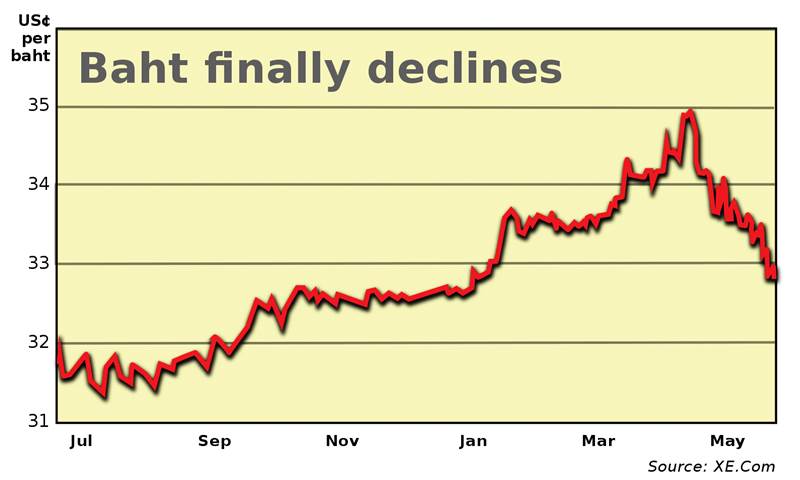
He cited several factors curbing Thai exports – the continued slowdown of the EU economy, reduced imports by Japan, the baht’s appreciation and higher costs stemming from the new 300-baht daily minimum wage.
“I’m just back from Europe, which accounts for 10.5 per cent of Thai exports, and it’s quite clear the German economy will remain bearish, with the financial problem expanding to France,” he said.
“In Asia, the weak yen is expected to result in fewer imports by Japan from Thailand.” He said April export growth of just 2.9 per cent compared with the same month last year reflected the impact of the weak global economy and stronger baht.
Nonetheless, he predicts Thai exports will recover this month now that the baht has begun to ease.
Mr Tanit said if exports improve in the second half, average working hours in manufacturing should increase.
He suggests the government prepare for higher demand, especially for skilled labour, as private investment grows.
The NESDB expects the shortage of workers to become more drastic over the next three years.