


What many people might not know is that once a year the southern area comes alive with festivities to celebrate the culture of Buddhists, Muslims and Sea Gypsies.
The Rawai Traditional Customs and Culture Celebration, a one day event held every June, features cultural performances and examples of traditional way of life for the three cultures.
Activities include cooking local foods, performances such as rong-ngaeng (a traditional southern dance), li-kea pa (southern singing and dancing performances both sing and dance) and ram-wong (Thai dance).
Rawai resident Chalin Thanomwong said before Phuket became a popular tourist destination, people in the south used to know everyone in the seven villages in the area. They lived peacefully and created unity through traditional activities and customs.
“We now feel our area is made up of a lot of mixed cultures and different people, like both Thais and foreigners. Our lifestyle has changed and many activities in the past have been forgotten.” Mr Chalin said.
Rawai Mayor Aroon Solos and other leaders of Rawai sub-district, together with the Three Generation Centre (Soon Sam Wai) decided to hold the event to help restore traditional customs to the community.
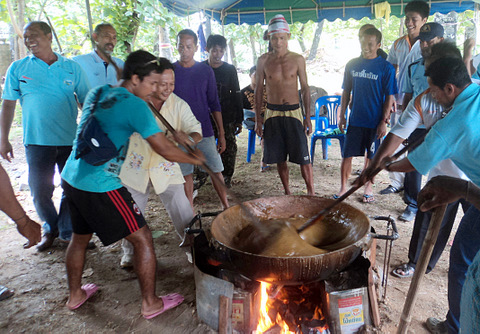
One of the popular activities held during the event is cooking with local Rawai caramel (ga-la-mare) which is a popular dessert often used for wedding celebrations.
Juang Solos, one of the event leaders, said cooking the caramel was a great team building exercise because it took four hours to make one big pan of caramel. The caramel is made from sticky-rice flour, sugar, coconut, and salt.
“In the past, everyone had to make caramel by themselves, and there was no machine to help them, unlike nowadays.”
Educating the younger generations about traditional customs in the area helped create unity in the community, Mr Juang said.
“We are not just Buddhists, Muslim or Sea Gypsies. All of us are Rawai people who want to see good things happen in our mother land.”