
EXOTIQ The Phuket News The Phuket News Poll The Phuket News Laguna Resort and Hotel
The Phuket News Login   |   Create Account   |   Manage Account   |   Logout
Google Plus - The Phuket News Twitter - The Phuket News Facebook - The Phuket News The Phuket News - YouTube The Phuket News
The Phuket News
The Phuket News
The Phuket News
The Phuket News
The Phuket News SUNDAY  |  May 26, 2013  |  Last update: 11:19 AM.
Phuket Radio Phuket TV The Phuket News
The Phuket News
The Phuket News PHUKET NEWS  The Phuket News
The Phuket News
The Phuket News Phuket News
The Phuket News Phuket | Thailand | Asia | World | Business | Features | Opinion | Weird World XML, RSS, Feed
The Phuket News The Phuket News
The Phuket News

Against the clock: When a minute lasts 61 seconds

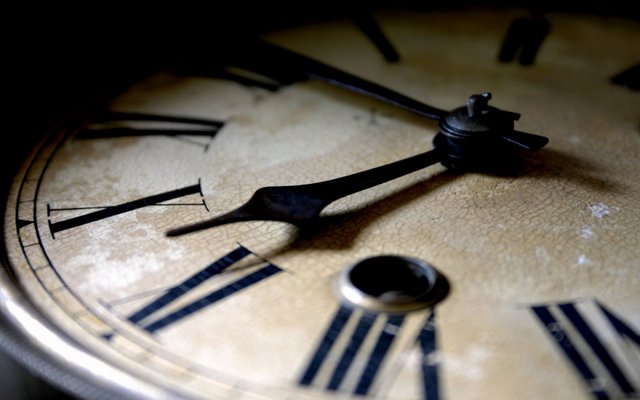
Horologists around the world last Saturday (June 30) carried out one of the weirdest operations of their profession: they held back time.

Friday 13 July 2012, 11:13AM


The last minute of June 30, 2012, was in fact 61 seconds long, with timekeepers around the globe adding a “leap second” to compensate for the wibbly-wobbly movements of our planet.

The ever-so-brief halting of the second hand helped compensate for a creeping divergence from solar time, meaning the period required for Earth to complete a day.
The planet takes just over 86,400 seconds for a 360-degree revolution.

But it wobbles on its axis and is affected by the gravitational pull of the Sun and Moon and the ocean tides, all of which brake the rotation by a tiny sliver of a second.

As a result, Earth gets out of step with International Atomic Time (TAI), which uses the pulsation of atoms to measure time to an accuracy of several billionths of a second.

To avoid solar time and TAI moving too far apart, the widely used indicator of Coordinated Universal Time (UTC) is adjusted every so often to give us the odd 86,401-second day.

The adjustments began in 1972. Before then, time was measured exclusively by the position of the Sun or stars in relation to Earth, expressed in Greenwich Mean Time (GMT) or its successor UT1.

Saturday was the 25th intervention to add a “leap second” to UTC.

“Today, time is constructed, defined and measured with atomic clocks that are infinitely more stable than astronomical time,” Noel Dimarcq, director of the SYRTE time-space reference system at the Paris Observatory, said.

“This allows us to ensure that everyone on Earth is on the exact same time.”

TAI is kept by several hundred atomic clocks around the world, measuring fluctuations in the atom of the chemical element caesium that allows them to divide a single second into 10 billion smaller bits.

With such precision, “only one (atomic) second is lost every 300 million years,” said Dimarcq.

The Phuket News
Comment on this story
comments powered by Disqus
The Phuket News The Phuket News The Phuket News
The Phuket News
Share this
The Phuket News
Related stories
The Phuket News
Phuket community
The Phuket News
The Phuket News Poll
Should Phuket taxis all run on the meter?
Phuket Hotels
Destination
Check-in
Check-out
Rooms :
Child
Adult(s)
PHUKET NEWS
Phuket
Thailand
Asia
World
Business
Features
Opinion
Weird World
ARCHIVE
POLL
The Phuket News PHUKET SPORT
Phuket
Thailand
Asia
World
Competitions
Phuket FC
Tipping Comp
The Phuket News PHUKET LIFE
Phuket Arts
Phuket Dining
Phuket Education
Phuket Environment
Phuket Film
Phuket Health
Phuket Legal
Phuket Music
Phuket People
Phuket Tech
Phuket Travel
Photo Galleries
COLOURING BOOK
The Phuket News PHUKET CLASSIFIEDS
Phuket Buy and Sell
Phuket Jobs
Phuket Property
Phuket Cars and Boats
Phuket Community
Phuket Services
SEARCH CLASSIFIEDS
POST CLASSIFIED
The Phuket News PHUKET EVENTS
Phuket Event listings
Phuket Event calendar
Phuket Ticketmaster
POST EVENT
The Phuket News PHUKET DIRECTORY
Phuket Bars, pubs and clubs
Phuket Hotels and villas
Phuket Restaurants
Phuket Yellow Pages
POST LISTING
The Phuket News ABOUT US
Q&A
The Company
Distribution points
Subscribe
Advertise with us
Pay for advert
Contact us
F.A.Q.
CONTESTS
 
Copyright © 2013 Class Act Media. All rights reserved. | Website usage terms and conditions | Privacy and Confidentiality Statement.